I heard about this report from David McRaney’s excellent You Are Not So Smart podcast. It’s a free resource that covers some current science around misinformation and how to debunk it.
It’s an easy read and worth downloading.
It highlights the:
- continued influence effect: how misinformation continues to influence people’s thinking even after receiving and accepting a correction to the misinformation.
- illustory truth effect: this is how repeated info is more likely to be judged as true compared to novel info, because the repeated info becomes more familiar.
- backfire effect: where a correction to misinformation inadvertently increases the belief in or reliance on that misinformation relative to before the correction was made. (# You Are Not So Smart has three episodes focused on the backfire effect.)
One technique they describe (among others) is called “inoculation”. Inoculation seeks to counter the stickiness of misinformation by preempting (prebunking) the misinformation, which the authors state “makes people resilient to subsequent manipulation attempts”.
This has me thinking about how to leverage the debunking methods in countering the dominance of TRIFR/LTIFR etc. in our industry, given recent work highlighting the statistical invalidity of them (e.g. from Matthew Hallowell’s team in the US).
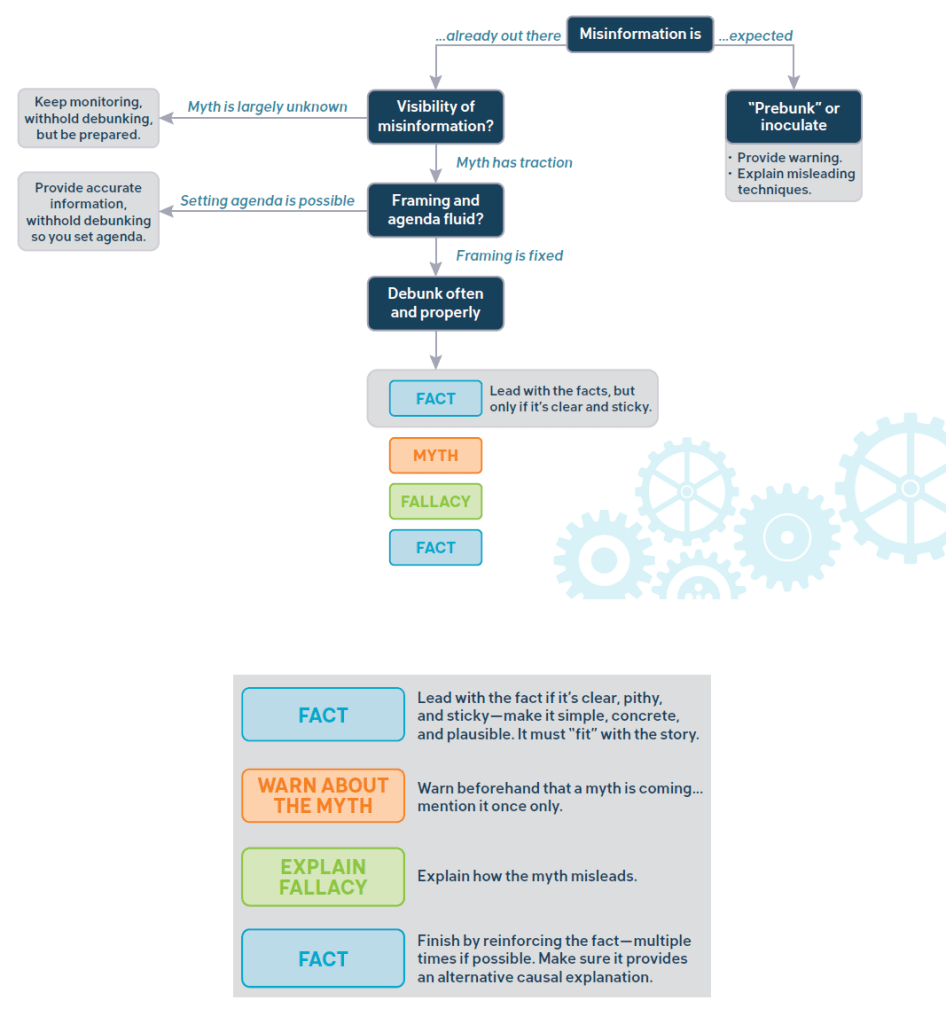
https://www.climatechangecommunication.org/debunking-handbook-2020

 SafetyInsights.org