This study is pretty useful if you’re after the data for the quality of evidence for psychosocial risk factors on musculoskeletal disorders and absenteeism. The findings from 24 systematic reviews or meta-analyses and six longitudinal studies were reviewed.
Results
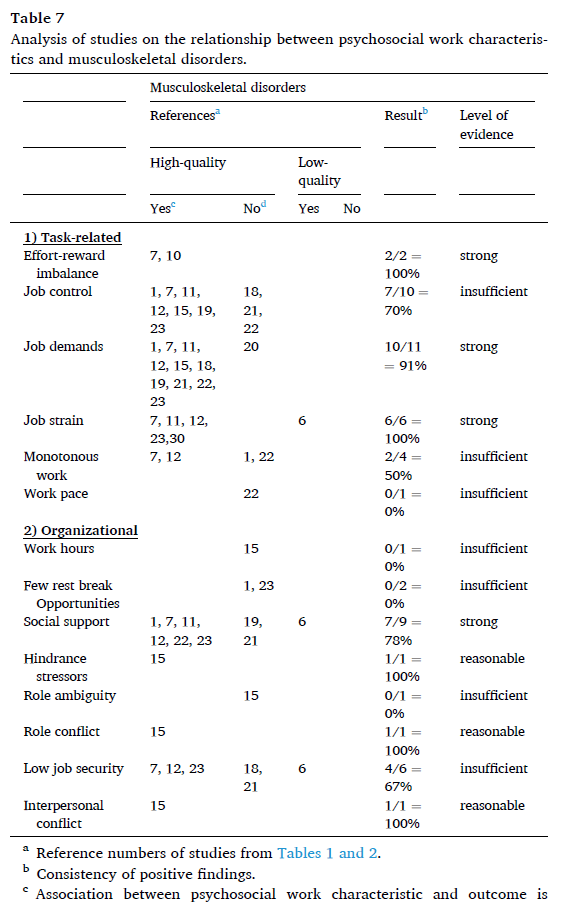
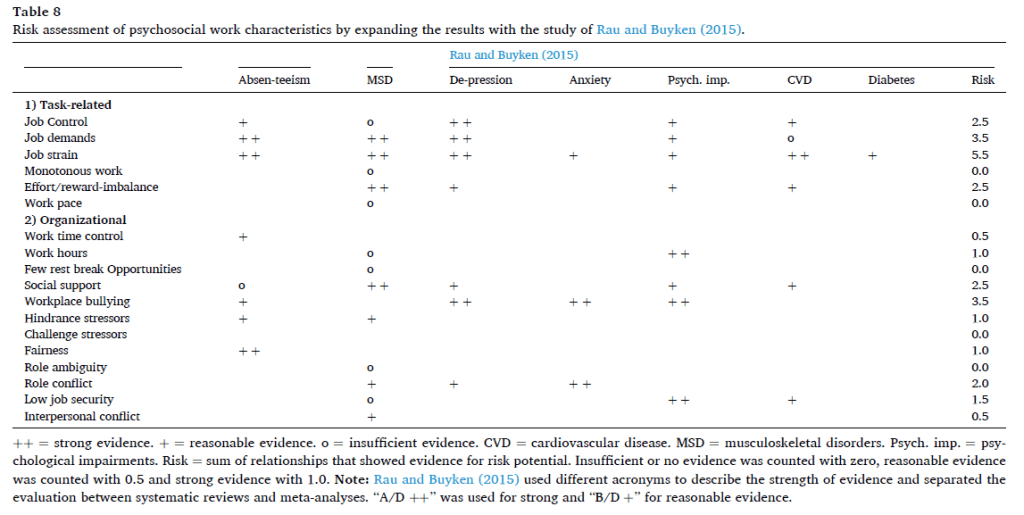
The systematic review found the following work characteristics to be strong risk factors for musculoskeletal disorders and absenteeism:
- High job demands
- High job strain
- High effort-reward imbalance
- Low social support
- Low perceived fairness
Reasonable evidence was found for the following:
- Low job control
- Low work time control
- High workplace bullying
- High hindrance stressors
- High role conflict
- Interpersonal conflicts
For monotonous work, the findings indicate only insufficient evidence:
- Number of work hours
- Few rest break opportunities
- Work pace
- Challenge stressors
- Low job security
- Role ambiguity
Insufficient evidence was found linking psychosocial work characteristics to an increased risk for workplace accidents as only a few studies were available.
The paper has the full data set, but you can find one of the tables below highlighting the strength of evidence.
Authors: Yacine Taibi, Yannick A. Metzler, Silja Bellingrath, Andreas Müller, 2021, Applied Ergonomics
Study link: https://doi.org/10.1016/j.apergo.2021.103434
Link to the LinkedIn article: https://www.linkedin.com/pulse/systematic-overview-risk-effects-psychosocial-work-ben-hutchinson

 SafetyInsights.org
One thought on “A systematic overview on the risk effects of psychosocial work characteristics on musculoskeletal disorders, absenteeism, and workplace accidents”