“Gimme fuel, gimme fire, gimme that which I desire” said Metallica.
Or maybe if you want to prioritise a performance goal or change initiative, like critical risk observations, incident reporting, learning teams, work insights, pre-task discussions etc, remove the frictions more than adding extra fuel?
I love the #hiddenbrain podcast with Shankar Vedantam, and they ran a fantastic episode on changing habits & behaviours (link below).
I can’t do this justice, but they breakdown the concept of fuel and friction. Fuel enhances the appeal of an idea or action, like incentives or emotional appeals. Frictions are psychological forces that resist change (barriers).
Whereas it’s important to add fuel to an idea, such as a new performance initiative, perhaps we don’t focus enough on removing the barriers & perceived frictions to change?
For instance, if you expect a supervisor to run a pre-start, observation or work insight – adding more fuel may not help, such as emotional/procedural appeals (you “shall” do this, KPIs, trying to “audit in” the performance you’re after [which Deming warned against], or using incentives like BBQs). It’s likely your staff do already care enough so don’t need more fuel.
[Of course, we should be properly engaging and consulting in appropriate human-centred design principles before adding anything, but let’s pretend this has already happened.]
Instead of just fuel, try embedding the task into existing process flows so that performing the activity becomes part of the natural work scope; thus, it’s really hard not to get the desired performance goal completed as part of normal work.
If incident reporting or proactive team discussions are important for your business then make it really easy—too easy—for people to do these tasks (NB. Systems, like incident reporting, typically suck and take too much time; especially for the limited benefit it can return).
Make time for that activity by removing other tasks from the process flow (frictions). It’s easy to keep adding to workflows (new rules, steps, technology) but harder to remove things; but arguably removing frictions may be more important.
Loran Nordgren & David Schonthal in their book “The Human Element” describe 4 frictions:
· Inertia: Does the idea involve a major change?
· Effort: What is the cost of implementation?
· Reactance: Do the stakeholders feel pressure to change?
· Emotion: What negative feelings might the change elicit?
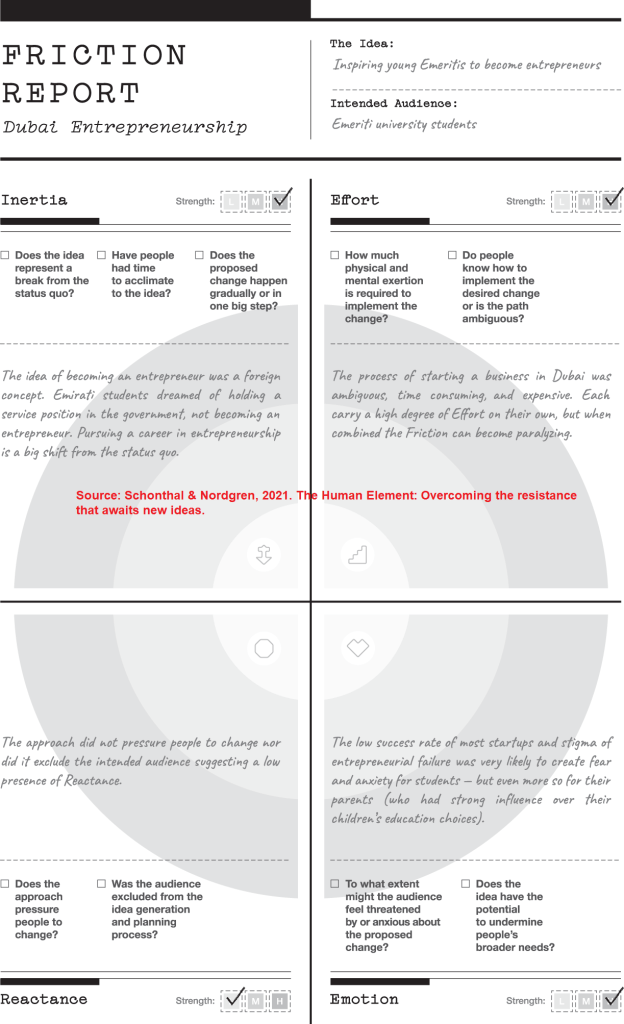
They note that while change initiatives may add fuel to enhance idea attraction, they neglect frictions that work against the change; thus, largely ignore the fact that people work towards the path of least resistance. See image one for a “friction report” from their book.
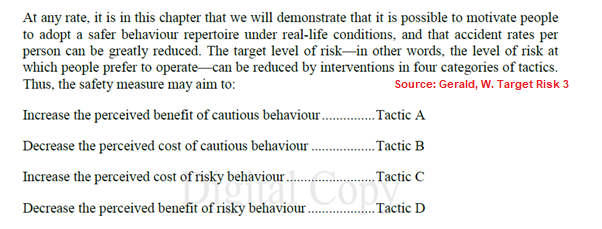
The fuel/friction dichotomy reminds me of Gerald Wilde’s criteria for altering behaviour (second image). Although it refers to individual behaviour, I think it’s just as applicable for system-level frictions.
Hidden Brain podcast link: https://hiddenbrain.org/podcast/work-2-0-the-obstacles-you-dont-see/
Link to the Human Element book: https://www.amazon.com/Human-Element-Overcoming-Resistance-Awaits/dp/1119765048
Link to the LinkedIn post: https://www.linkedin.com/posts/benhutchinson2_hiddenbrain-activity-6912905030928932865-UuJT?utm_source=linkedin_share&utm_medium=member_desktop_web

 SafetyInsights.org