How can application of S-II and resilient performance ideas enhance learning opportunities? This study (link below) explored the application of S-II for post-hoc analysis of 35 investigation reports to explore that question.
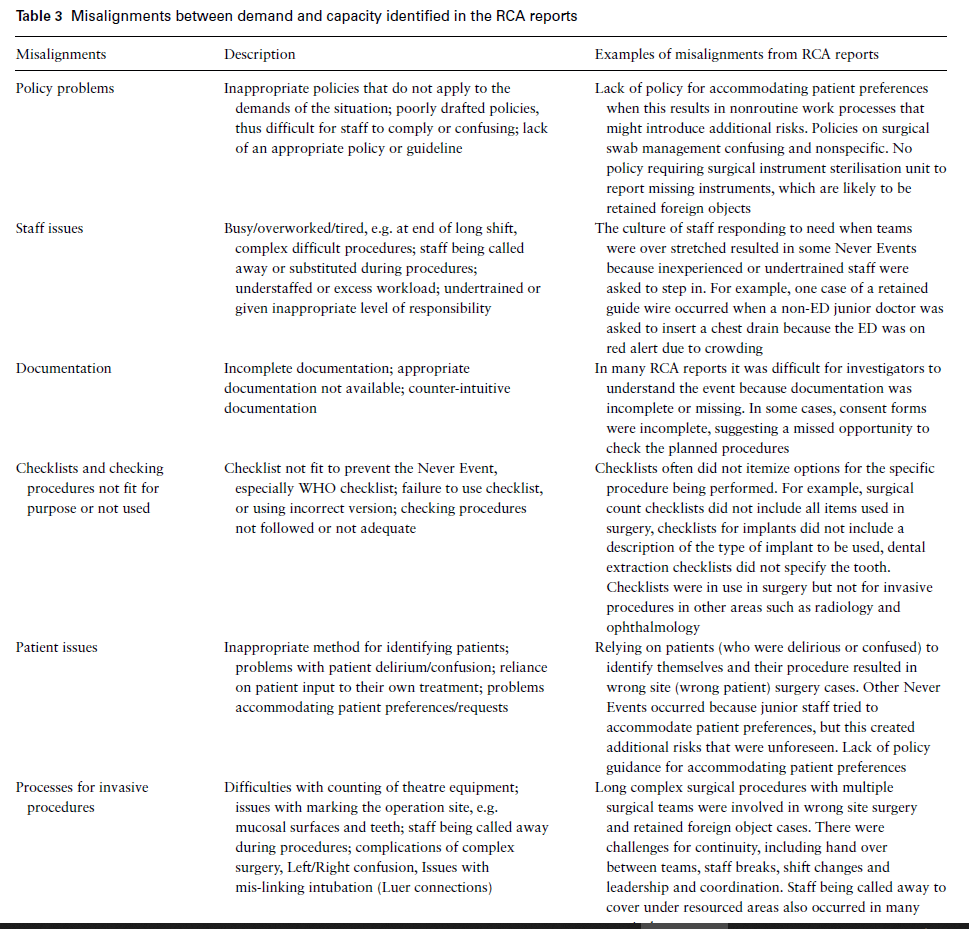
Specifically, they explored how S-II/resilient healthcare principles could enhance the quality of investigations – such as via understanding misalignments between demand & capacity, adaptive capacity, and WAI vs WAD etc, in conjunction to systemic issues & rate quality of recommendations.
They found that, overall, most recommendations in the investigations were of low to moderate effectiveness for preventing future issues/reoccurrence. For intervention effectiveness and resilient potentials, no reports achieved higher than a 56% score of effectiveness.
Moreover, they identified that despite many reports identifying misalignment factors that might lead to future incidents – in 44% of cases there was no intervention proposed to mitigate or remove the risk.
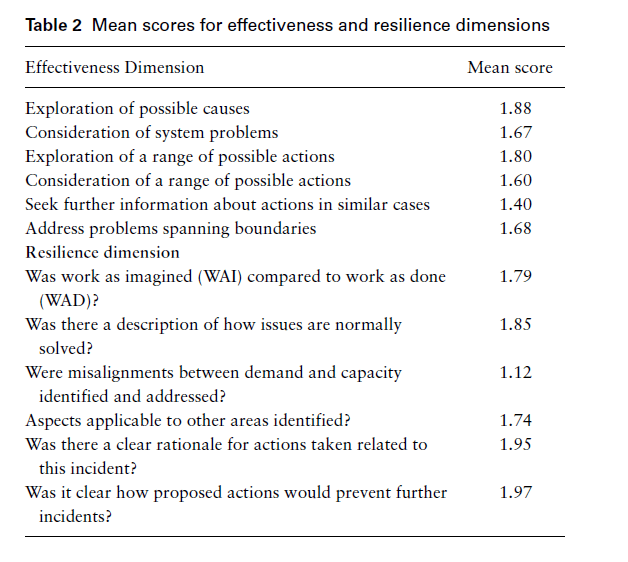
Main weaknesses in the investigation reports were:
1. Not understanding or describing WAD, including barriers for staff and how they solve problems
2. Not addressing misalignments that indicate weaknesses in systems, e.g. incomplete documents, staff shortages
3. Not considering how the identified problems could affect other areas or risks, how they manage the risks, or how to apply solutions elsewhere
4. Not addressing staff wellbeing
5. Lack of holistic and systematic learning after incidents, where instead new items are added to checklists etc
6. Policy problems left unaddressed, where few attempts made to understand how/why people follow (or not) policies.
The authors argue that based on this sample, many investigation reports are not successfully leveraging opportunities to create safer or more tolerant systems.
Although many of these items won’t be new to people, the authors argue that moving forward investigations (and proactive learning activities) should also: (p6)
1. Include a description of how the task or process is usually carried out in practice before considering what happened in the case under investigation, e.g. focus on work as done
2. Consider misalignments between demand and capacity when thinking about potential interventions
3. Identify and discuss adaptations and adjustments to work processes – where adaptive capacity is argued to be one key consideration for high quality practice
4. Identify how learnings can be applied more broadly
5. Enhance learning activities by incorporating an assessment of intervention effectiveness and resilient potentials.
Authors: Anderson, J. E., & Watt, A. J. (2020). Using Safety-II and resilient healthcare principles to learn from Never Events. International Journal for Quality in Health Care, 32(3), 196-203.
Study link: https://doi.org/10.1093/intqhc/mzaa009
My summary of the study: https://safety177496371.wordpress.com/2021/02/12/using-safety-ii-and-resilient-healthcare-principles-to-learn-from-never-events/

 SafetyInsights.org
One thought on “Can S-II principles enhance learning from investigations?”