Are organisations generally good at investigating adverse events but poor at fixing what is actually found?
Or said differently, are we replacing continual improvement with continual investigation for things we already largely know?
One study explored this question among 34 oil & gas companies over a 12 month period. Over 2.5k incident reports were evaluated.
Overall they found around 75% of investigations had a ‘fair’ quality. 13% were rated as strong and 11% as weak.
Interestingly, 14% of serious injuries or property damage failed to result in even a single improvement.
Further, an average of 23% of fatalities or catastrophic damage also failed to result in at least one improvement.
Only 45% of investigations assigned actions for somebody to complete. Of the reports that did assign improvements – just 14% confirmed the action as completed.
Quoting the authors, “most companies failed to implement (complete) their proposed corrective actions: 76.47% failed to implement their proposed corrective actions more than 50% of the time” (p7).
Some in the dataset had a perception that the safety system data around incidents was ineffective, such that the measures “do not differentiate [between little incidents and fatalities]. A papercut is the same as death”.
For risk controls, nearly half couldn’t be assigned to a category (e.g. Hierarchy of Control). E.g. many reports instead of controls listed statements like “no one was hurt”, or an action to complete relating to the investigation rather than risk amelioration (e.g. a remark that more witness interviews are needed).
For controls which could be categorised, the majority were administrative (~45%), with a low number for engineering and elimination (~9%).
Authors note that “although most companies have fair quality investigations, the corrective actions are of lower quality for nearly a third of the sample” (p7).
Further, based on findings that many HIPOs failed to have at least one corrective action, nor checks that actions were completed, it’s said “the sampled oil and gas companies fail to sufficiently find and fix errors once they occur, and, with a few notable exceptions, fail to consistently and efficiently ameliorate the risk of incidents reoccurring” (p7).
Overall, “companies are diverting the majority of their attention to investigations, without devoting sufficient attention on to remediation” (p12). That is, companies focus more effort on investigating than they do designing and implementing better controls and ways to manage risk.
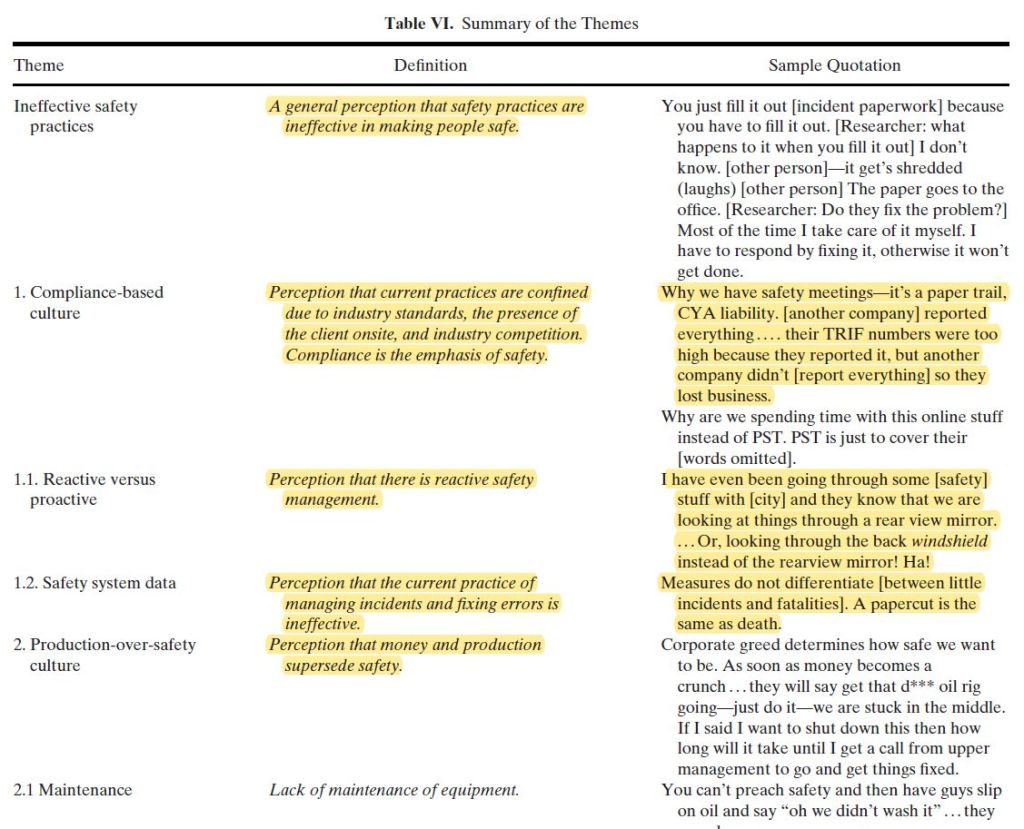
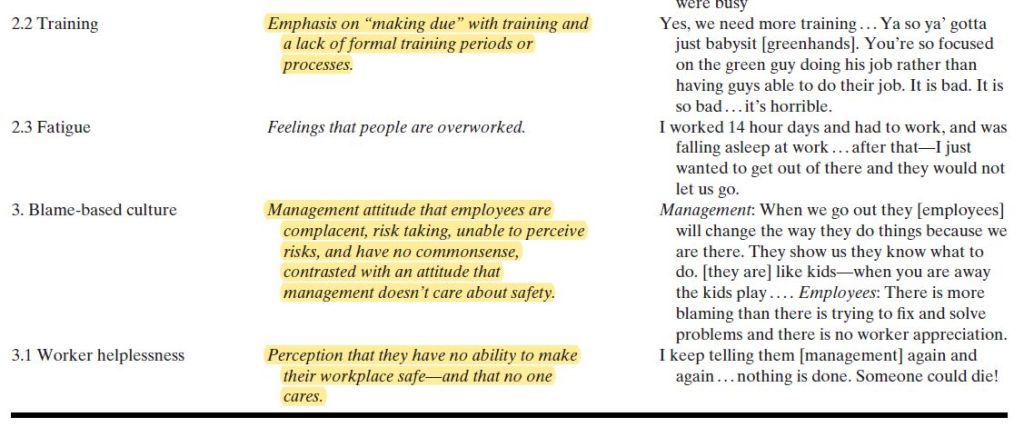
Authors: Madelynn R. D. Stackhouse, Robert Stewart, 2016, Risk Analysis
Study link: https://doi.org/10.1111/risa.12583
Summary of study: https://safety177496371.wordpress.com/2021/02/16/failing-to-fix-what-is-found-risk-accommodation-in-the-oil-and-gas-industry/

 SafetyInsights.org
2 thoughts on “Risk accommodation and preference for continual investigation over continual improvement”