One of many dozens of papers exploring the propagation of misinformation (and disinformation) on social media platforms, like Twitter.
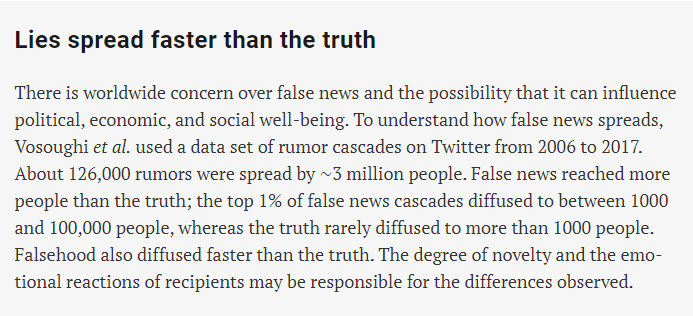
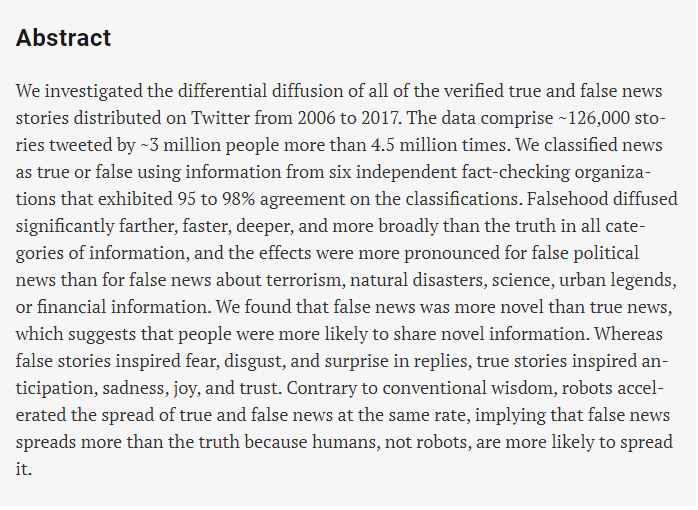
This particular study evaluated ~126k stories tweeted by ~3 million period, classified as true or false based on assessments from six independent fact-checking organisations.
Key findings were that:
· “Falsehood diffused significantly farther, faster, deeper, and more broadly than the truth in all categories of information”
· “the effects were more pronounced for false political news than for false news about terrorism, natural disasters, science, urban legends, or financial information”
· “false news was more novel than true news, which suggests that people were more likely to share novel information”
· “Whereas false stories inspired fear, disgust, and surprise in replies, true stories inspired anticipation, sadness, joy, and trust”
· Against expectations, robots accelerated both false- and true-assessed news at approximately the same rate – implying that “false news spreads more than the truth because humans, not robots, are more likely to spread it”
· False news was 70% more likely to be retweeted than truthful claims, or false cascades spread six times faster than truthful cascades
See comments for a link to the paper, an article talking about the paper, and a summary I did earlier about the characteristics of journalist tweets in the context of cognitive heuristics and type 1/type 2 thinking.
Study link: https://doi.org/10.1126/science.aap9559
Article about the study: https://www.te.gob.mx/blog/reyes/front/openJustice/article/84
A similar study looking at what journalists tweet: https://www.linkedin.com/pulse/anchoring-past-tweeting-from-present-cognitive-bias-ben-hutchinson
Link to the LinkedIn post: https://www.linkedin.com/posts/benhutchinson2_one-of-many-dozens-of-papers-exploring-the-activity-7030301221060022272-uoxL?utm_source=share&utm_medium=member_desktop

 SafetyInsights.org