Just summarised a paper that studied the links between the number of consecutive day or night shifts in a swing in relation to reported incidents and near misses, using a large Fortune 500 work scheduling dataset (Laske et al., 2022).
One key finding was that risk of an incident increases fairly linearly to each consecutive day shift such that the fourth consecutive shift results in higher risk than preceding shifts.
They argued that if a work team was working their fourth consecutive day shift, they faced a 5.84% higher probability of an incident and a 4.93% probability of a near miss occurring during that shift.
Curiously, this relationship didn’t hold in the same manner for night shifts, with a reverse direction of risk (higher at start, lower towards end).
There’s been lots of solid research around the design of shift work schedules, as part of integrated fatigue risk management system approaches.
Below are some guidelines from Peter Knauth. Note – these recommendations are from 1997, so there is more current data & advice available.
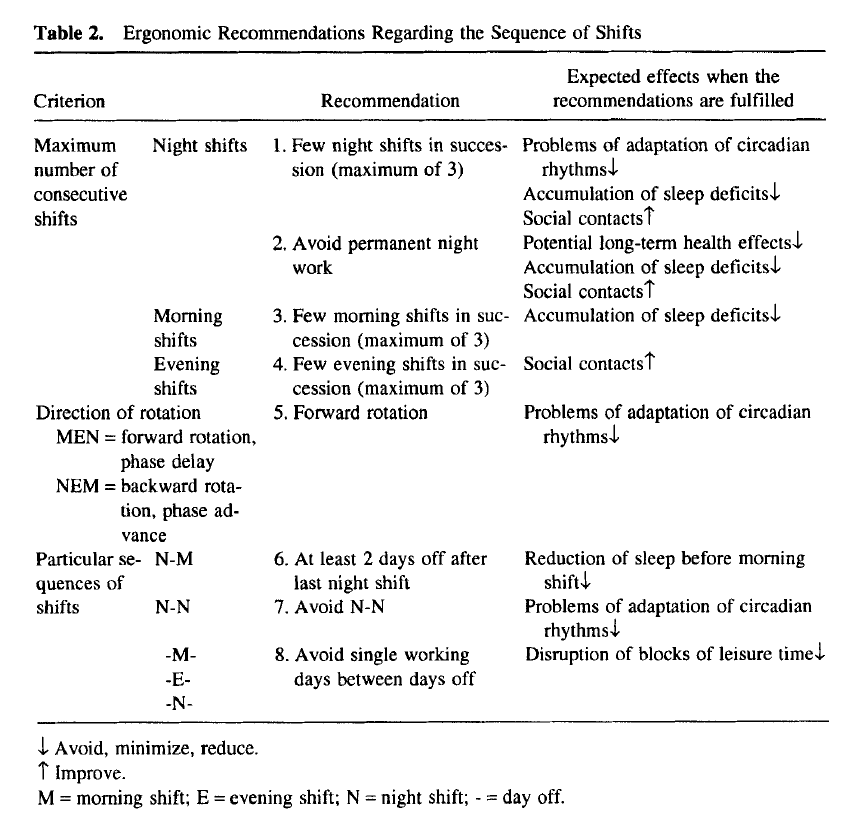
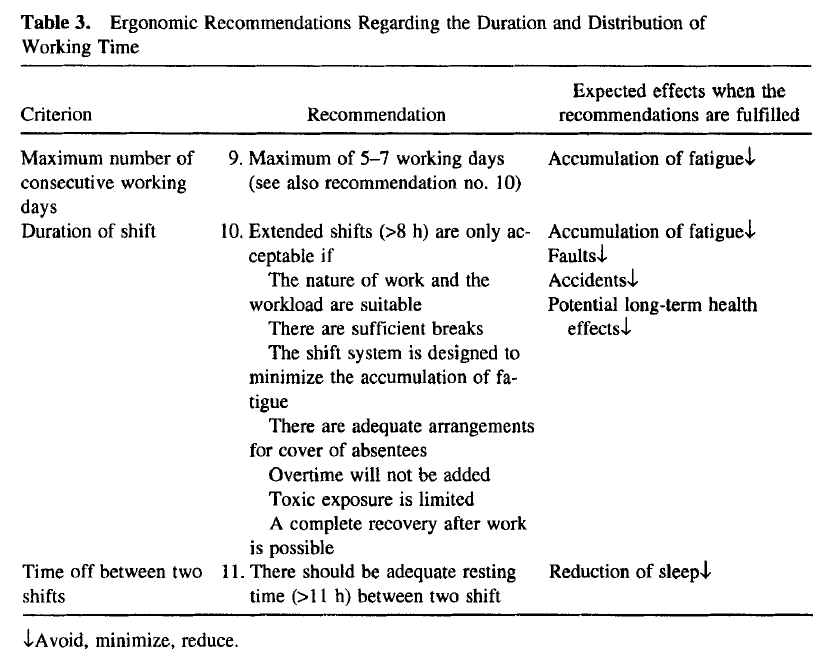
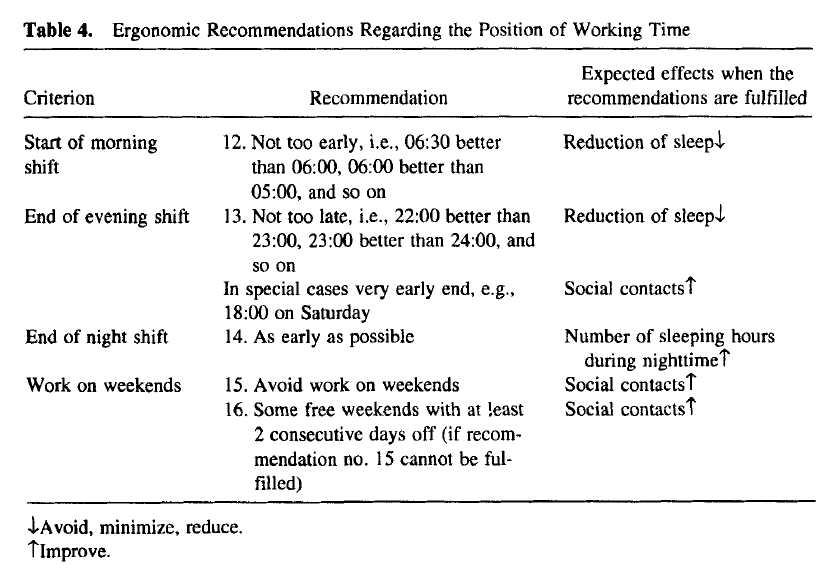
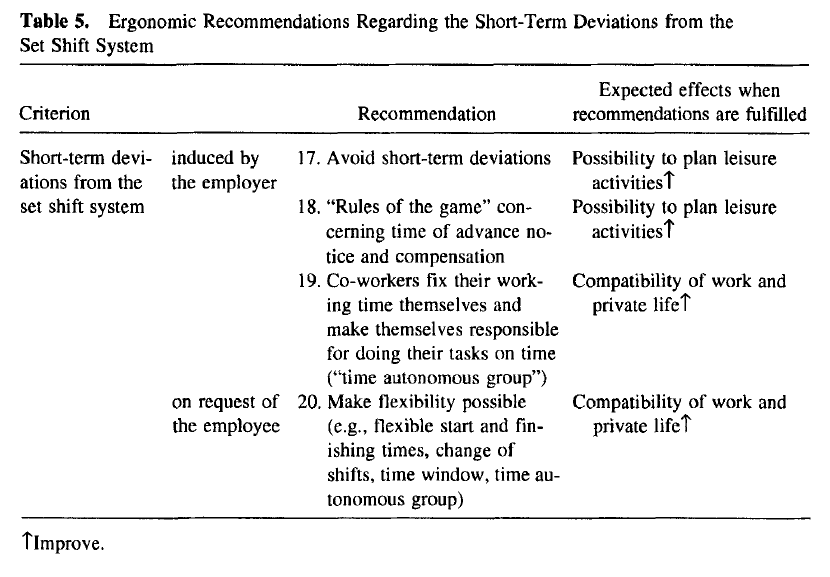
It’s a handy consolidation of general principles, but make sure to compare to current research and/or Codes of Practice (e.g. for Australia, Preventing and managing fatigue-related risk in the workplace or QGN 16 Guidance Note for Fatigue Risk Management, or internationally IPIECA’s Managing fatigue in the workplace).
Author: Peter Knauth (1997) Changing schedules: Shiftwork, Chronobiology International, 14:2, 159-171.
Study link: Study link: http://dx.doi.org/10.3109/07420529709001153
Link to the LinkedIn post:
Other links:
Fatigue tools from IPIECA: https://www.ipieca.org/resources/good-practice/managing-fatigue-in-the-workplace/
https://www.linkedin.com/pulse/updating-risk-index-systematic-review-meta-analysis-work-hutchinson

 SafetyInsights.org