This systematic review and meta-analysis evaluated the evidence from over 30 years on the effects of workplace health/wellness programs on specific dietary habits, anthropometric parameters and cardiometabolic risk factors.
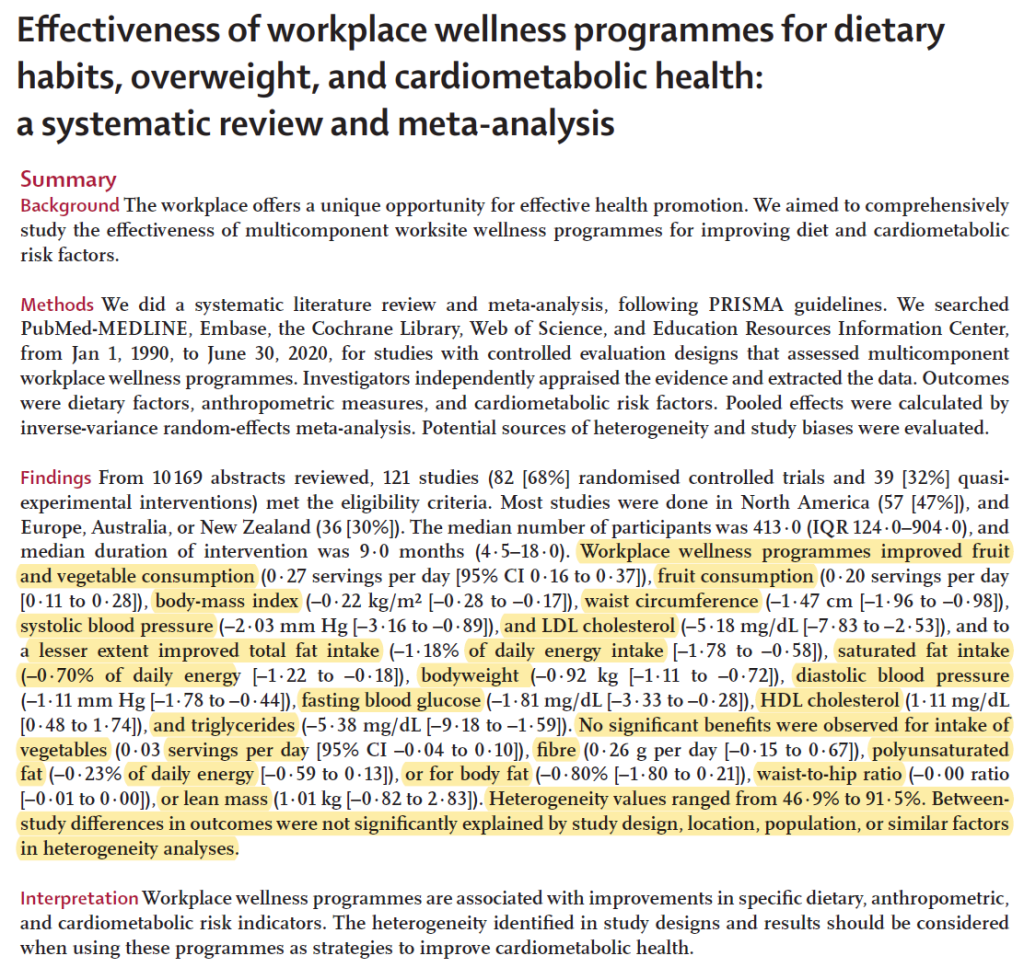
Not a summary since the full paper is freely available.
Wellness programs included screening, individual education, group education, food environment, labelling, financial incentives, physical activity, self-awareness and others.
Specific findings are shown in image 2.
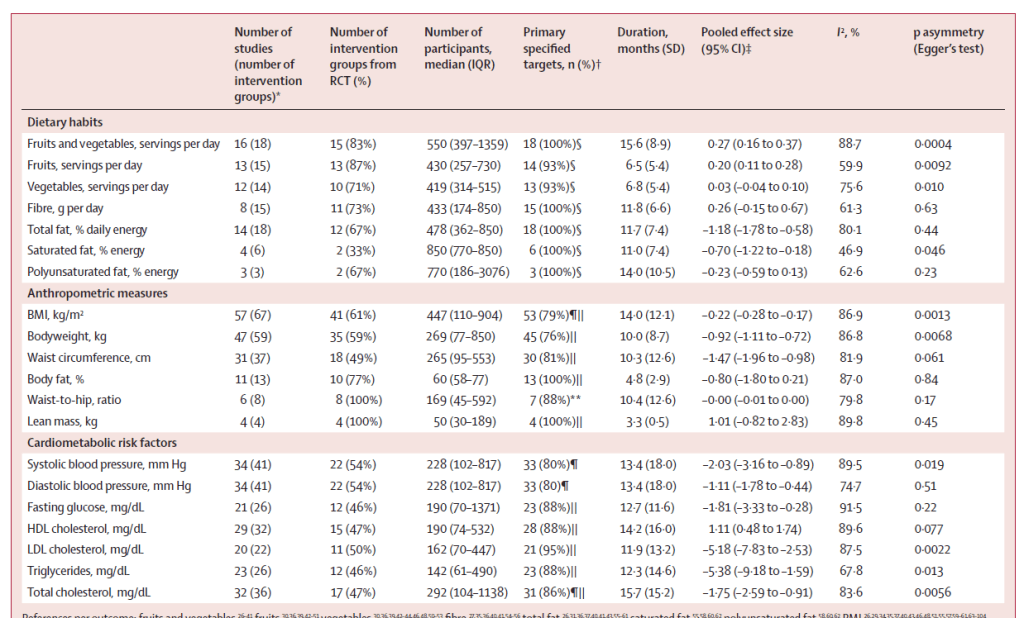
The authors note that this analysis suggests that wellness programs can “improve specific dietary, anthropometric, and cardiometabolic risk indicators, supporting their use and further investigation as effective strategies to improve cardiometabolic health” (p657).
They further argue that “Although magnitudes of effects were often modest, such effects are crucial and provide meaningful risk reduction when shown across populations, as opposed to through individual-focused clinical treatment” (p655).
However, as predicted there were a number of limitations present in the dataset and the study. A large degree of heterogeneity between studies, potential effects of small studies unduly influencing overall results and potential publication bias.
Source: Peñalvo, J. L., Sagastume, D., Mertens, E., Uzhova, I., Smith, J., Wu, J. H., … & Mozaffarian, D. (2021). The Lancet Public Health, 6(9), e648-e660.
Study link: https://doi.org/10.1016/S2468-2667(21)00140-7
Link to the LinkedIn post: https://www.linkedin.com/posts/benhutchinson2_this-systematic-review-and-meta-analysis-activity-7059652467575164928-4OaH?utm_source=share&utm_medium=member_desktop

 SafetyInsights.org
One thought on “Effectiveness of workplace wellness programmes for dietary habits, overweight, and cardiometabolic health: a systematic review and meta-analysis”