Why don’t organisations effectively learn from incidents?
This is a question perpetually asked, with various factors, beliefs and data.
A 2014 study held focus groups in seven organisations to discuss the factors that employees believe contributed to a failure to learn.
Key findings are shown in the attached table via causes for bottlenecks in learning and the conditions.
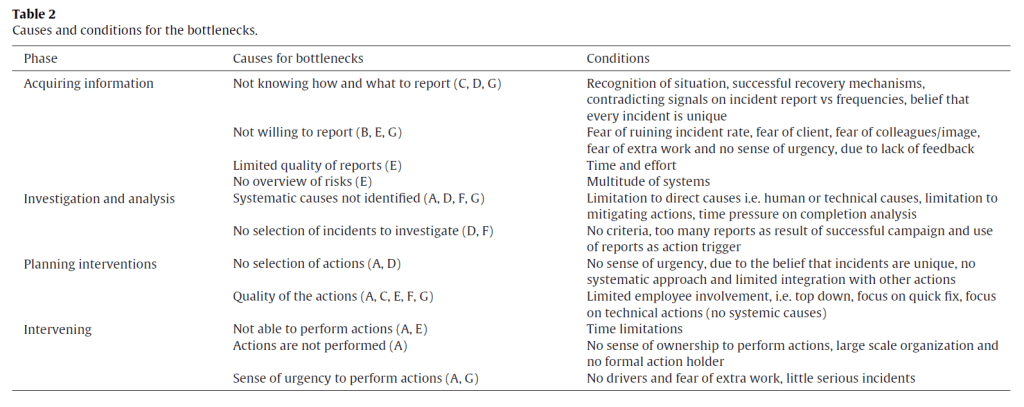
They note that “immediate actions were taken to remedy incidents. The consequence is that even though the risk of repetition of the specific incidents is mitigated, a similar incident may occur if the conditions are slightly different. Therefore learning from incidents should secure a more generic prevention of repetition” (p357).
Bottlenecks to learning were found in all steps of the learning process – from reporting, selection, investigation, planning actions and performing actions.
However, most difficulties became evident at the planning actions stage. This is where lessons learnt from incidents are translated into recommendations and the recommendations are prioritised and selected.
They argue that while learning from incidents are seen as relevant events to learn from, likewise the failure to learn from incidents should also be seen as opportunities to learn from and that “Studying the learning process itself allows for improvement from a less emotional perspective in comparison to the analysis of specific incidents” (p357).
Summary will be posted sometime in the near future.
Authors: Drupsteen, L., & Hasle, P. (2014). Why do organizations not learn from incidents? Bottlenecks, causes and conditions for a failure to effectively learn. Accident Analysis & Prevention, 72, 351-358.
Link to the LinkedIn post: https://www.linkedin.com/posts/benhutchinson2_why-dont-organisations-effectively-learn-activity-7060374411907928064-ItK6?utm_source=share&utm_medium=member_desktop

 SafetyInsights.org
2 thoughts on “Why don’t organisations learn from incidents?”