When you post a lot on LinkedIn, you’ll inevitably run into various criticisms, like biased research/methods/views. Confirmation bias, hindsight bias, outcome bias, overconfidence etc are also thrown around(which fair enough, we should apply critical lenses and thinking to research as with any part of our lives).
Another that is used, albeit less frequently, is the Hawthorne effect. As in, “those research findings are probably due to the Hawthorne effect”.
Hawthorne effect describes a potential phenomenon where participants who are being studied, and aware of being studied, alter their behaviour while being studied. The original studies found increases in productivity among a group of workers who were supervised intensively “under the auspices of a research program” (p267).
A 2014 systematically reviewed evidence of the Hawthorne effect dating back decades – including 19 papers that met quality criteria (virtually all from healthcare/health sciences).
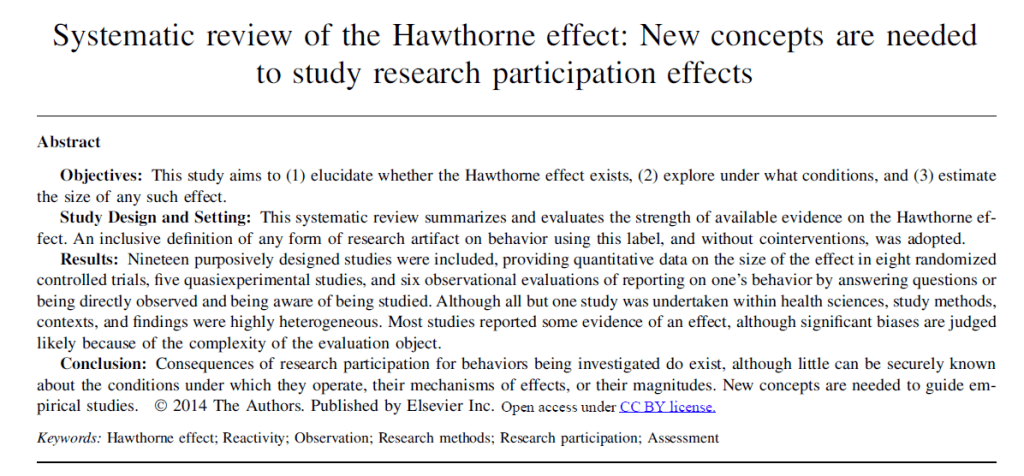
Overall, they concluded that there are small but statistically significant effects of a Hawthorne effect, but wide inconsistencies in this evidence making it difficult to draw clear conclusions. Moreover, the effects are short-term when follow-up approaches are employed.
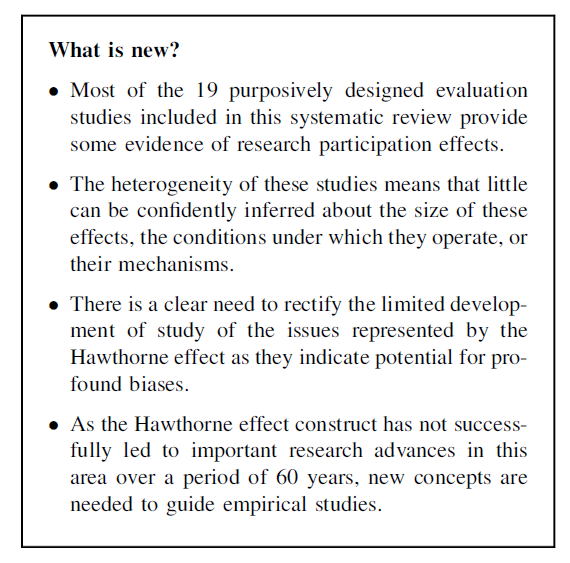
Moreover, the data suggests that any effects of practitioners altering their behaviour due to being observed “probably very much depends on what exactly they are doing”.
Importantly, this rather obvious statement “does undermine further the idea that there is a single effect, which can be called the Hawthorne effect. Rather, the effect, if it exists, is highly contingent on task and context” (p275).
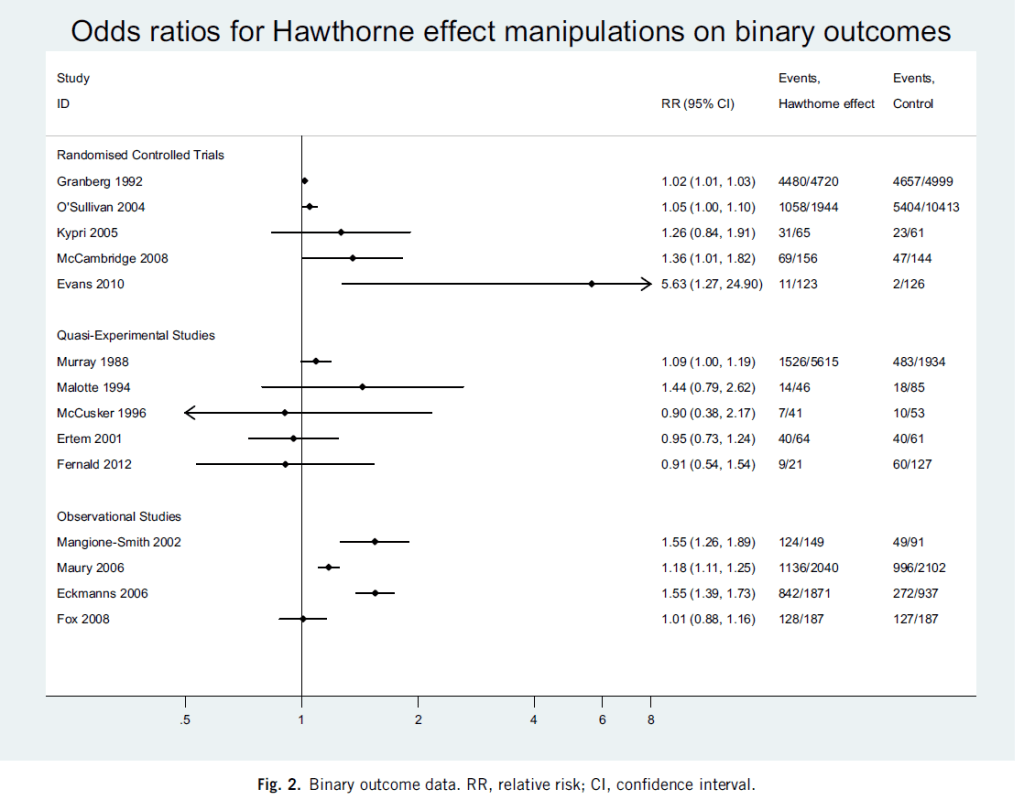
That is, they argue that “there is no single Hawthorne effect” (p276, emphasis added) and that unqualified use of the term should be abandoned“ (p276). Moreover, it’s said that this construct is “an inadequate vehicle for advancing understanding of these issues” since it has, seemingly, resulted in little progress on the conceptualisation over many decades.
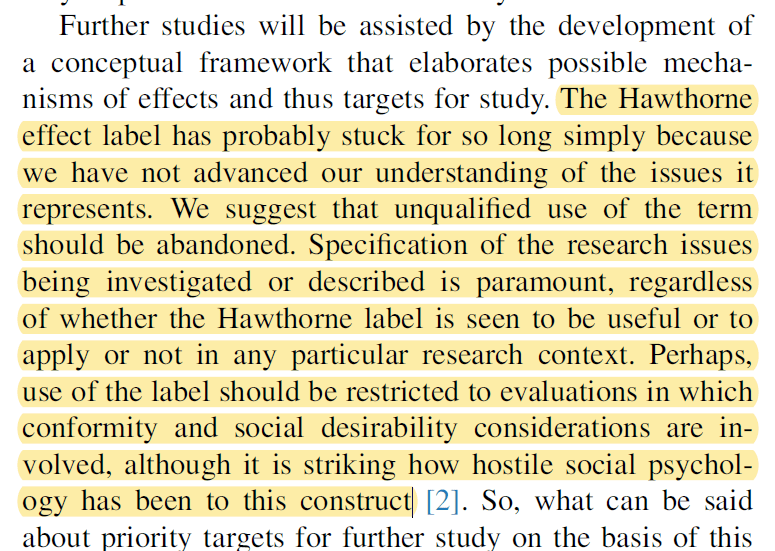
Authors: McCambridge, J., Witton, J., & Elbourne, D. R. (2014). Journal of clinical epidemiology, 67(3), 267-277.
Study link: https://doi.org/10.1016/j.jclinepi.2013.08.015
Link to the LinkedIn post: https://www.linkedin.com/posts/benhutchinson2_when-you-post-a-lot-on-linkedin-youll-inevitably-activity-7066539053835309056-n_OZ?utm_source=share&utm_medium=member_desktop

 SafetyInsights.org
One thought on “Systematic review of evidence around the Hawthorne effect”