On the back of the new research highlighting potential “backfiring effect” (their words) of very high Psychological Safety (PS) (see link in comments), it’s interesting to look back at Amy’s work about potential boundary effects of PS.
In a 2004 paper, Amy discusses several potential ways that PS may not be beneficial to team performance – see attached for some examples.
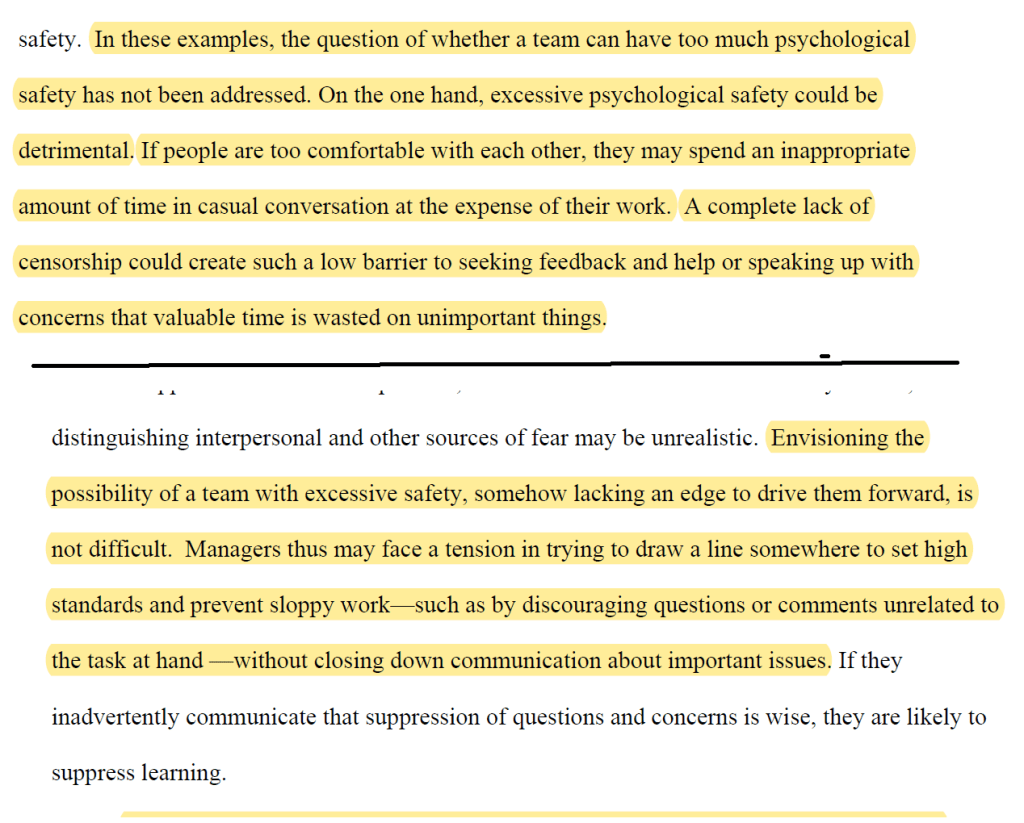
Interestingly, Amy notes “Envisioning the possibility of a team with excessive safety, somehow lacking an edge to drive them forward, is not difficult” (p35)
It’s good that we now have some evidence about some potential boundary effects of high PS in certain contexts (e.g. reduced in-role performance and higher unethical behaviour and cheating rationalisation).
Although, as noted by some other authors, these findings don’t require PS to be attached with a caution warning. Most, if not all, concepts and phenomena have boundary effects and potential unintended byproducts.
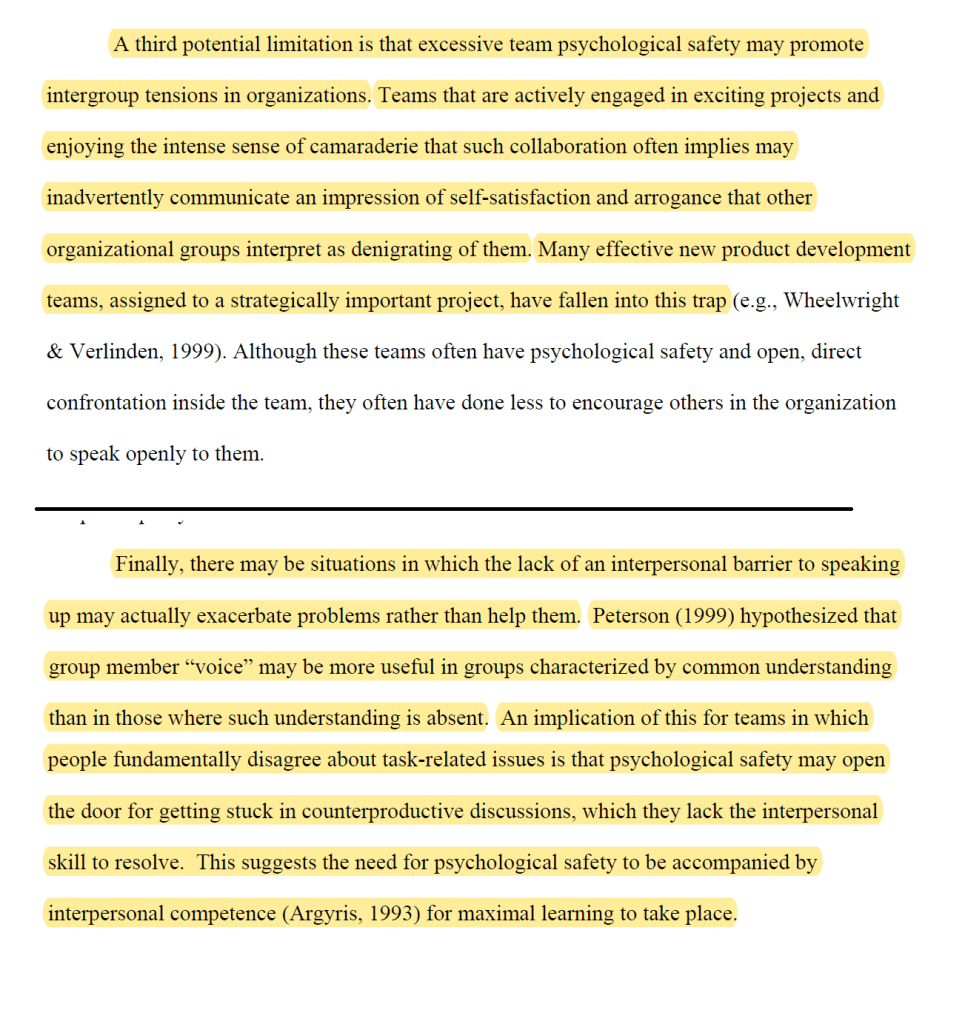
Ref: Edmondson, A. C., Kramer, R. M., & Cook, K. S. (2004). Psychological safety, trust, and learning in organizations: A group-level lens. Trust and distrust in organizations: Dilemmas and approaches, 12(2004), 239-272.

 SafetyInsights.org
2 thoughts on “Envisioning a team with ‘excessive psychological safety’”