Take 5, STOP, SLAM and other Last Minute Risk assessments seem like a good idea in principle, but how do they work function in practice?
Not so well, according to one study.
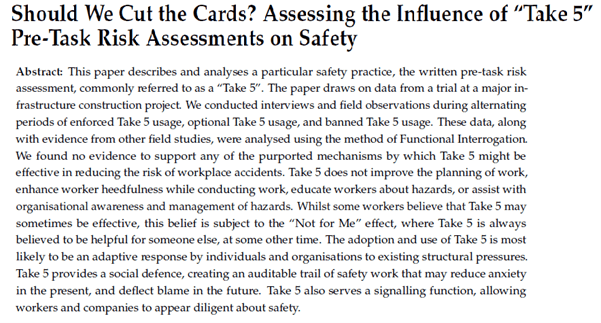
I finally summarised Havinga, Shire & Rae’s 2022 study which empirically explored the functioning of Take 5 during a trial at a major infrastructure construction program of works. Full post in the next couple of weeks.
Even under “near optimal” conditions in their Take 5 trial, they found:
· “no evidence to support any of the purported mechanisms by which Take 5 might be effective in reducing the risk of workplace accidents”
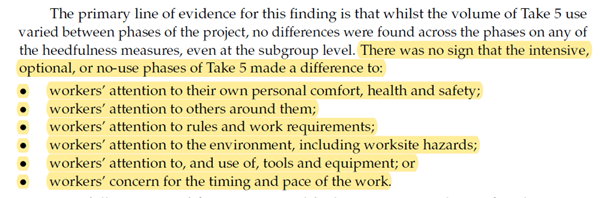
· “Take 5 does not improve the planning of work, enhance worker heedfulness while conducting work, educate workers about hazards, or assist with organisational awareness and management of hazards”
· “Whilst some workers believe that Take 5 may sometimes be effective, this belief is subject to the “Not for Me” effect, where Take 5 is always believed to be helpful for someone else, at some other time”
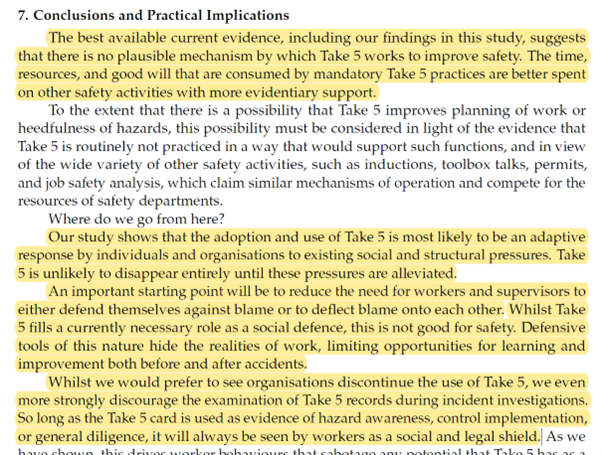
· “Take 5 provides a social defence, creating an auditable trail of safety work that may reduce anxiety in the present, and deflect blame in the future”
· “Take 5 also serves a signalling function, allowing workers and companies to appear diligent about safety”
The researchers also observed instances where the Take 5s were completed well in advance of the task, and in some cases bulk filled.
It’s open access, so you can read it in full via the link in comments.
Ref: Havinga, J., Shire, M. I., & Rae, A. (2022). Safety, 8(2), 27
Study link: https://doi.org/10.3390/safety8020027

 SafetyInsights.org
One thought on “Do Take 5, Last Minute Risk Assessments etc. work? One study suggests not so well.”