Do Zero Harm (ZH) / Zero Accident approaches result in criminalisation of human error?
This interesting case study explored the ZH approach in a Dutch steel company.

Given my prior critical posts on ZH, this will hopefully provide more nuance, as this paper takes a balanced view highlighting the positive logics of ZH, with some mismatches in practice.
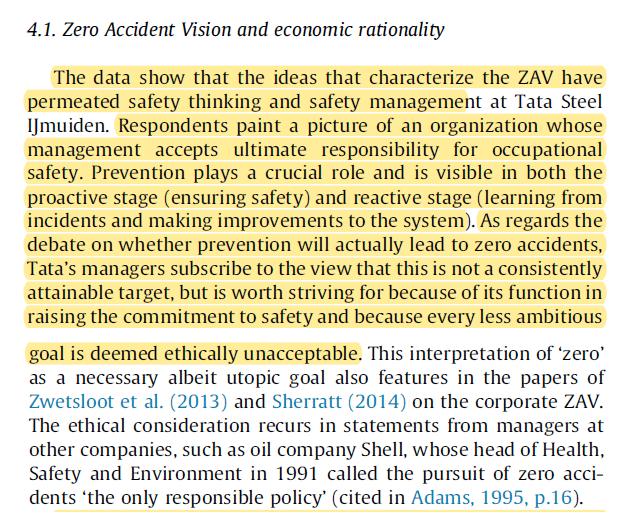
For one, ZH thinking “have permeated safety thinking and safety management at Tata Steel”, where respondents “paint a picture of an organization whose management accepts ultimate responsibility for occupational safety”.
Tata’s management may not subscribe to a literal view of zero accidents that are consistently achievable, but rather as something worth striving for as they see anything less “ethically unacceptable”.
ZH in this case is also driven by economic reasons, where management believe it will pay off through prevention and improved process control.
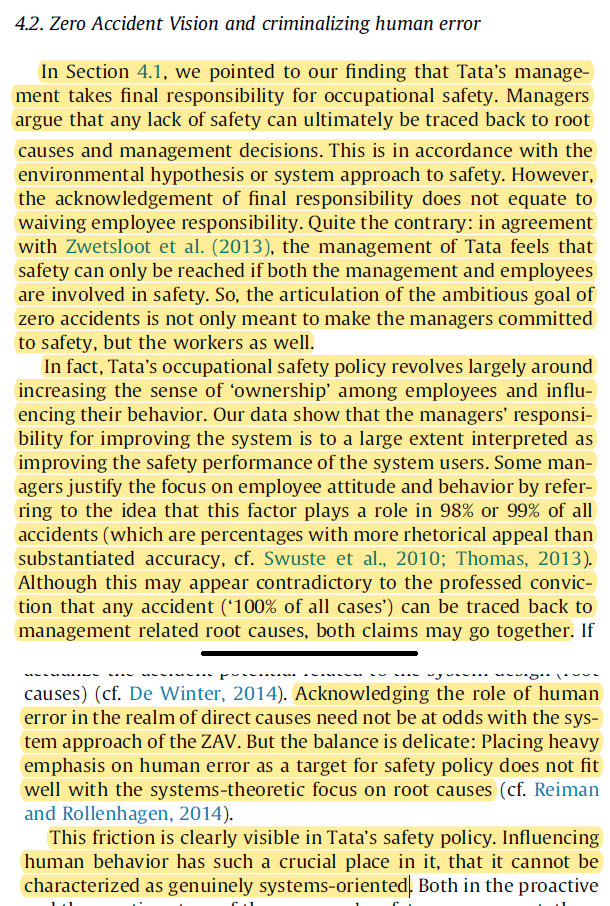
Management takes responsibility for safety, and support a collaboration with workers, and this seems to be attributed in part to the ZH vision; supporting a systems-orientation to some degree.
However, some tensions remain in practice. While managers do take responsibility, there is a thread of worker blame evident with some managers (with some citing 98-99% of accidents due to worker attitudes and behaviour).
While acknowledging the role of human performance in accidents need not be at odds with systems thinking, “the balance is delicate”.
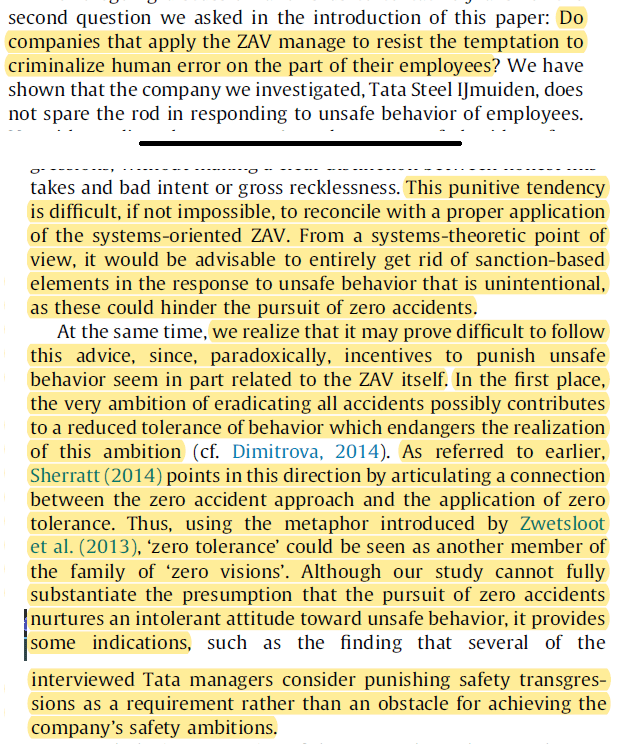
Finally, the paper explores whether “companies that apply [zero harm approaches] manage to resist the temptation to criminalize human error on the part of their employees?”.
In Tata’s example, while they promote the principles of learning from contextual and contributing factors, in practice “managers also pay considerable attention to direct causes and evidently criminalize individual safety transgressions, without making a clear distinction between honest mistakes and bad intent”.
Notably, they state “our study cannot fully substantiate the presumption that the pursuit of [ZH] nurtures an intolerant attitude toward unsafe behavior, it provides some indications”.
Authors: Twaalfhoven, S. F., & Kortleven, W. J. (2016). Safety science, 86, 57-68.

Study link: https://doi.org/10.1016/j.ssci.2016.02.010

 SafetyInsights.org
2 thoughts on “What role does zero harm play in the criminalisation of human error?”