How well do permit to work (PTW) processes in practice align to the documented process?
An upcoming summary explored the difference between WAI and WAD via FRAM modelling of a permit to work process in oil & gas.
Unsurprisingly, they found some key differences in the PTW as imagined/prescribed versus in practice.
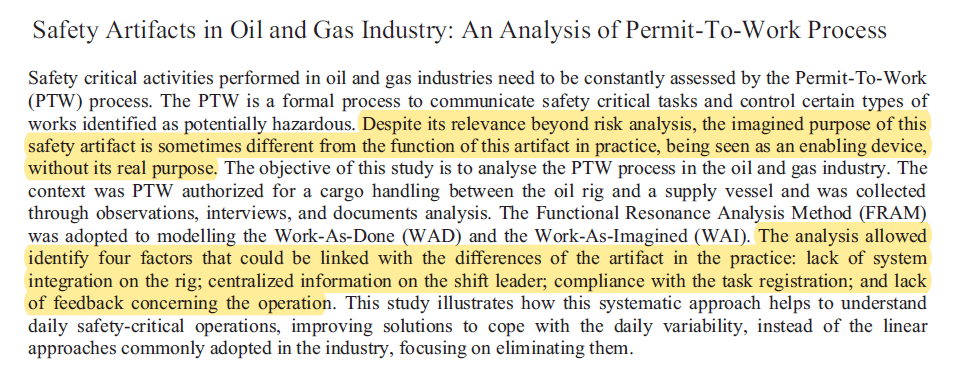
Differences between WAI and WAD in this sample related to four themes:
· lack of system integration on the rig
· centralized information on the shift leader
· compliance with the task registration
· lack of feedback concerning the operation
They also identified several key PTW functions that did not occur in practice: 1) analyse ongoing works, 2) categorise the PTW risk, 3) continue task plan and 4) modify task plan. Three other functions did occur, but were performed quite differently as prescribed.
The authors found that “information contained in the PTW was sometimes inconsistent with the risks and operations found in practice”.
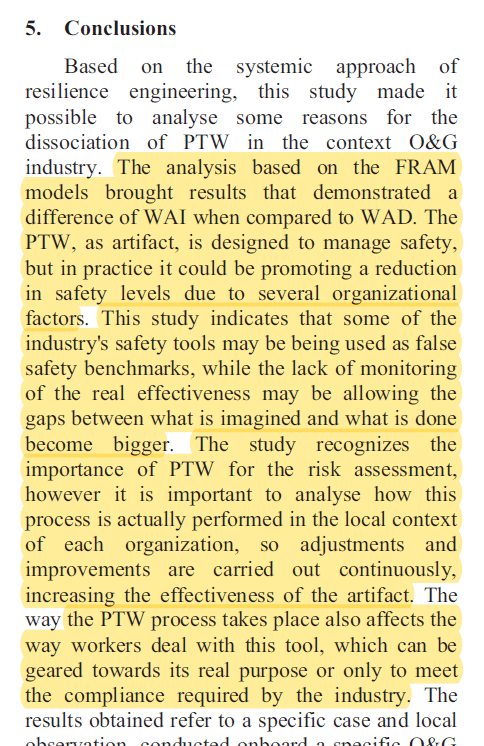
Concluding, the authors state that “The PTW, as artifact, is designed to manage safety, but in practice it could be promoting a reduction in safety levels due to several organizational factors”.
That is, reliance on the PTW system may, in some instances, be leading to a false sense of safety as it contains some critical differences in practice compared to as prescribed.
Ref: de Freitas, J. H., Pulz, M. H., da Silva Junior, F. D. A., Henriqson, É., & Júnior, M. M. C. (2023). Safety Artifacts in Oil and Gas Industry: An Analysis of Permit-To-Work Process.

 SafetyInsights.org
One thought on “Permit to work in oil & gas and a false sense of safety”