What is the quality of investigation corrective actions? Pretty poor, according to data from one industry.
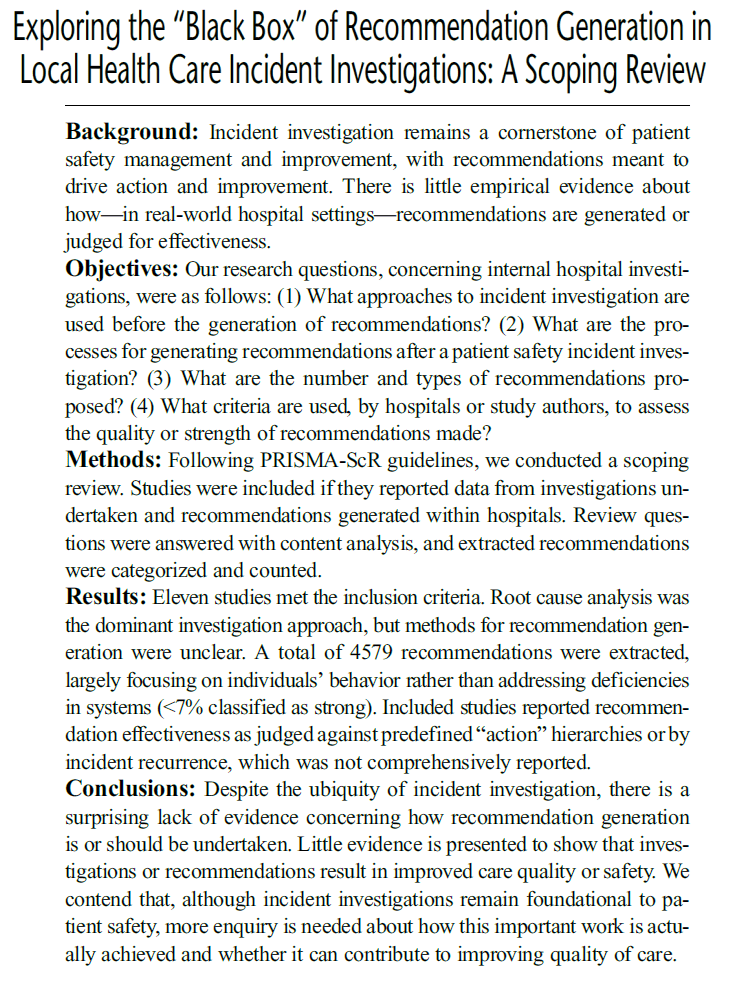
A new study from 2023 to be posted soon assessed >4k corrective actions from incident investigations from across 11 studies in healthcare.
Overall, they found that:
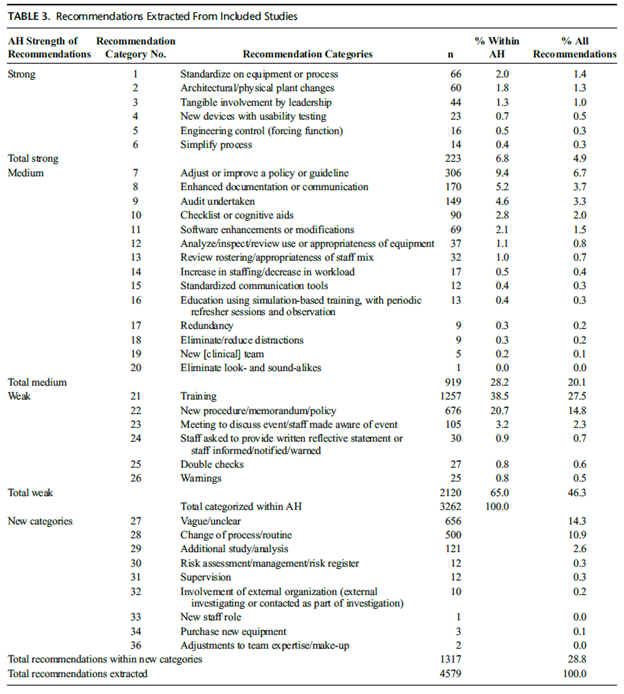
· Based on the 4k corrective actions, the vast majority “largely focus[ed] on individuals’ behavior rather than addressing deficiencies in systems”. Less than 7% were rated as strong.
· As seen below, training and education was the most frequent category of actions. This was followed by a new procedure/memorandum, change of process of policy, and adjustment to policy or guideline.
· Most recommendations largely focused on staff knowledge and skills, rather than engineering and design, and workplace improvement.
Results suggested that investigations were used to “support existing agendas rather than to generate new findings”, and investigations used to “manage scrutiny and maintain reputations”.
On the latter, investigations failed to “appreciate the complex organizational agendas as well as social and political influences on recommendation generation”; factors likely to hamper improvements in safety.
Thus, they argue that this research “suggest that the generation of recommendations is likely to be a highly complex sociopolitical process with many stages and influences”.
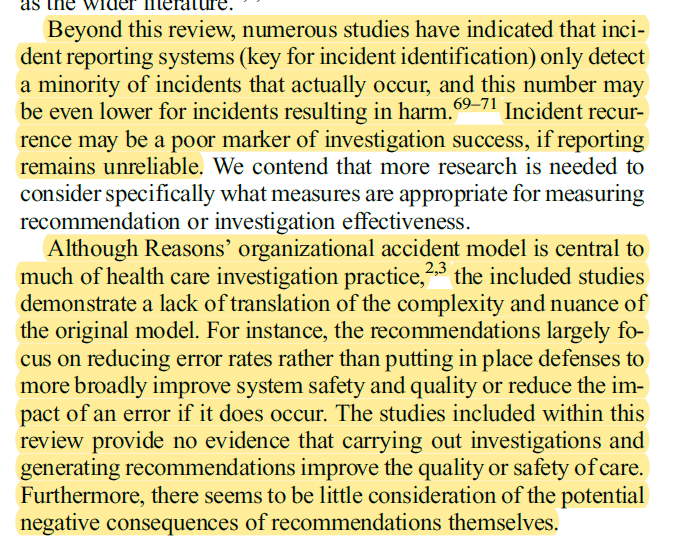
Finally, they argue that “The studies included within this review provide no evidence that carrying out investigations and generating recommendations improve the quality or safety of care”.
Ref: Lea, W., Lawton, R., Vincent, C., & O’Hara, J. (2023). Journal of Patient Safety, 10-1097.

 SafetyInsights.org
2 thoughts on “Incident investigations not found to improve safety or quality in new data”