An upcoming summary analysed 75 investigation reports from the U.S. Chemical Safety and Hazard Investigation Board (CSB), exploring the attributed causal/contributory factors and the types of corrective actions implemented.
In this study, they grouped the accident factors into errors…for some reason. Of course, these types of categories depend on worldview, definitions etc, and can be more indicative of the analysts, so I suggest you don’t take them too literally.
More interesting I think are the types of corrective actions employed by organisations in response to the process accidents.
First, analysis of the CSB reports associated the following contributory factors (image 1):
· Organisational factors was the highest contributor at 29%
· Design was the second most frequent contributor at 26%, technical error third at 23%, and human error at 20%, and natural disaster at 2%
· These categories don’t mean much on their own, of course, so the paper breaks them down
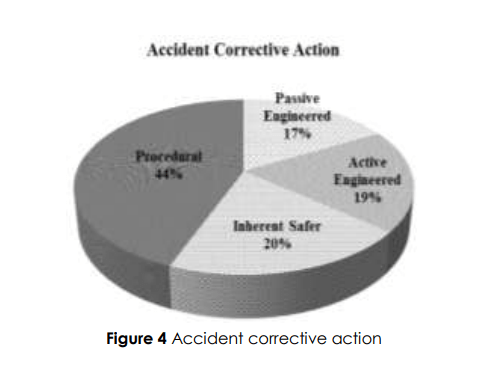
Next and more interesting, the authors highlight the mismatch between accident contributors and the hierarchy of corrective actions, such that “the contribution of design and technical errors to accident is significant i.e. 49%, however majority of the corrective action taken are based on procedural (44%) strategy”.
That is, design and technical problems should ideally be addressed with engineering rather than procedural. Not surprisingly, procedural actions were the most common response for all types of accident contributors.
Inherent safety was used in 20% of recommendations, passive engineering 17% and active engineering in 19% of recommendations.
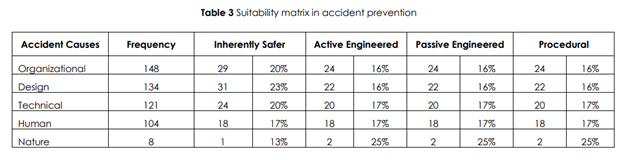
Image 2 breaks down the interventions based on the accident factor analysis.
Another finding based on this sample was that chemical accidents seem to “recur every 5 year interval”.
Moreover, in 58 cases of accidents, 26 cases (32%) reoccur within the same company, while 32 cases (39) happen in similar operations in different companies.
Of course, engineering and redesign for inherent safety can be expensive and challenging, but given that the CSB typically only investigate events that were substantial or could have been substantial, these findings are somewhat disconcerting.
Authors: Jalani, J. A., Kidam, K., Shahlan, S. S., Kamarden, H., Hassan, O., & Hashim, H. (2015). An analysis of major accident in the US chemical safety board (CSB) database. Jurnal Teknologi, 75(6).
Study link: https://citeseerx.ist.psu.edu/document?repid=rep1&type=pdf&doi=dbf85b55d0e079f3ee842ba78529d8a5e1746f2d

 SafetyInsights.org
2 thoughts on “Process accidents and the use of weaker corrective actions and improvements”