Not much to say here – a couple of extracts that I found interesting around developing ‘ideal’ rule systems.
Lots to be said here – there’s volumes of books, journal articles and specialised fields/teams that develop rules, but the attached provide a few summarised points.
Images 1 & 2 come from Hale et al. 2003.
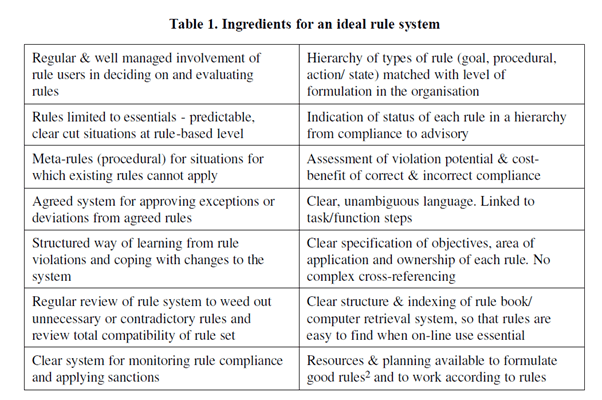
They argue “Detailed rules have a bad name; thick rule books are seen as symptoms of system pathology … yet rules are still seen as essential ingredients for controlling system safety. The cry is for better rule use and management, but there are still not very clear ideas of how and of how to avoid the main pitfalls in producing workable safety rules” [** since 2003 we now have a lot of useful guidances]
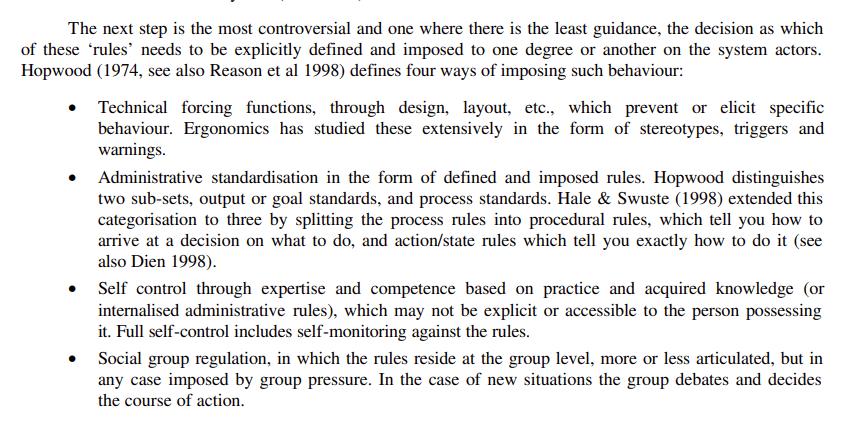
Different types of rules have been proposed. One classification is:
- Goal-based: broadly defining the goals to be achieved, eg duty of care
- Process rules: defining the process to be achieved but still allowing considerable freedom, e.g. conduct a risk assessment
- Action-based: ‘If-then’ type logics, prescribing the steps that must be taken
They note prior research has highlighted the pitfalls in “proceduralising activities in a too rigid way” resulting in “people blindly following rules simply because they are there, rather than thinking about what they are doing”. This can result in a type of ‘system paralysis’.
Other data highlighted the conflict between detailed rules and professional competence, which in some professions, rules took second preference over professional judgement.
Other data warned against the ‘uncontrolled growth of rules, driven by the discovery of exceptions to existing rules and dealt with, as a knee-jerk reaction, by adding extra rules and codicils’.
They argue for, in part, meta-rules, which describe cognitive logics and steps to help people navigate situations that fall outside of existing rules.
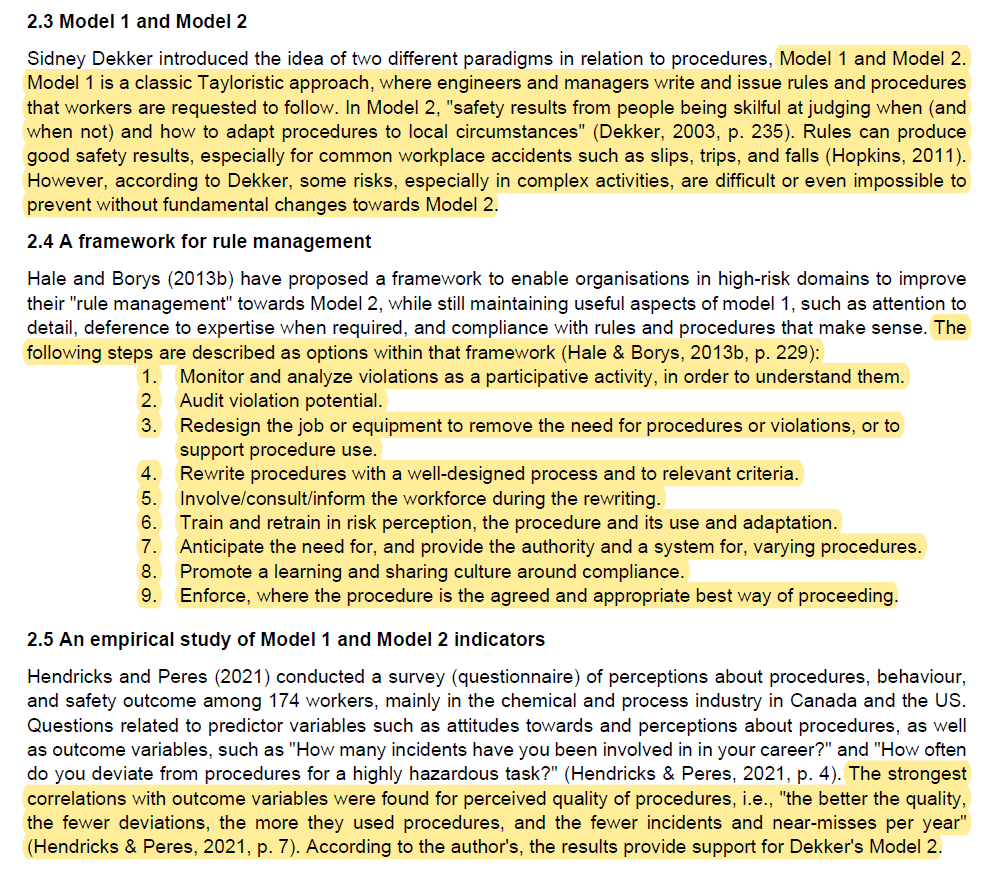
Image 3 provides more recent data from a 2022 study, outlining the model 1 / model 2 framework of rules [**note: model 1 /2 isn’t Safety-I and II].
Refs:
Hale, A. R., Heijer, T., & Koornneef, F. (2003). Management of safety rules: the case of railways. Safety Science Monitor, 7(1), 1-11.
Lindgren, M. (2022). Improving the management and use of operating instructions for process safety. Chemical Engineering Transactions, 90, 733-738.
Study links:

 SafetyInsights.org
One thought on “Ingredients for ideal rule systems and some pitfalls to avoid”