Another study highlighting potential limits of psychological safety (PS).
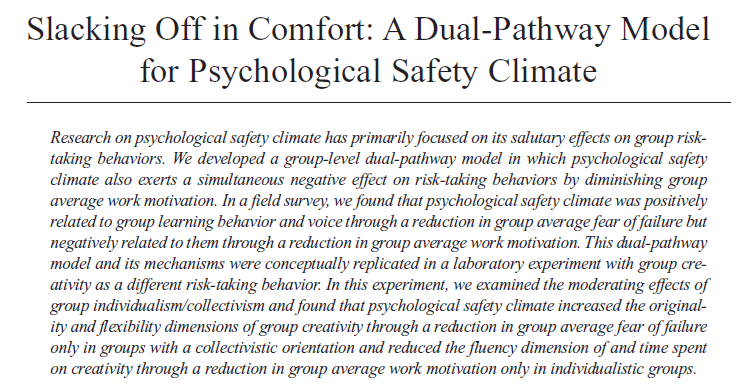
Using two protocols, they evaluated the role of PS and two mediators – fear of failure and work motivation, all as group-level constructs via aggregated group member ratings.
Summary posted next week.
Key findings:
• PS was shown to display “two concomitant, opposite effects on positive risk-taking behaviors via fear of failure and work motivation”
• PS reduced fear of failure, but only among collectivist groups
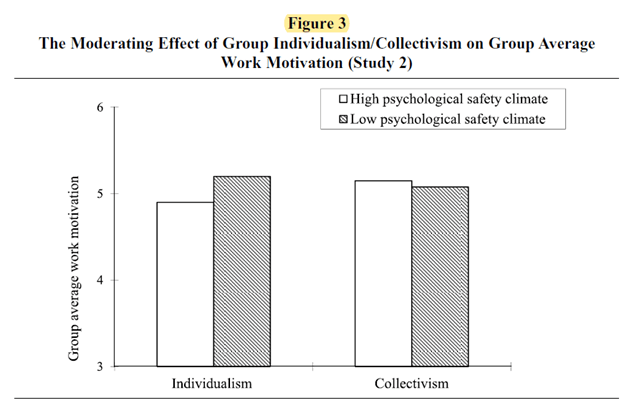
• PS negatively affected work motivation, but only among individualistic groups
• PS “reduces desirable risk-taking behaviors, including group voice, learning behavior, and creativity, through a reduction in work motivation, especially among individualistic groups”
• The findings demonstrate two opposing pathways that cancel out each other’s influence, resulting in non-significant effects of PS on risk-taking behaviours
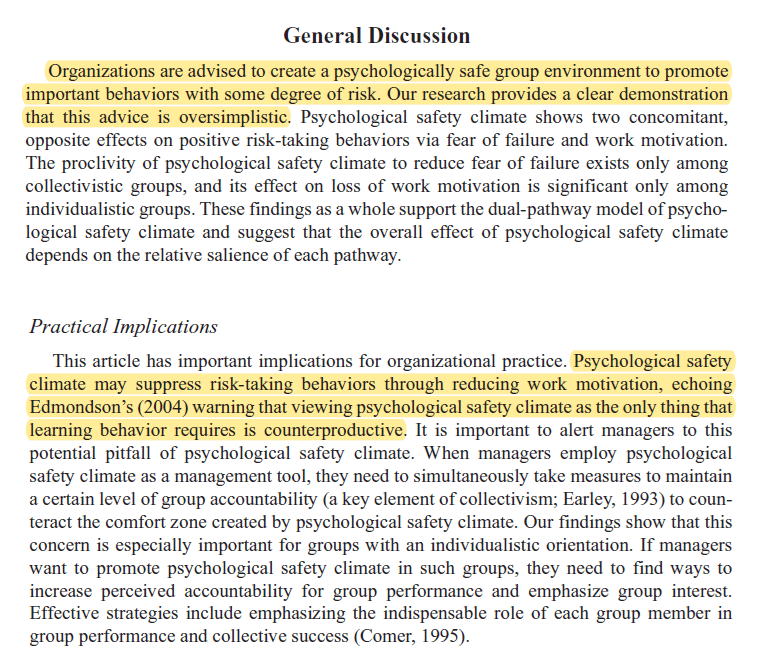
While “Organizations are advised to create a psychologically safe group environment to promote important behaviors” these results “provides a clear demonstration that this advice is oversimplistic”.
Indeed, these findings provide evidence how higher PS can reduce “desirable risk-taking behaviors, including group voice, learning behavior, and creativity, through a reduction in work motivation, especially among individualistic groups”.
In certain group configurations, higher PS may “create a “zone of egocentrism” where motivation for group success is reduced”. Hence, in individualistic groups, “low psychological safety climate is actually desirable for maintaining work motivation for group tasks”.
Authors: Deng, H., Leung, K., Lam, C. K., & Huang, X. (2019). Journal of Management, 45(3), 1114-1144.
Study link: https://doi.org/10.1177/0149206317693083

 SafetyInsights.org
One thought on “Psychological safety and the negative effects of work motivation”