“Drive safely”, “watch your speed”, and display boards with the number of crashes seem prudent on the surface. But importantly, can they have a revenge effect and increase harm? A 2022 study suggests ‘Yes’.
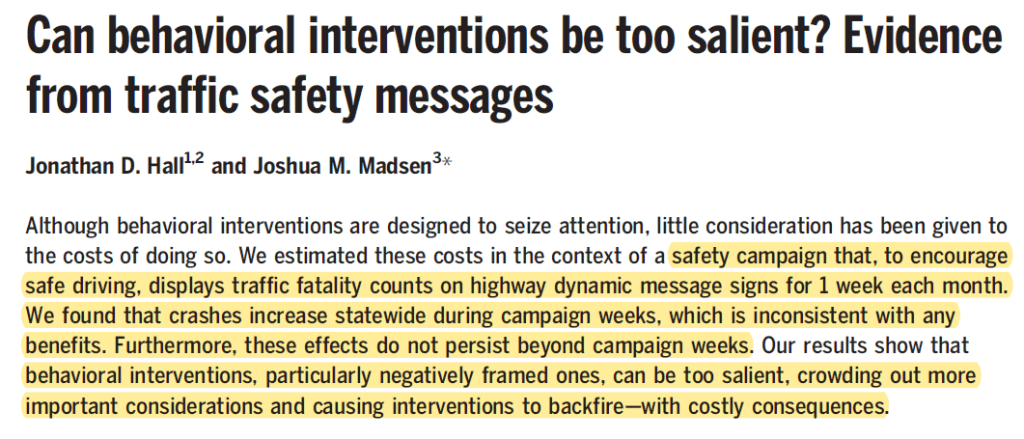
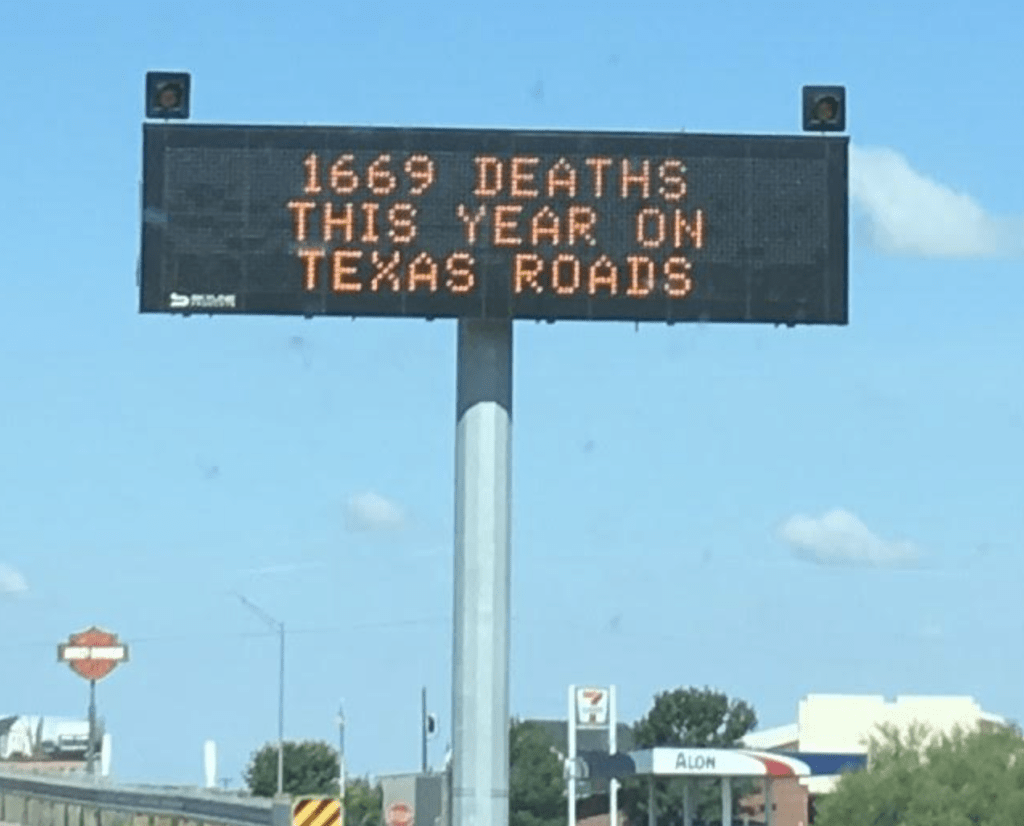
Hall and Madsen studied crash rates during campaigns in Texas where road fatality counts are displayed on dynamic message boards, e.g. “1669 deaths this year on Texas roads”.
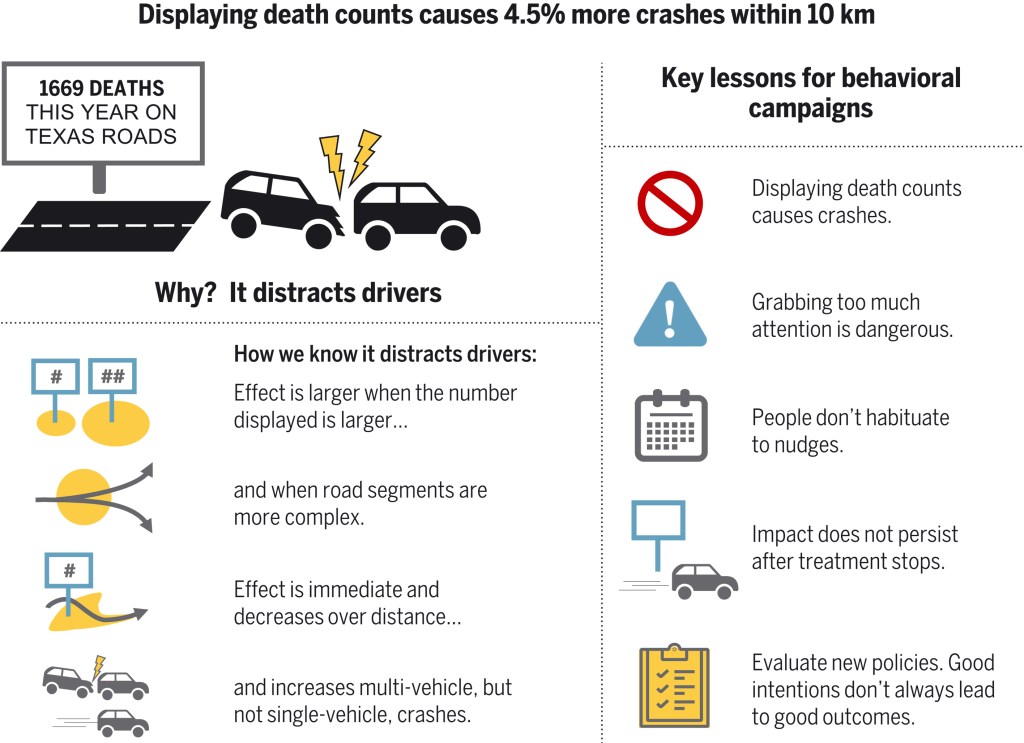
They found:
· Contrary to policy-maker expectations, displaying these fatality messages results in an additional 2600 crashes per year in Texas alone – 4.5% increase over 10kms following the board
· While they couldn’t calculate additional fatalities, but based on existing road data this could result in an additional 16 fatalities per year
· Campaign weeks where the boards are displayed result in an additional 1.52% crashes within 5km of the boards, diminishing to 1.35% over 10kms
· The increase of crashes by 4.5% is equivalent to increasing the speed limit by 3-5 mph or reducing the number of highway troopers by 6-14%
In explaining the mechanisms how, they propose distraction and cognitive load as key. E.g.:
· Attention and working memory are scarce resources, and additional distractions on the road elevates cognitive load; affecting the ability to process information
· High levels of anxiety or arousal can worsen performance, and shift attention from one task to another (like overthinking)
· Supporting their argument of distraction – more harm is done when the number of fatalities in the message is larger compared to smaller; hence, bigger statistics are more distracting than smaller ones
· When the number of deaths is small, displaying a fatality messages the number of crashes by 2.8%; but this reverses as the number of fatalities displayed increases
· The number of crashes related to the message boards increases over the year, as the number of road fatalities also naturally accumulates
· The increase of crashes is larger in areas with higher cognitive loads on drivers, e.g. road design and complexity
In concluding, they note that while there is still open debate whether billboards increase crashes, recent simulator studies suggests that billboards can result in greater speed and lane position variability, and crashes.
And while the evidence suggests that the use of fatality boards can help reduce crash frequency in some circumstances, “these benefits do not outweigh the harm done”, but they do show that “behavioral interventions can help if they are not too salient and are delivered when individuals’ cognitive loads are low”.
Although not discussed, I also wonder about factors like behavioural adaptation and risk compensation.
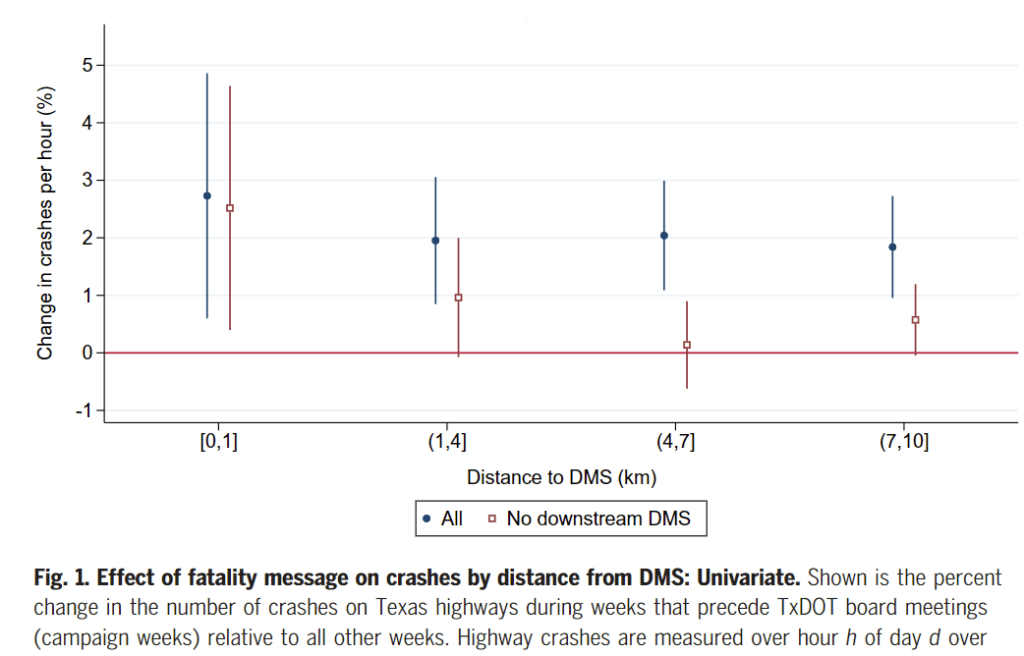
Ref: Hall, J. D., & Madsen, J. M. (2022). Science, 376(6591), eabm3427.
Study link: https://doi.org/10.1126/science.abm3427

 SafetyInsights.org
One thought on “Can behavioral interventions be too salient? Evidence from traffic safety messages”