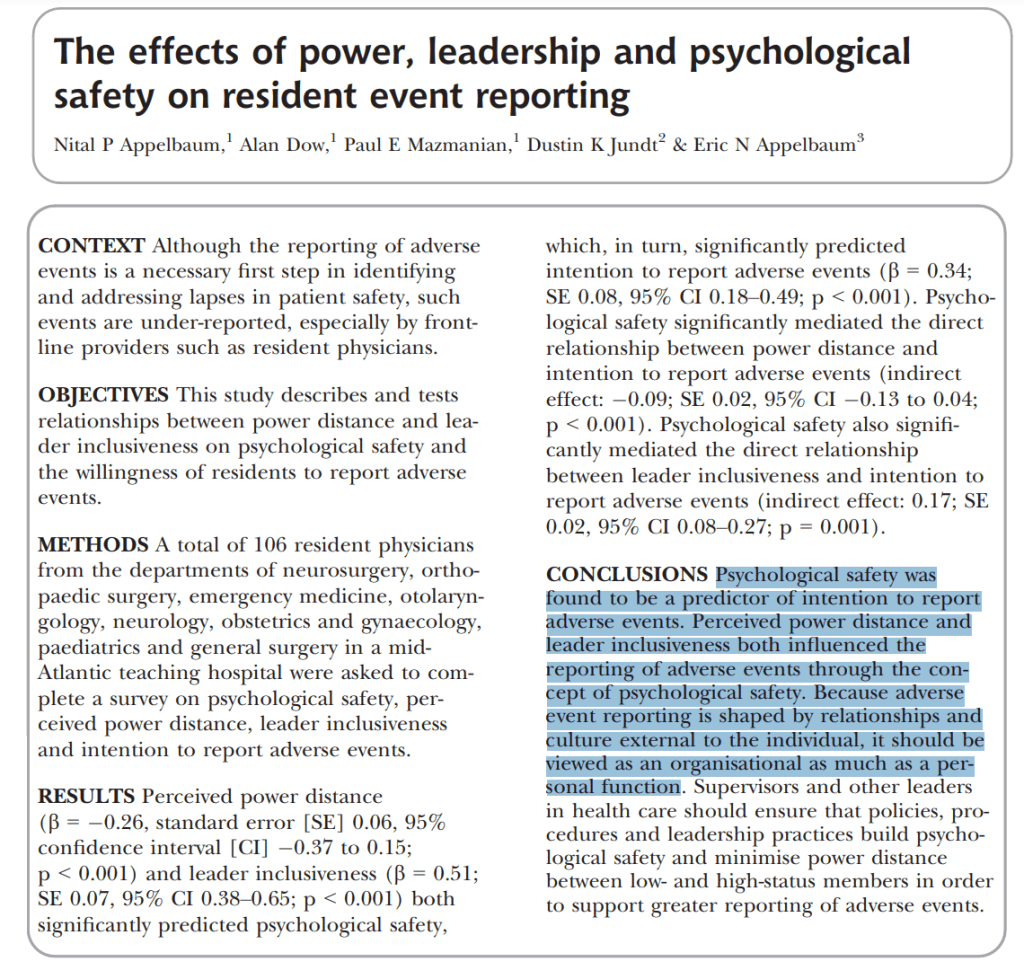
This open access paper explored the relationships between power distance and leader inclusiveness on psychological safety, and resident willingness to report adverse events.
Sample was 106 residents in a US teaching hospital.
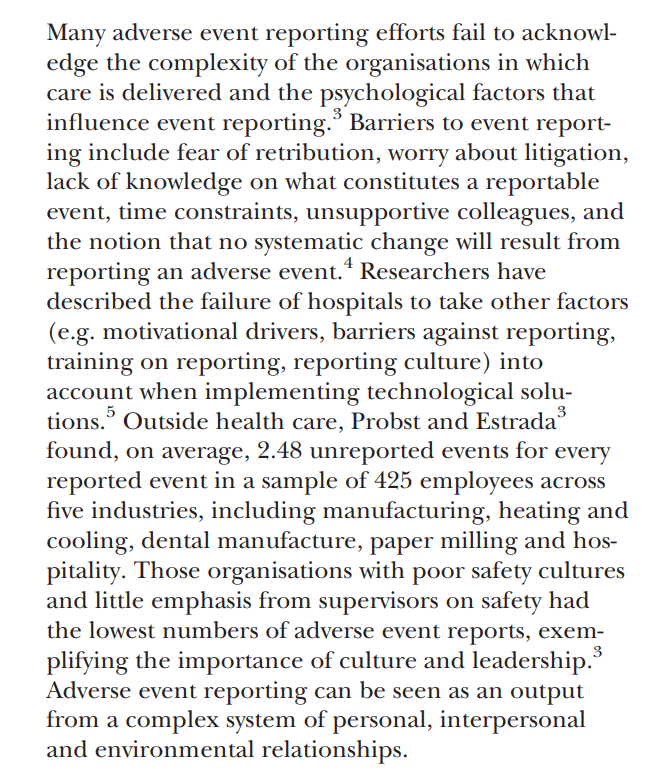
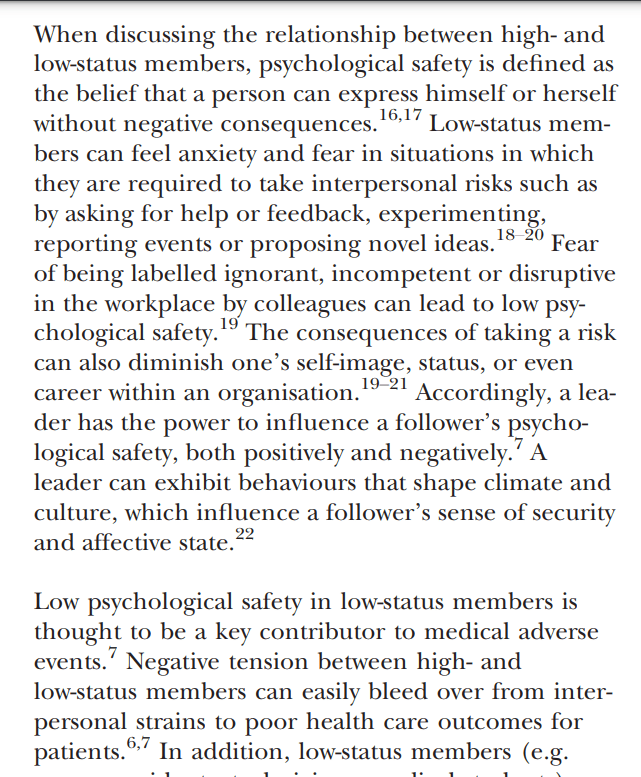
Key findings:
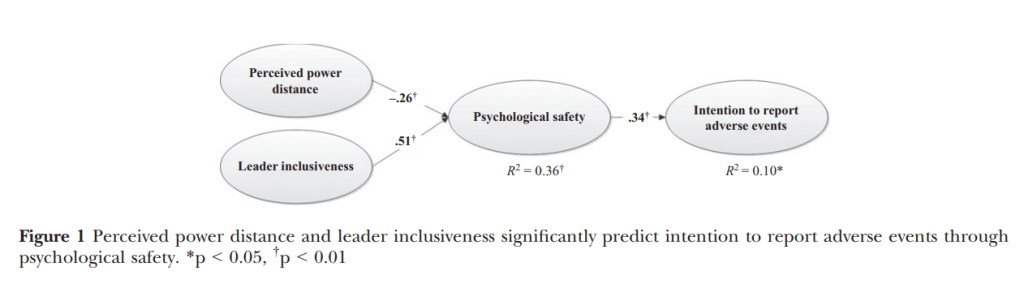
· Perceived power distance and leader inclusiveness both significantly predicted psychological safety
· This in turn significantly predicted intention to report adverse events
· Psychological safety significantly mediated the direct relationship between power distance and intention to report
· It also significantly mediated the direct relationship between leader inclusiveness and intention to report adverse events
· Perceived power distance and leader inclusiveness influenced the reporting of adverse events via psychological safety
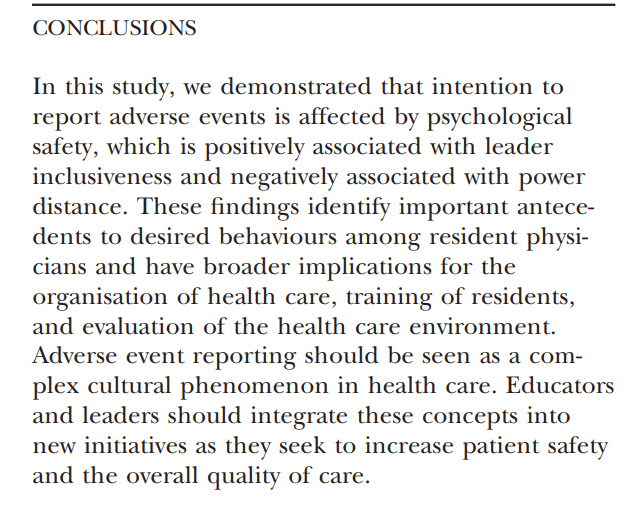
They argue that “Because adverse event reporting is shaped by relationships and culture external to the individual, it should be viewed as an organisational as much as a personal function”.
Hence, “Adverse event reporting should be seen as a complex cultural phenomenon in health care”.
Moreover, efforts should be directed to minimising power distances between low- and high-status members.
Authors: Appelbaum, N. P., Dow, A., Mazmanian, P. E., Jundt, D. K., & Appelbaum, E. N. (2016). Medical education, 50(3), 343-350.
Study link: https://bcpsqc.ca/wp-content/uploads/2018/03/3.0-Effects-of-power-leadership-and-psychological-safety.pdf

 SafetyInsights.org
2 thoughts on “The effects of power, leadership and psychological safety on resident event reporting”