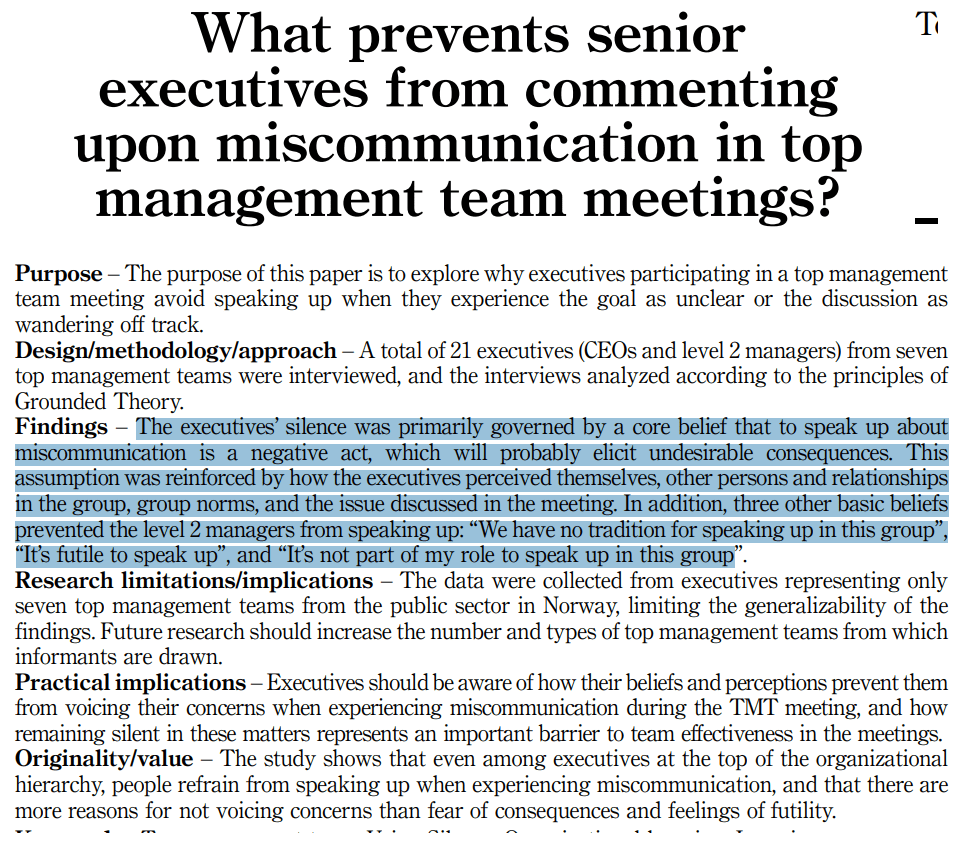
What factors prevent senior executives from speaking up and voicing opinions in response to miscommunication during meetings?
This interesting study explored such factors of silence among 21 CEOs and senior managers across 7 firms.
Not a summary, but you can read the full paper yourself.
Prior research found that silence was linked to feelings of fear and feelings of futility, 1) fear of being labelled or viewed negatively, or of retaliation, 2) feelings of futility, having a sense that speaking up won’t make a difference.
This study identified for basic beliefs impacting silence:
1) Speaking up about miscommunication during the management meeting is a negative act of behaviour which will probably elicit undesirable consequences for that person or others, or impact interpersonal relationships
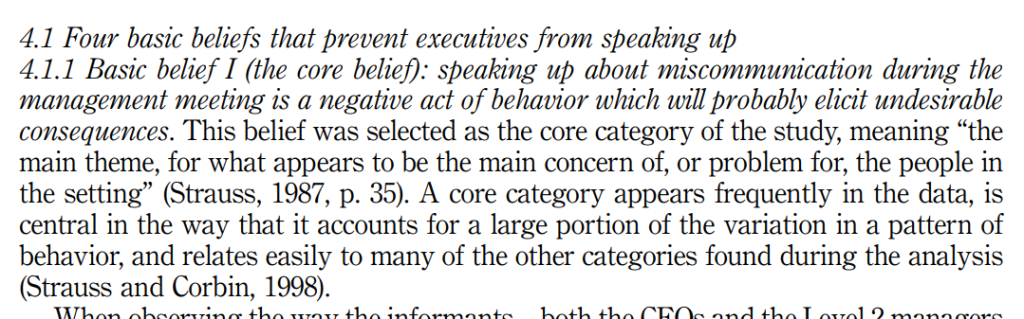
2) We have no tradition for speaking up when experiencing miscommunication in management meetings, hence it would feel awkward or unnatural to comment on other members communication
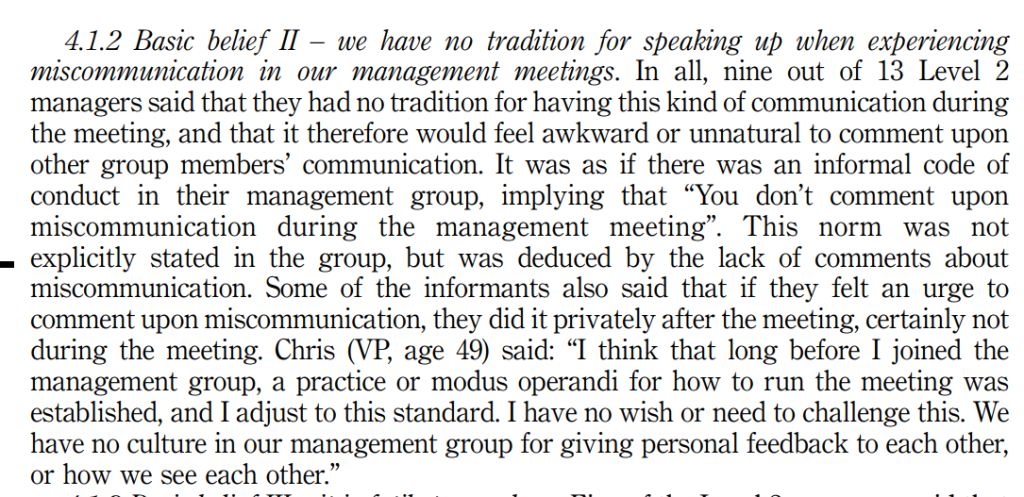
3) It’s futile to speak up, with some feeling it was heavy or burdensome to speak up so they refrained from doing it
4) It’s not part of my role in the top management team meeting to speak up about communication
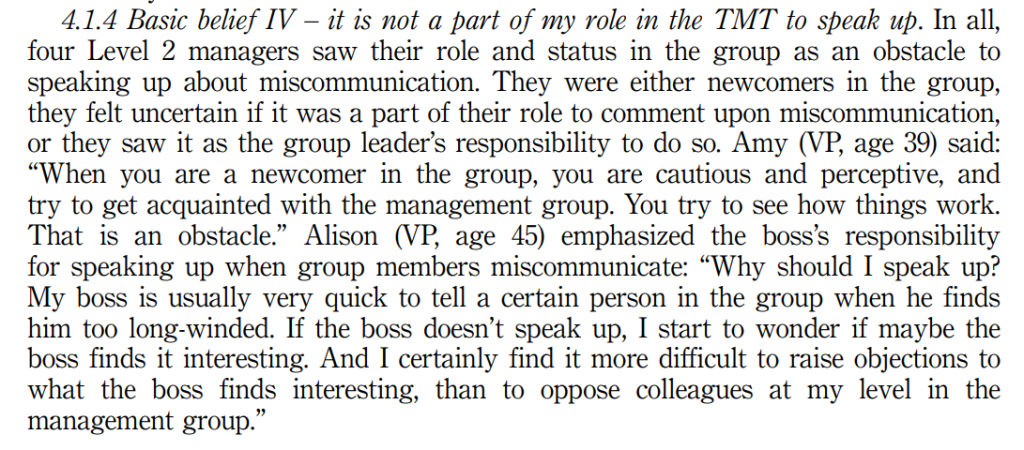
The study also identified secondary factors contributing to silence:
1) Perception of others: factors like other members’ role and status, personality, talents and more made it difficult for some to speak up
2) Perception of oneself: group members perceive themselves in ways that make it difficult for them to comment upon miscommunication during the management meeting, like aspects of their personality, lack of competence, perceptions of politeness, friendly, cowardly, fearful and more
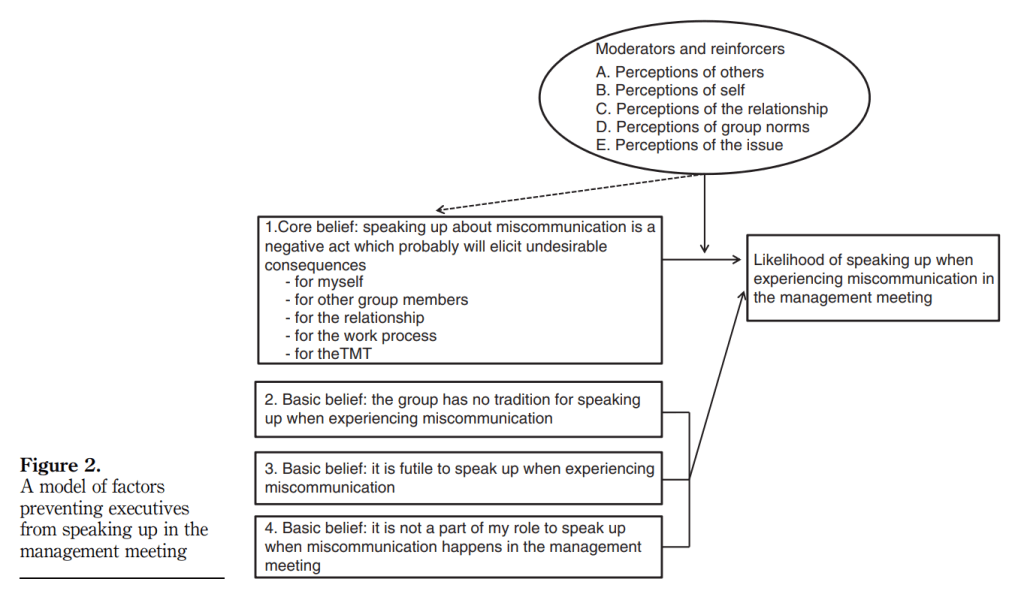
The study concludes that “barriers to voice behavior not only exist at the bottom of the organizational hierarchy, but also in the executive suite. Some of the barriers are mainly experienced in sideways and upwards communication, but the main barrier – seeing commenting upon miscommunication as a negative act of behavior – applies for communication in all directions within the [top management team meeting]”.
Importantly, “As the leader of the [team meeting], the CEO has a special responsibility for making it safe for the members to speak up during management meetings. Therefore CEOs should be aware of the way in which they speak, respond to other members and behave in the TMT. Specifically, CEOs should actively reinforce learning behaviors like asking clarifying questions, commenting when discussions wander off track, and giving feedback on miscommunication”.
Note: Although the author had no data on psychological safety, they discuss the probable importance of this construct in the top leadership team environments.
Ref: Henning Bang, (2012),”What prevents senior executives from commenting upon miscommunication in top management team meetings?”, Qualitative Research in Organizations and Management: An International Journal, Vol. 7 Iss: 2 pp. 189 – 208
Study link: https://www.academia.edu/download/52826441/What_prevents_senior_executives_from_com20170425-32005-zfbg3g.pdf

 SafetyInsights.org
One thought on “What prevents senior executives from commenting upon miscommunication in top management team meetings?”