I’m re-reading Robert R Hoffman’s et al.’s excellent book “Accelerated Expertise: Training for high proficiency in a complex world” and they cited this paper (also from Hoffman et al.).
It explores human-centred computing from a procurement perspective, but actually is a really cool read about human-centred design.
They talk about the “trap of designer-centered design”, being that designers may specify the requirements and ultimately “force the human user to execute the designer’s plan”.
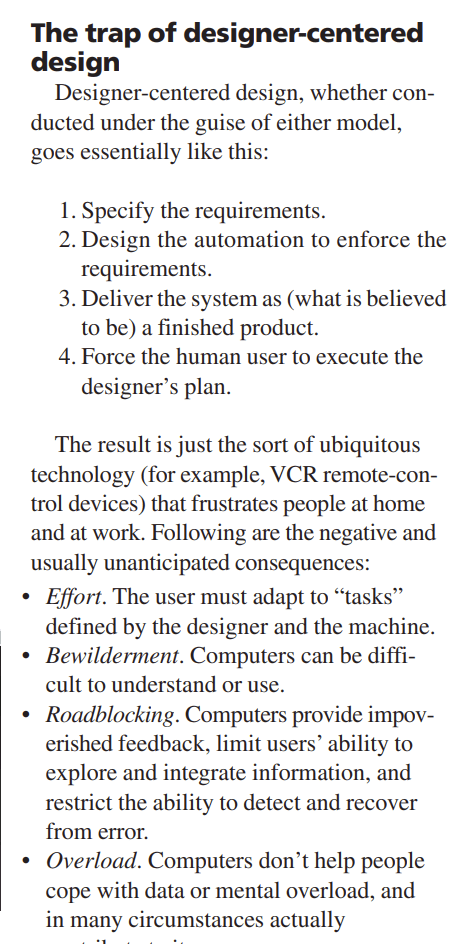
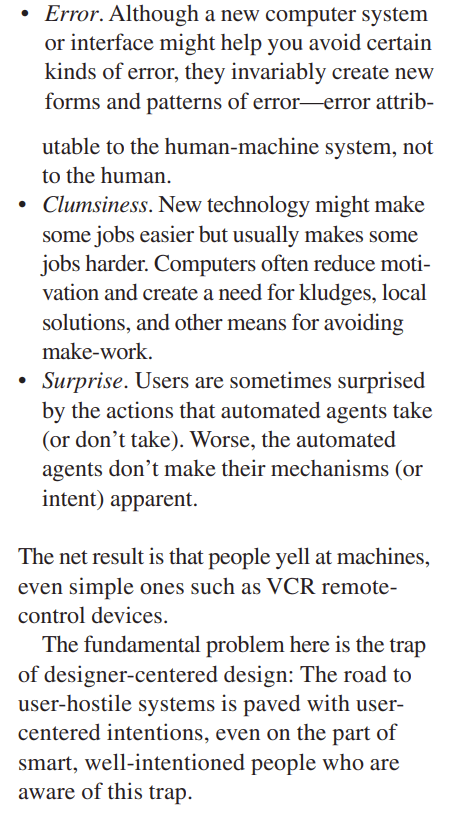
This includes negative effects like:
- Extra effort from users
- Bewilderment
- Roadblocking, where they limit user ability
- Overload
- Error/performance variability
- Clumsiness
- Surprise
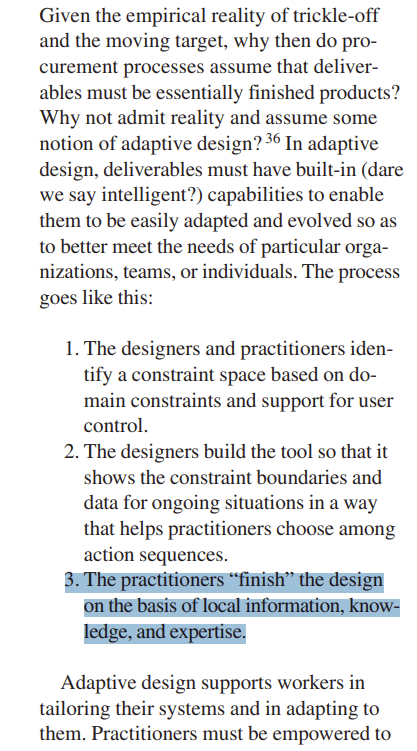
They also discuss other themes, including adaptive design and the adaptability of people.
It’s an easy read and worth your time.
Ref: Hoffman, R. R., & Elm, W. C. (2006). HCC implications for the procurement process. IEEE Intelligent Systems, 21(1), 74-81.

 SafetyInsights.org
One thought on “The traps of designer centred design, and the benefits of human-centred design”