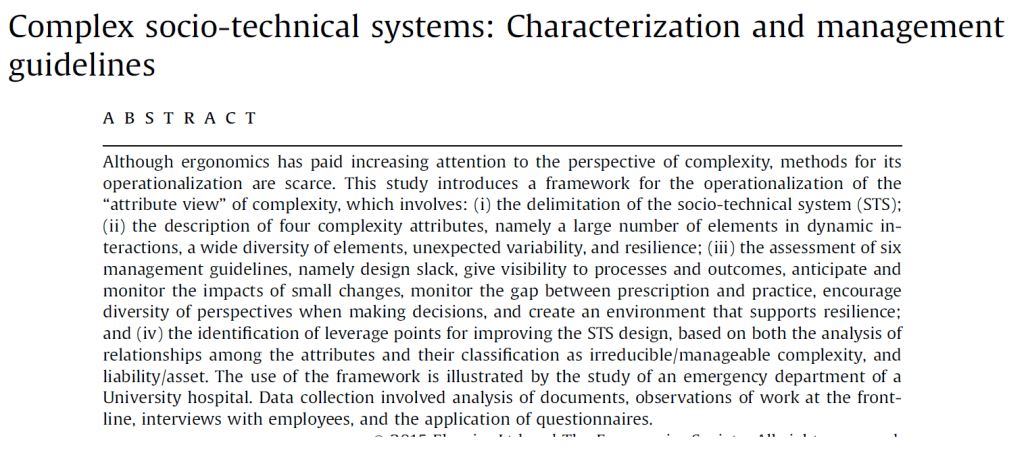
This interesting paper that you can read in full operationalised a complexity attribute framework, involving:
(i) the delimitation of the socio-technical system (STS)
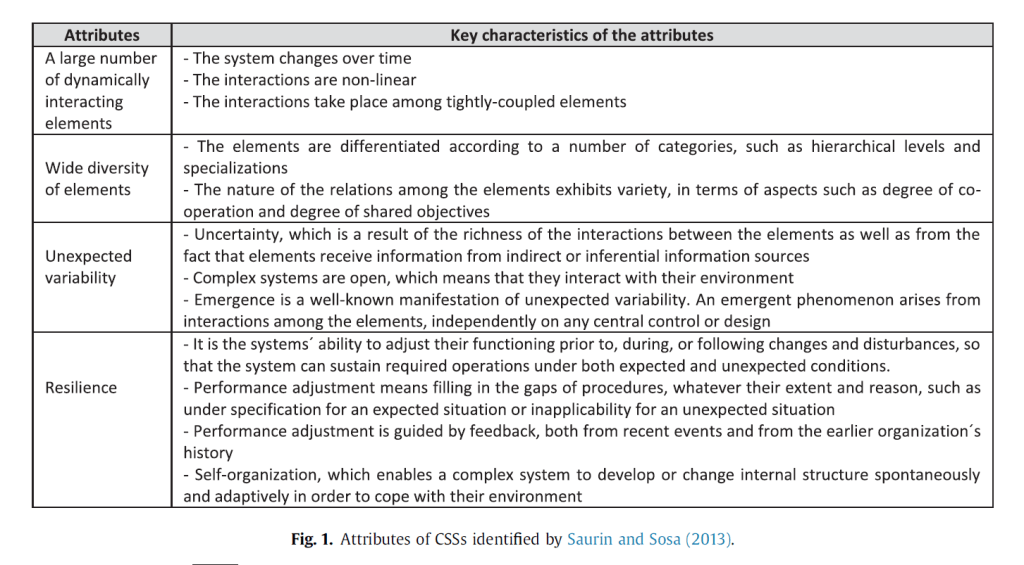
(ii) the description of four complexity attributes, namely a large number of elements in dynamic interactions, a wide diversity of elements, unexpected variability, and resilience
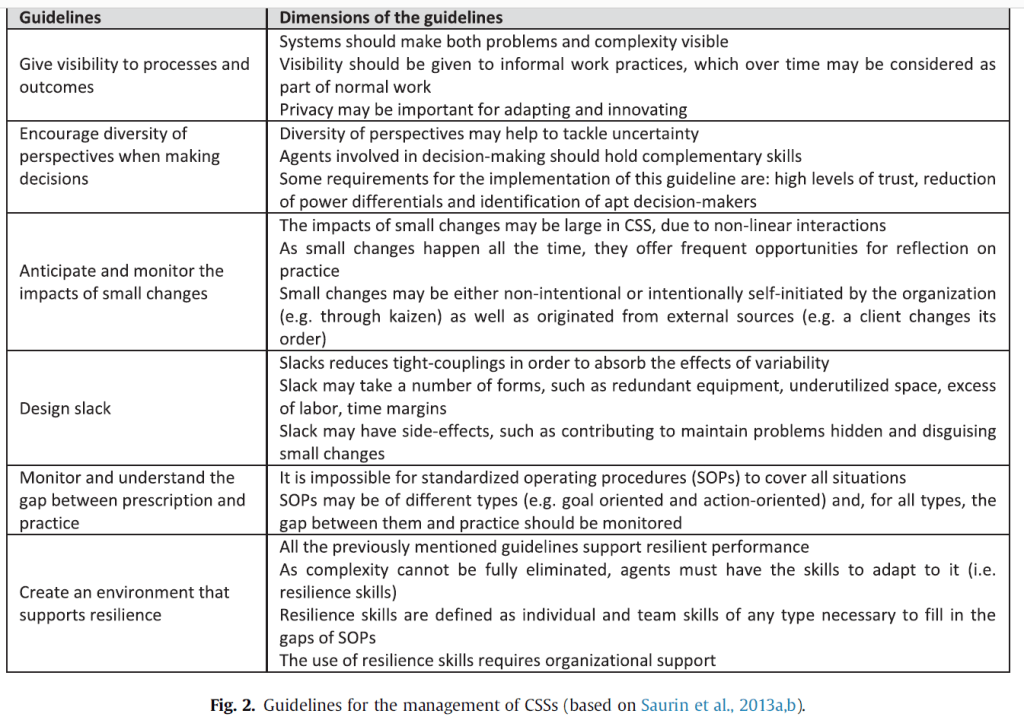
(iii) the assessment of six management guidelines, namely design slack, give visibility to processes and outcomes, anticipate and monitor the impacts of small changes, monitor the gap between prescription and practice, encourage diversity of perspectives when making decisions, and create an environment that supports resilience
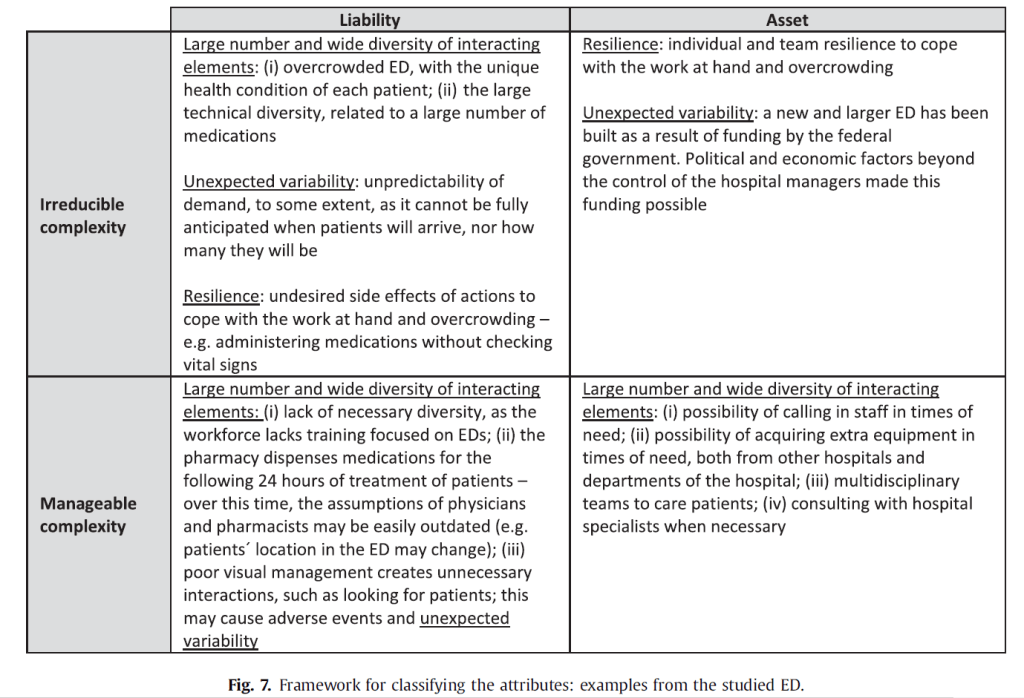
(iv) the identification of leverage points for improving the STS design, based on both the analysis of relationships among the attributes and their classification as irreducible/manageable complexity, and liability/asset.
This framework was then applied in an emergency department.
It’s a pretty good read for how to apply systems and complexity thinking.
Some specific findings were that:
· Two attributes mostly related to structural complexity—the number of elements and diversity of elements—were more strongly correlated with unexpected variability, than with resilience
· Which, according to the authors “should be a concern, as it indicates that the interactions among the elements that form the [Emergency Department] have been mostly a source of potential problems”
· Resilient capacities were said to be largely unexplored, and when instances existed, “occurred mostly at the individual and team levels (e.g. strategies for prioritizing tasks), without adequate organizational support”
· For unexpected variability, greater external sources (patients, diversity of symptoms, constraints) result in greater variability, whereas internal sources of variability “might be an asset for resilience”
· Hence, “it seems that unexpected variability is a concern mostly when the complexity brought from the external environment finds no compatible resources for its management within the internal environment”
· They also found that “slack is not necessarily designed into the system, and so it is proposed that the guideline design slack has a dimension related to taking advantage of opportunistic slack”
· Designed slack indicates spare resources and capacities, and thus, this department was found to operate with thin margins
· Opportunistic slack in comparison refers to “isolated and informal initiatives by staff in times of need. Examples of such type of slack include locating a specific piece of equipment at another hospital”; or the creation of slack via local reorganisation
· It’s argued that “designed slack arises from proactive organizational resilience, while opportunistic slack relies on reactive individual and team resilience, which is often overused, and misused”
Ref: Righi, A. W., & Saurin, T. A. (2015). Applied ergonomics, 50, 19-30.

 SafetyInsights.org
One thought on “Complex socio-technical systems: Characterization and management guidelines”