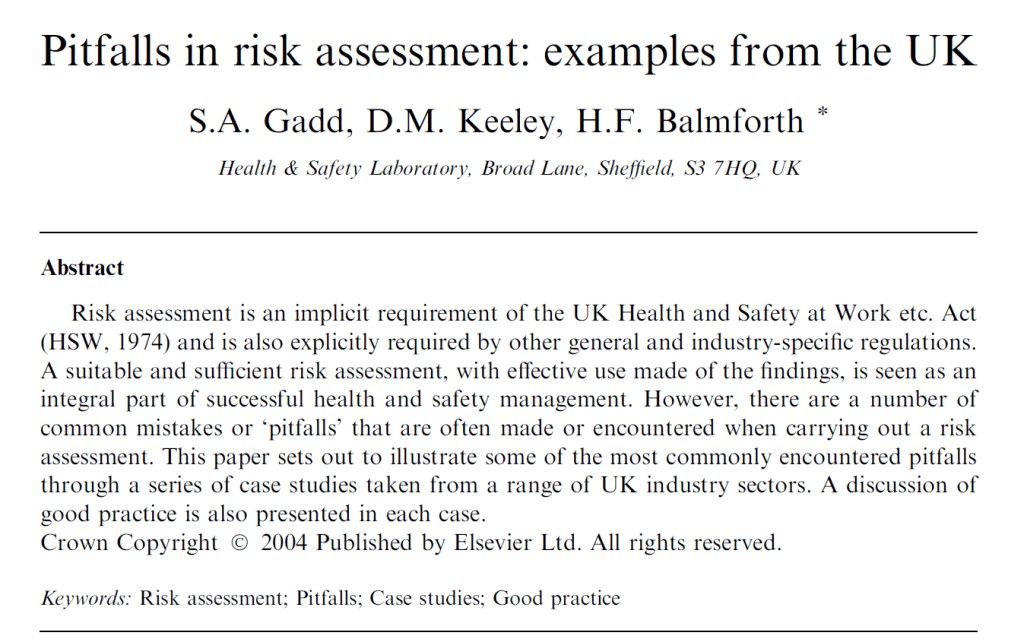
This 2004 paper covered a number of pit falls and misuses in risk assessment.
I’ll break it into two posts.
Pit falls:
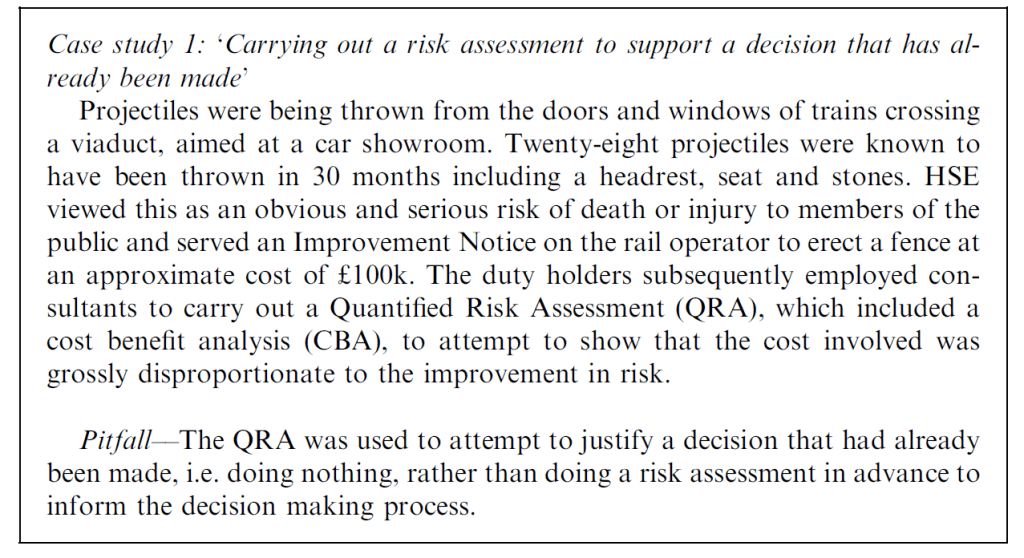
· Carrying out a risk assessment to support a decision that has already been made (image 2)
· Using a generic assessment when a site-specific assessment is needed – here a range of different hazards from different areas are assessed in the single assessment
· Carrying out a detailed quantified risk assessment without first considering whether any relevant good practice was applicable, or when relevant good practice exists
· Carrying out a risk assessment using inappropriate good practice
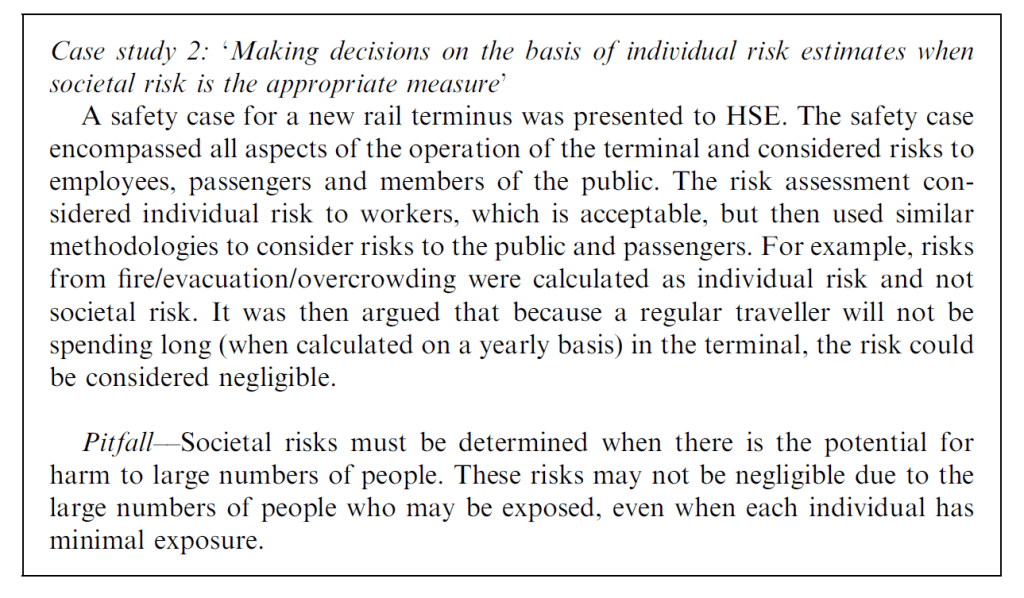
· Making decisions on the basis of individual risk estimates when societal risk is the appropriate measure (image 3)
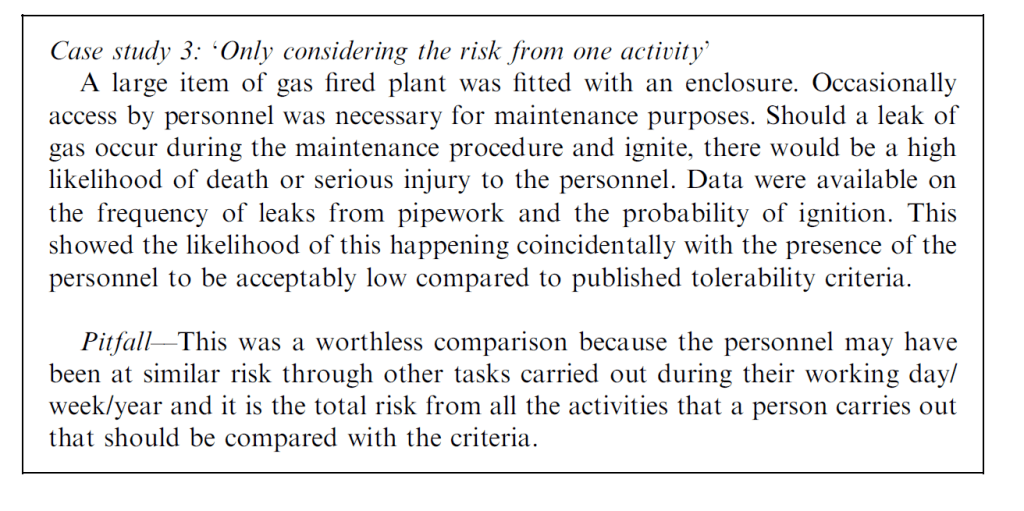
· Only considering the risk from one activity (image 4)
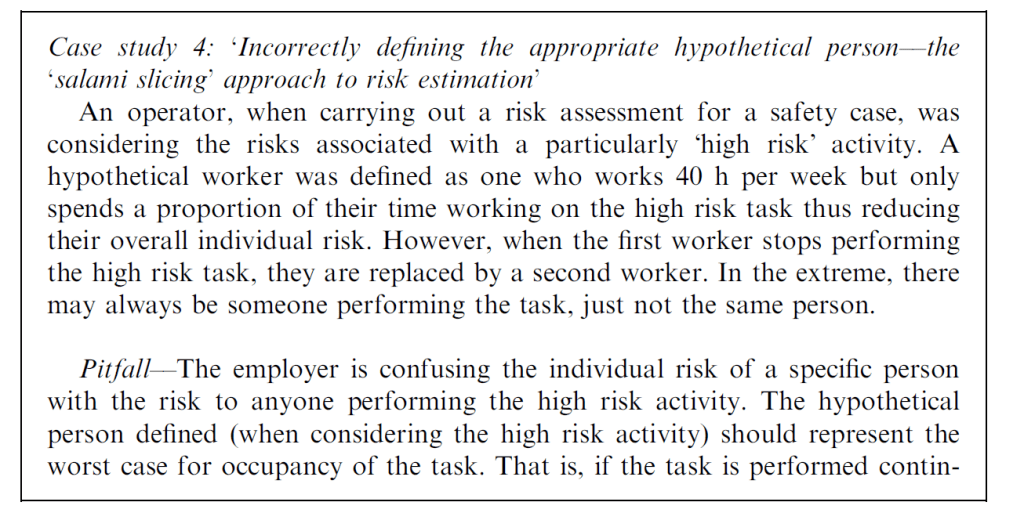
· Dividing the time spent on the hazardous activity between several individuals––the ‘salami slicing’ approach to risk estimation (image 5)
· Not involving a team of people in the assessment or not including employees with practical knowledge of the process/activity being assessed
· Ineffective use of consultants, where their over-reliance can dilute internal responsibility for risk assessment and control
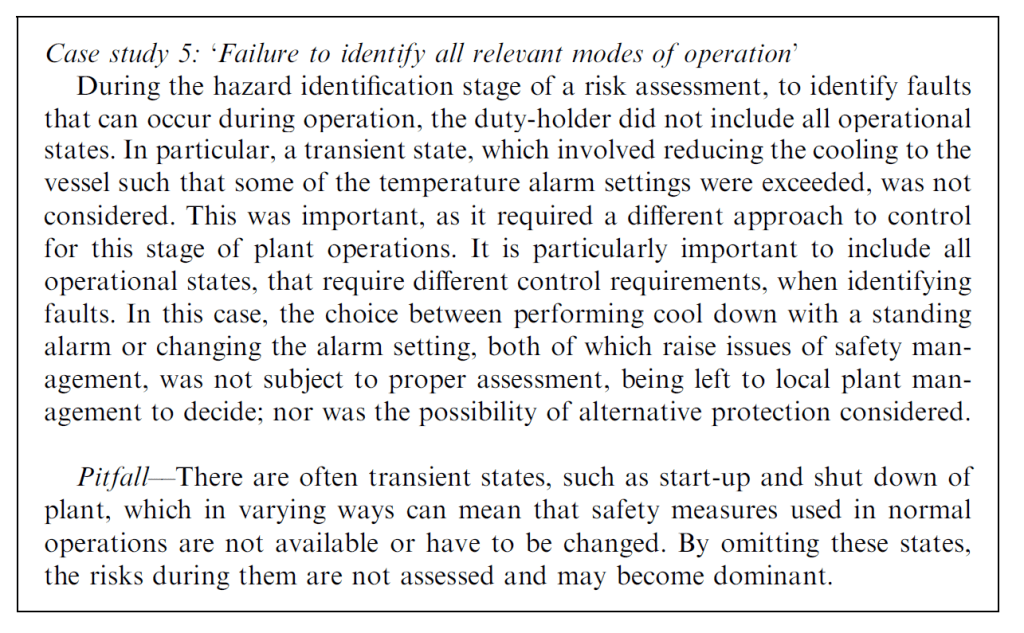
· Failure to identify all hazards associated with a particular activity (image 6)
Authors: Gadd, S. A., Keeley, D. M., & Balmforth, H. F. (2004). Pitfalls in risk assessment: examples from the UK. Safety Science, 42(9), 841-857.
Study link: https://doi.org/10.1016/j.ssci.2004.03.003

 SafetyInsights.org
One thought on “Pitfalls in risk assessment – part 1”