This NASA report on ‘Human Performance Contributions to Safety in Commercial Aviation’ was a really interesting read.
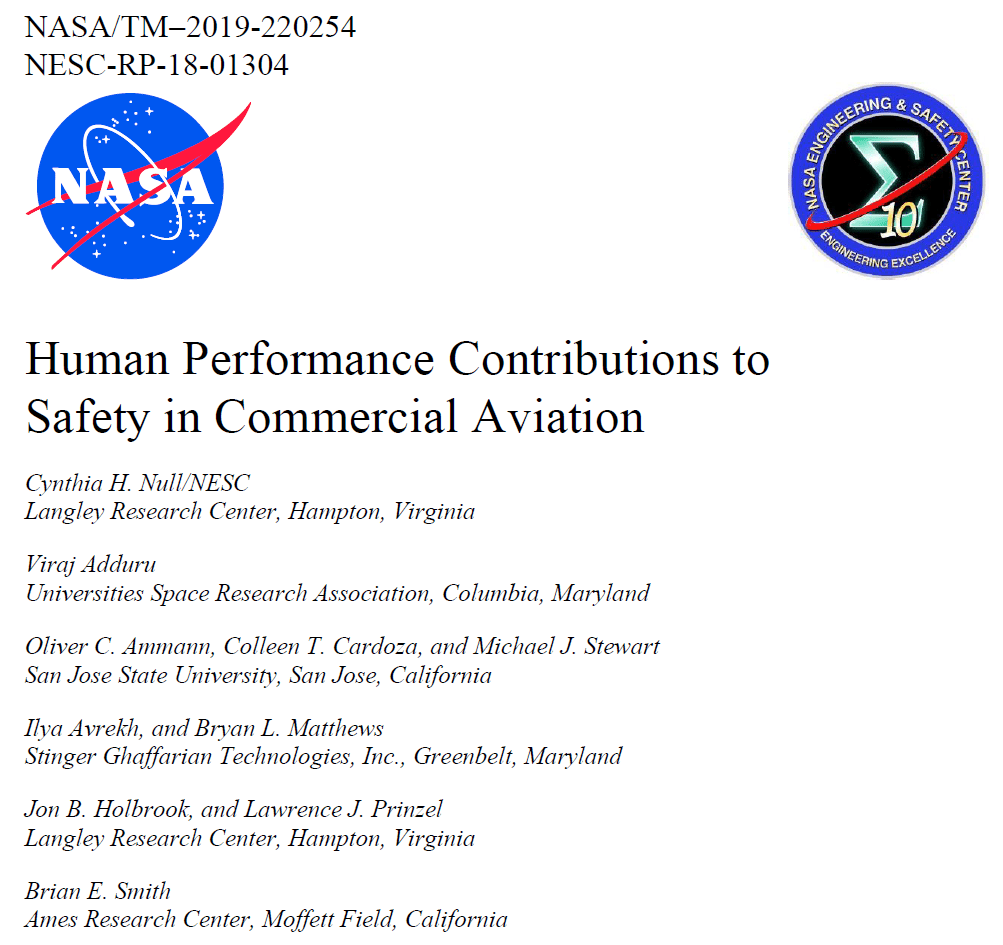
They note that every day in aviation, pilots, ATC and other personnel perform “countless correct judgments and actions in a variety of operational environments”.
These judgements and actions are “often the difference between an accident and a non-event. Ironically, data on these behaviors are rarely collected or analyzed”.
Large volumes of data are collected on failures and errors that result in infrequent incidents, but system design and safety management decisions are therefore based on a small sample of non-representative safety data, rather than the larger body of data on behaviours that result in routine successful outcomes.
Attached are some of their findings.
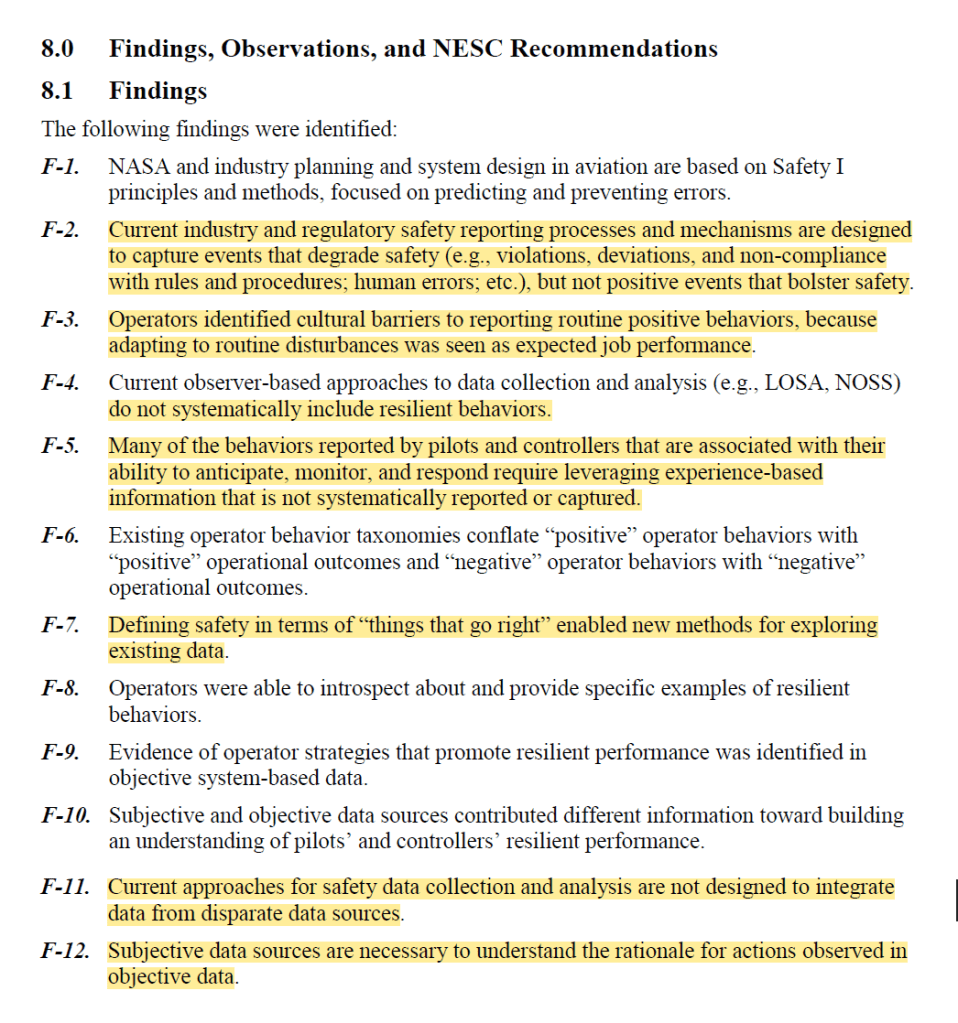
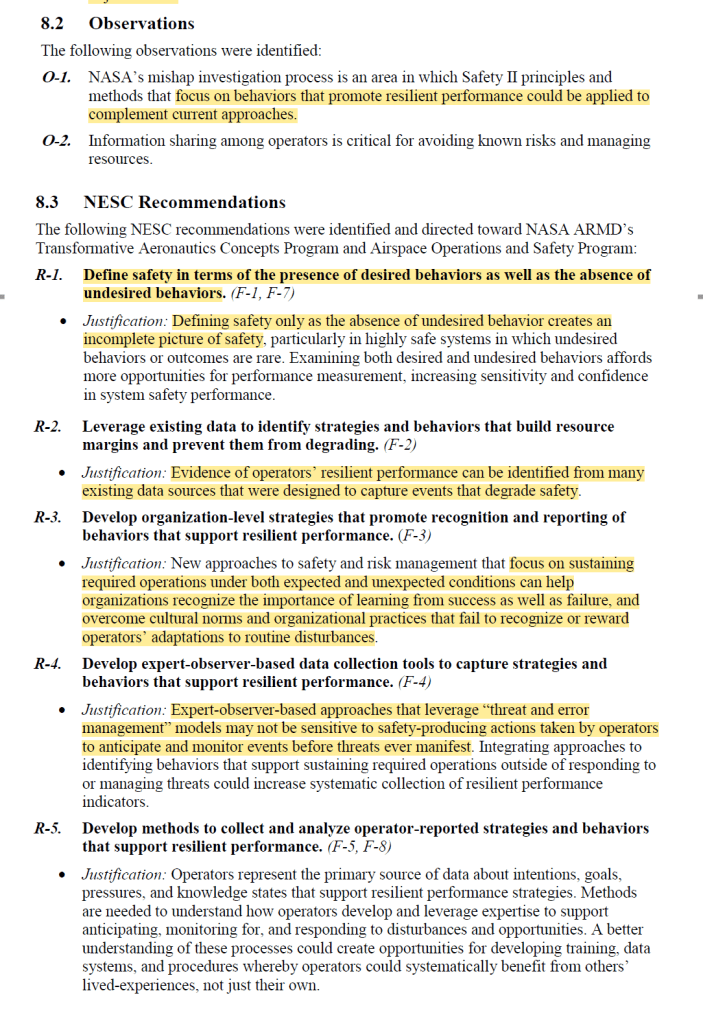
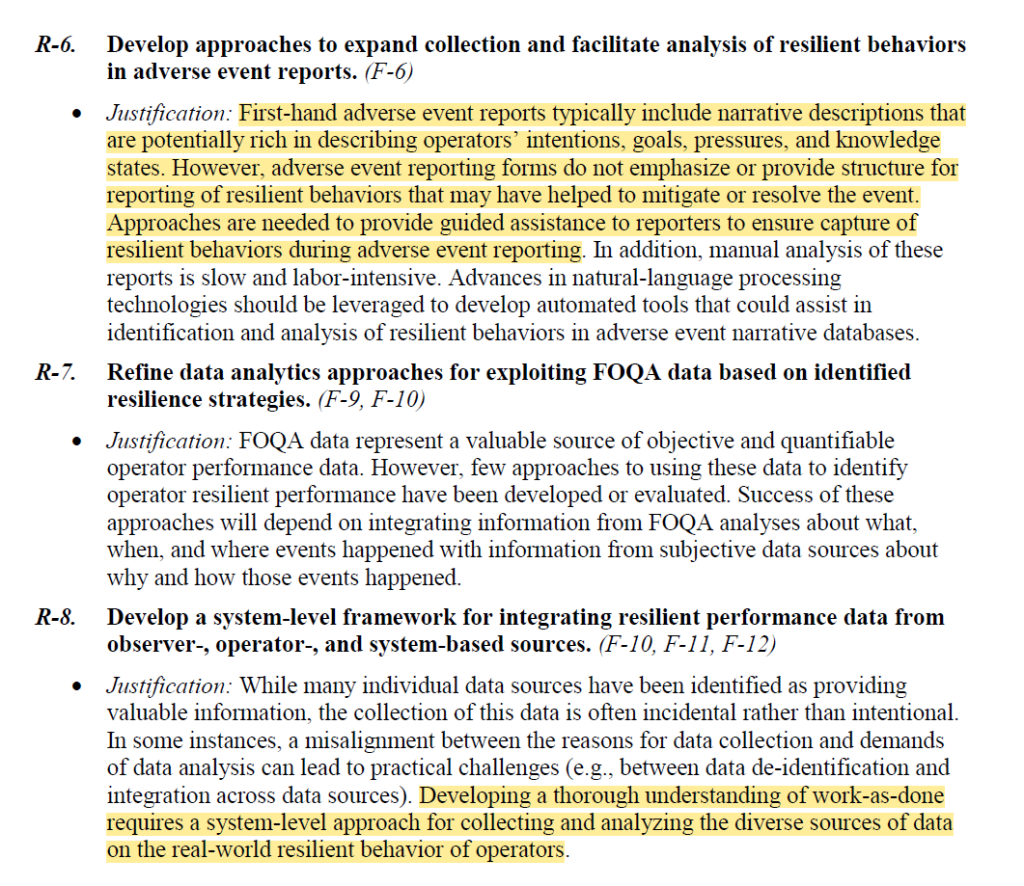
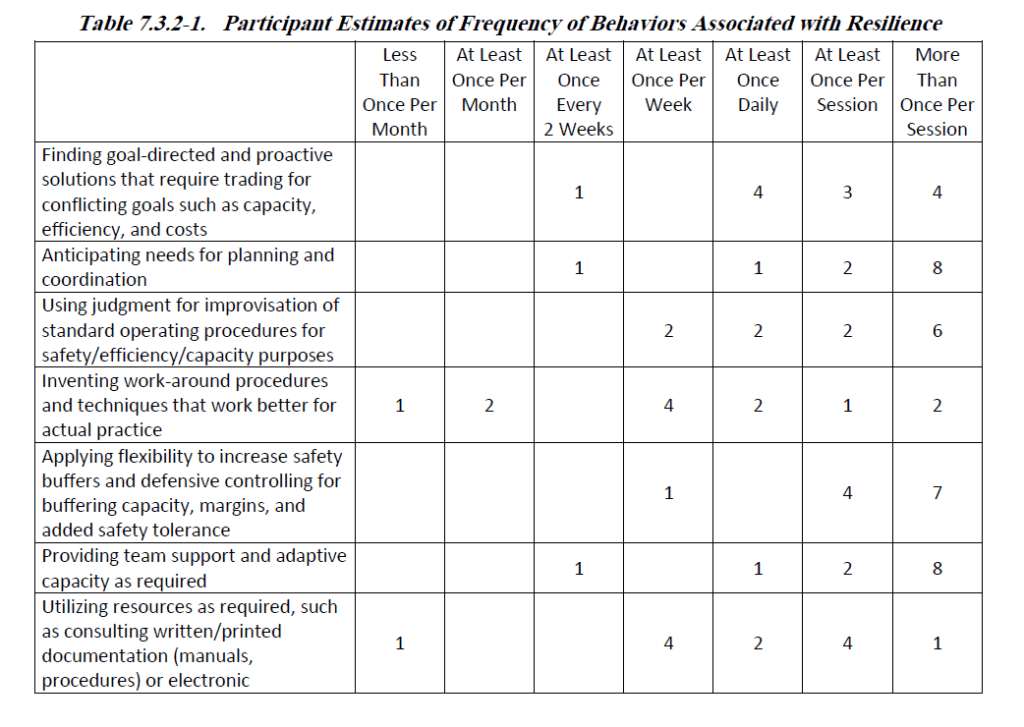
One element they note is that controllers reported their behaviours that support resilient capacities occurred on a routine basis, there is little focus on collecting, analysing or characterising these behaviours.
One barrier to reporting positive events is that the reporting systems are “structured to capture negative events (i.e., when things go wrong)”. Hence, the systems emphasise describing what went wrong but “not on the actions that controllers might take to resolve the reported anomaly.”
They argue that to improve safety, “system designers should understand what humans do well and create systems with this understanding in mind. System designers and safety managers should look at what goes right as well as what goes wrong, and learn from what succeeds as well as from what fails.”
Further, things typically go well not because people strictly follow rules, but because they “exhibit performance variability and make sensible adjustments and adaptations in response to interpretation of what is happening and the demands of the situation”.
Problematically, the safety created in ultra-safe airspace system by human operators is “not well-understood”.
There’s a lot of data in this report, and I’ve only covered some of it and the take-away messages.
Ref: Holbrook, J. B., Stewart, M. J., Smith, B. E., Prinzel, L. J., Matthews, B. L., Avrekh, I., … & Null, C. H. (2019). Human performance contributions to safety in commercial aviation (No. NF1676L-34965).
Report link: https://ntrs.nasa.gov/api/citations/20190033462/downloads/20190033462.pdf

 SafetyInsights.org
One thought on “NASA report drawing on S-II/Resilience Engineering: Human performance contributions to safety in commercial aviation”