This third and final part of a series has highlighted one perspective of integrating human performance into barrier thinking approaches.
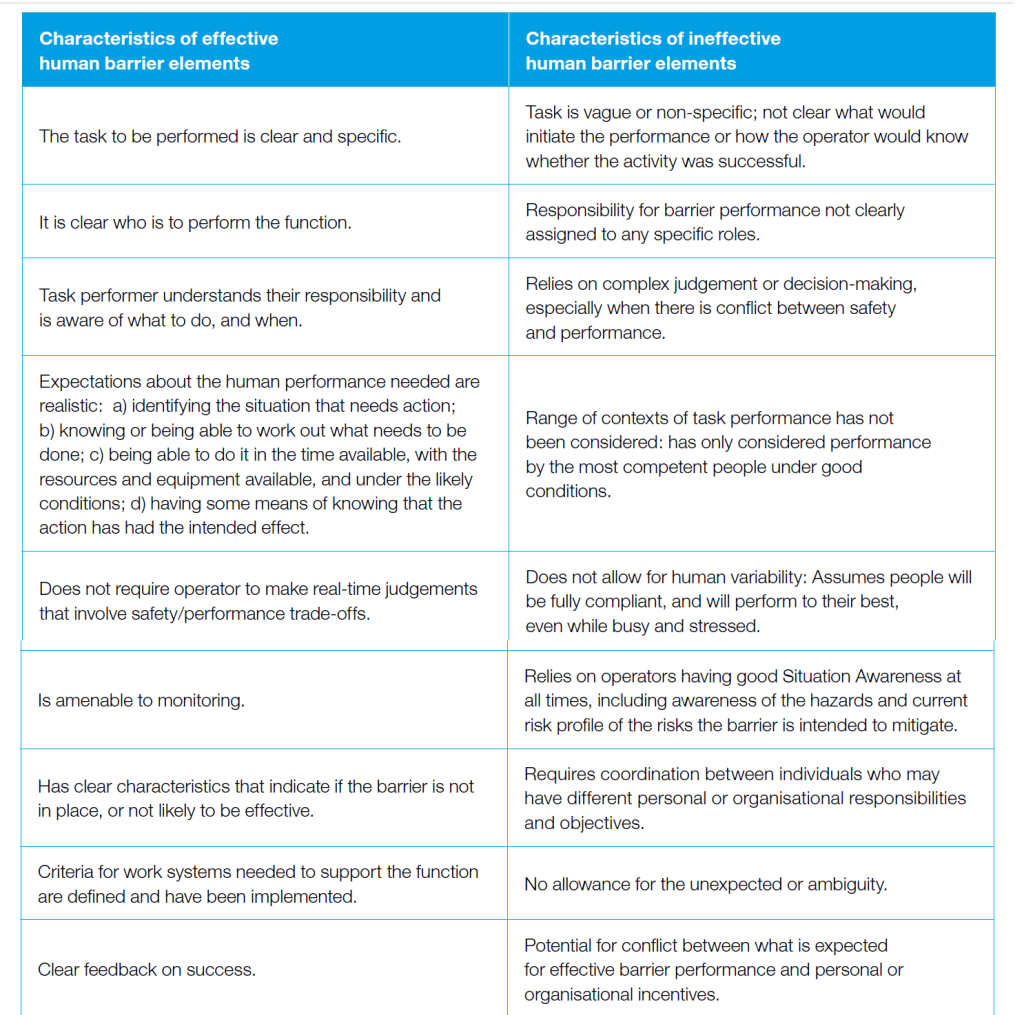
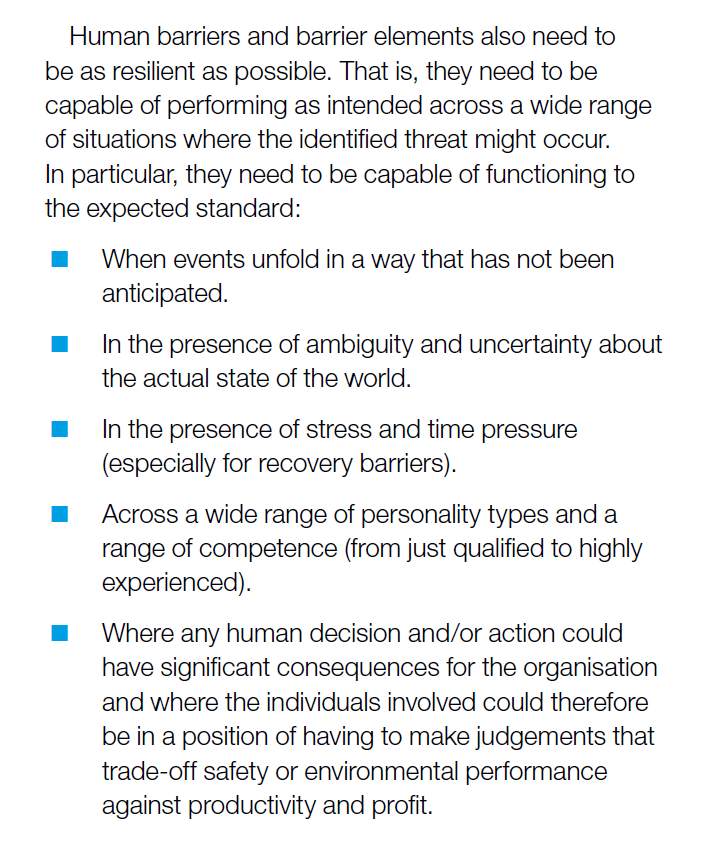
In this part, specific questions and prompts are provided around what makes for an effective human barrier element, like clear and specific task and goals. Most of this comes from the CIEHF ‘Human Factors in Barrier Management’,
Realistic performance expectations need to be set, like
- Identifying the situation
- Knowing or being able to work out what needs to be done
- Being able to do it in the time available, with the available resources under the likely conditions
- Having means of knowing that the action had the intended effect (feedback
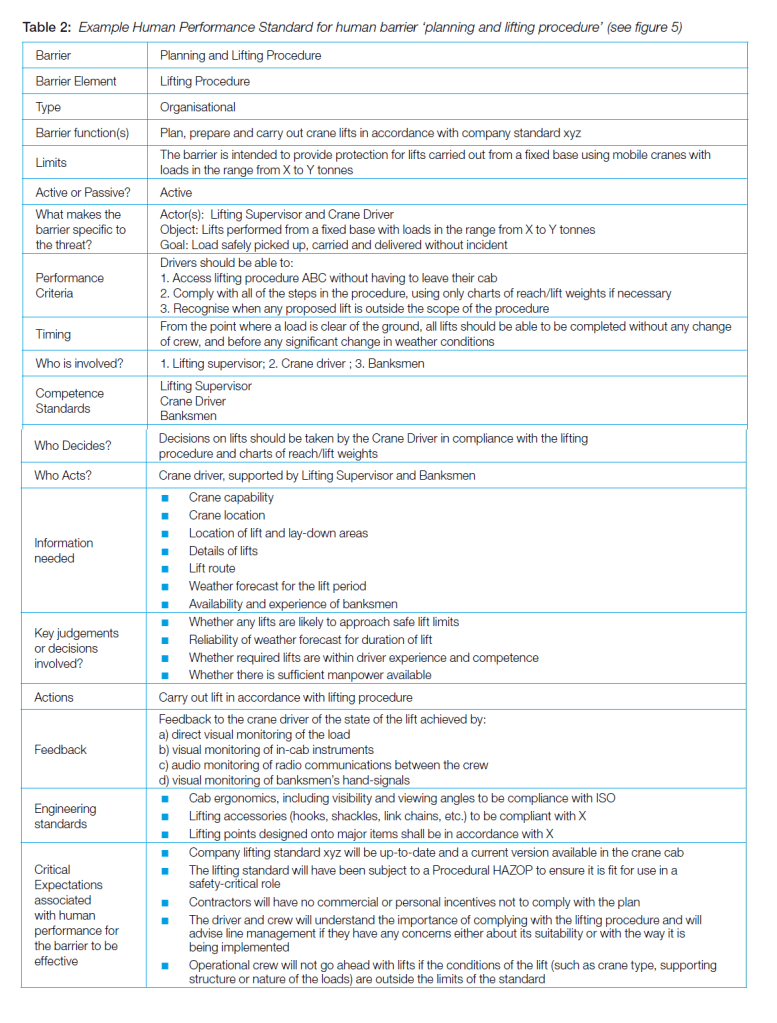
An example for specifying human performance for a lifting operation is provided, highlighting expectations on detect-decide-act, information and key decisions to be made, feedback, and any key critical expectations on human performance that’s needed for the barrier to be effective.
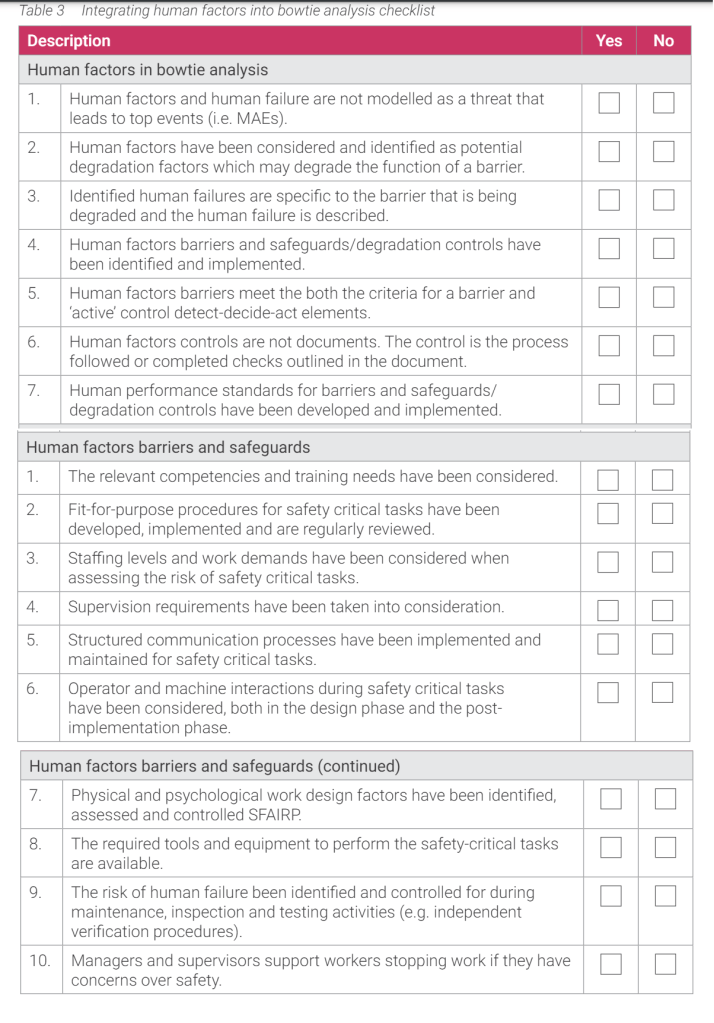
Finally, I’ve included a checklist (because…safety) from the WA Department of Energy, Mines, Industry Regulation and Safety, with some prompts around the specification of people in a barrier system.
Refs:
Human factors in barrier management. Chartered Institute of Ergonomics & Human Factors, 1-64. 2016
WA Department of Energy, Mines, Industry Regulation and Safety. Information Sheet – Human factors: Integrating human factors into bowtie analyses of major accident events.
Study links:
1. https://ergonomics.org.uk/asset/A2F56D6D%2D6D62%2D4C0F%2D9BCAC72AB8888637/
2.

 SafetyInsights.org
One thought on “Human performance in barrier thinking part 3”