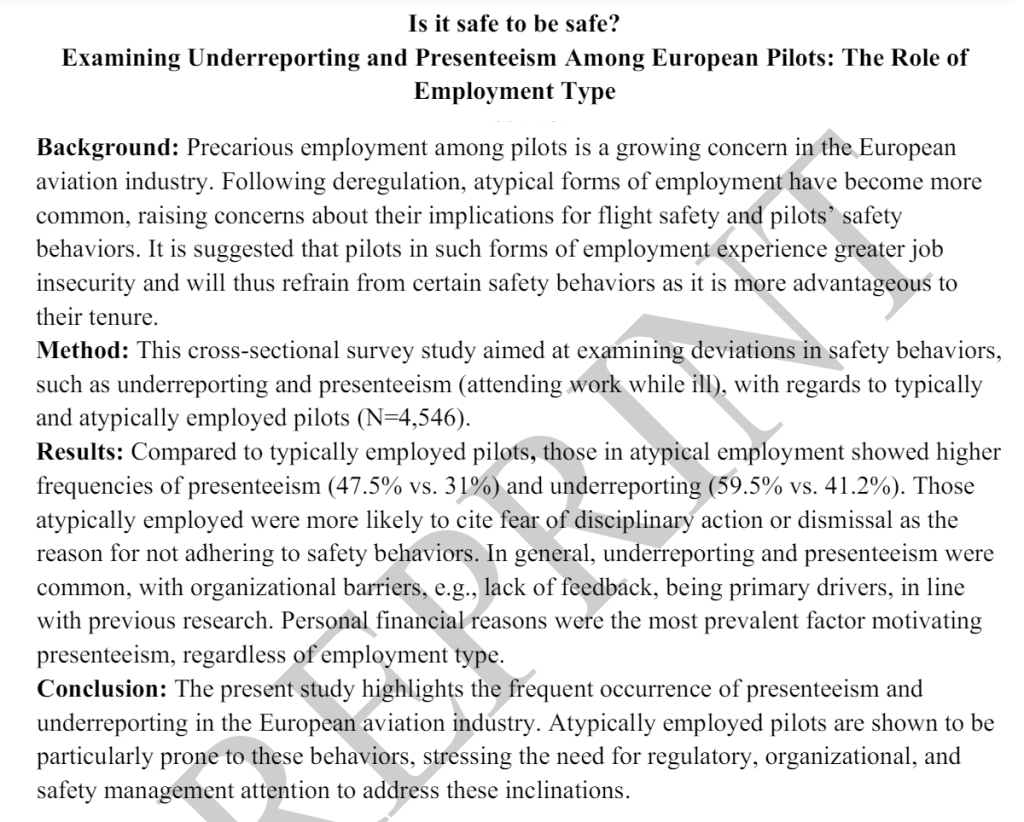
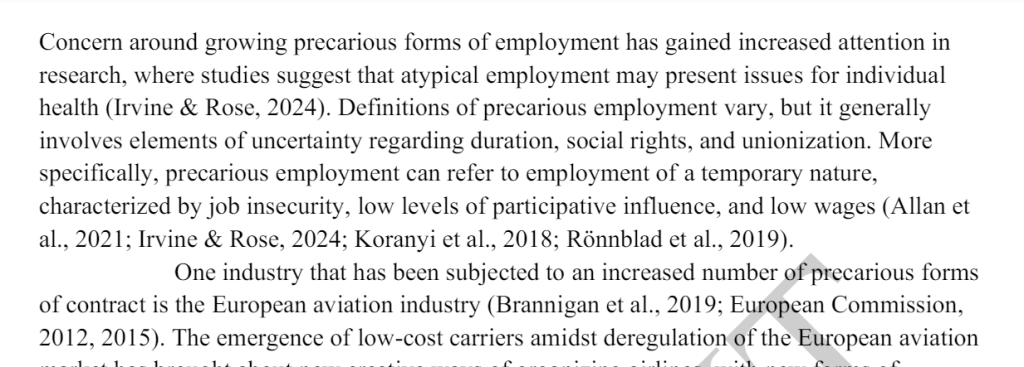
This preprint study may be of interest – it surveyed European pilots (n = 4,546) on their reasons for underreporting incidents and for presenteeism; also comparing atypically employed versus typically employed.
They found:
· Those in atypically employment showed higher frequencies of presenteeism and underreporting
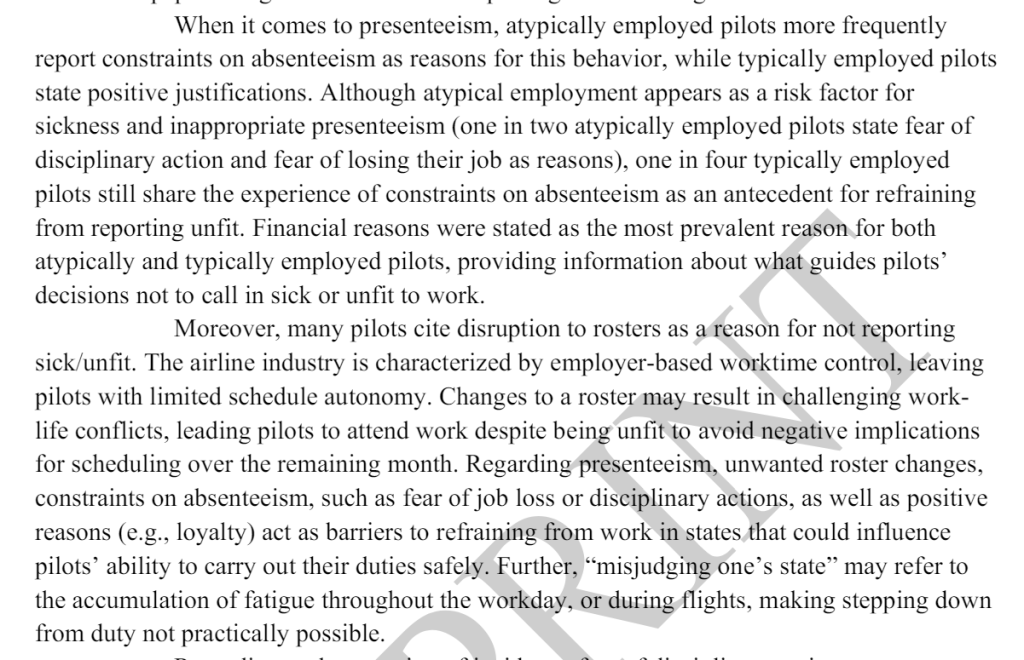
· Atypically employed were more likely to cite fear of disciplinary action or dismissal (59.5% vs 41.2%)
· Underreporting and presenteeism was common, with main cited factors being organisational barriers like lack of feedback being primary drivers
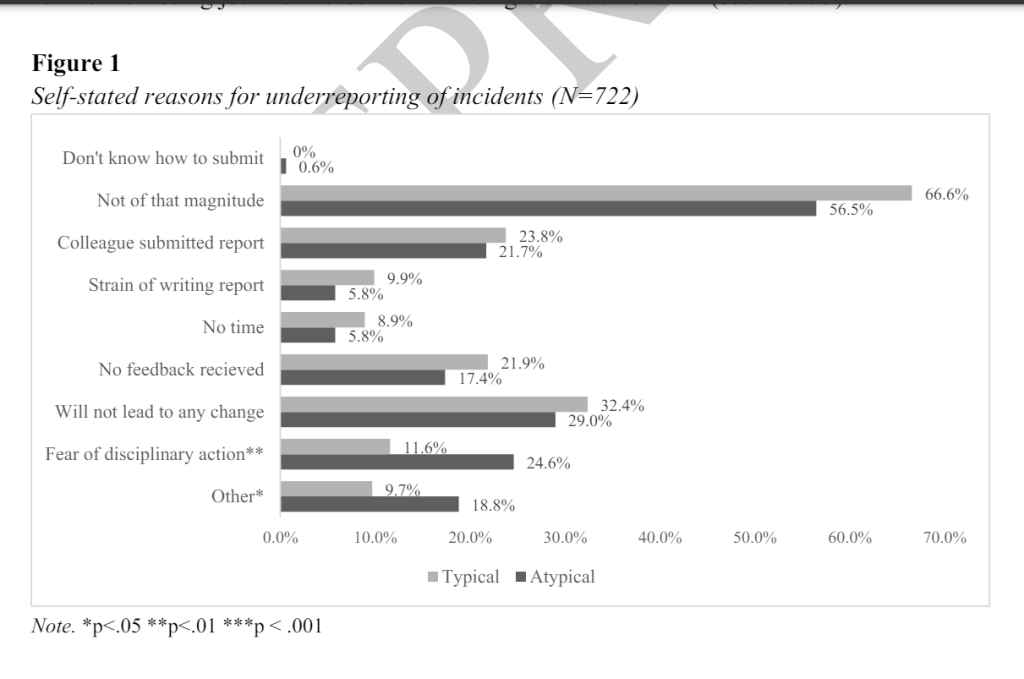
· Financial motivation were also prevalent with presenteeism
· Many pilots cited roster disruption as a barrier for not reporting being sick/unfit for duty; it’s said that the “industry is characterized by employer-based worktime control, leaving pilots with limited schedule autonomy”
· Changes to rosters may result in challenging worklife conflicts, leading pilots to attend work while unfit
· Underreporting was also linked to the evet not being seen as having the magnitude for reporting, which the authors wonder if it’s related to a normalisation of deviance within the industry, such as “sleeping on flight deck (from the free text answers: “It’s ‘normal’ to doze off from time to time in aviation”
· Other aviation data found >33% of pilots to have experienced safety-related events without formally reporting them
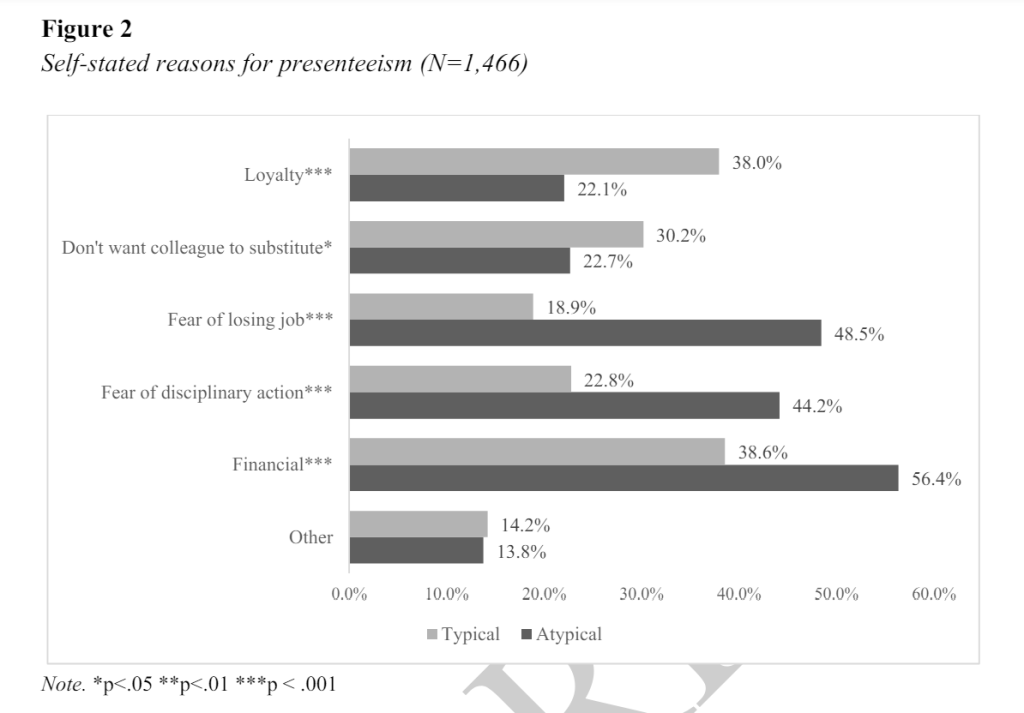
· One in five of the pilots in this sample reported that underreporting takes place due to lack of feedback, and one in three were discouraged form reporting as they didn’t believe it would result in change
Ref: Folke, F., & Melin, M. (2024). Is it safe to be safe? Examining Underreporting and Presenteeism Among European Pilots: The Role of Employment Type.
Study link: https://osf.io/preprints/psyarxiv/jg5n3
My site with more reviews: https://safety177496371.wordpress.com

 SafetyInsights.org
One thought on “Is it safe to be safe? Examining Underreporting and Presenteeism Among European Pilots: The Role of Employment Type”