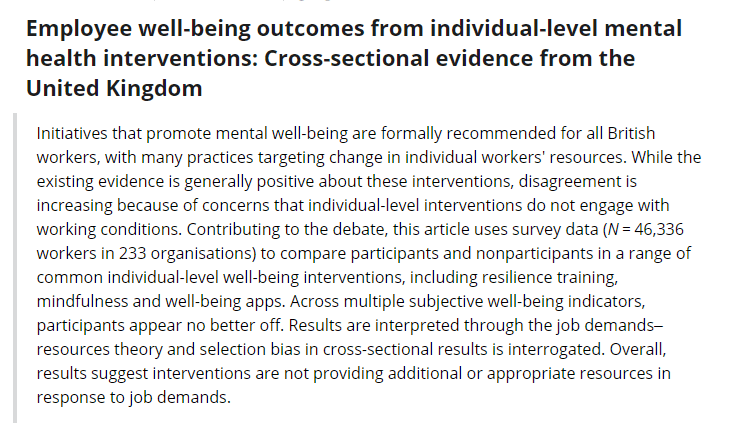
Does participation in workplace individual-level well-being interventions improve subjective well-being? Not so much according to this study.
This study has already done the rounds, so there’s a good chance you’ve seen it. It surveyed >46k workers across 233 organisations in the UK.
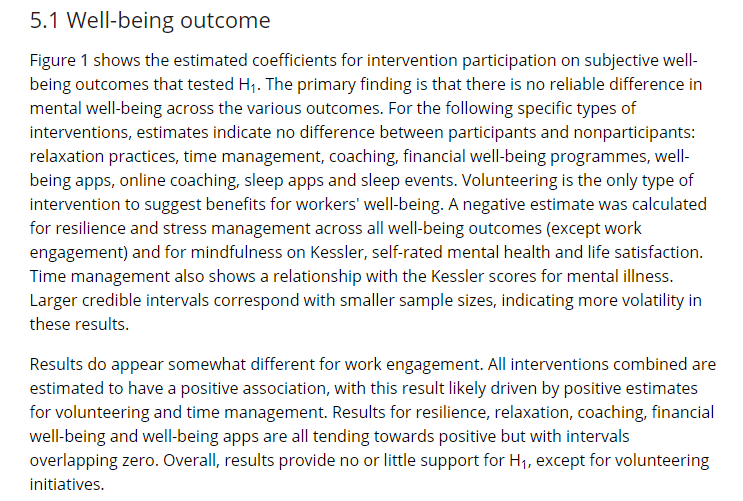
They included interventions like resilience and stress training, mindfulness, well-being apps, EAPs, counselling.
Key findings:
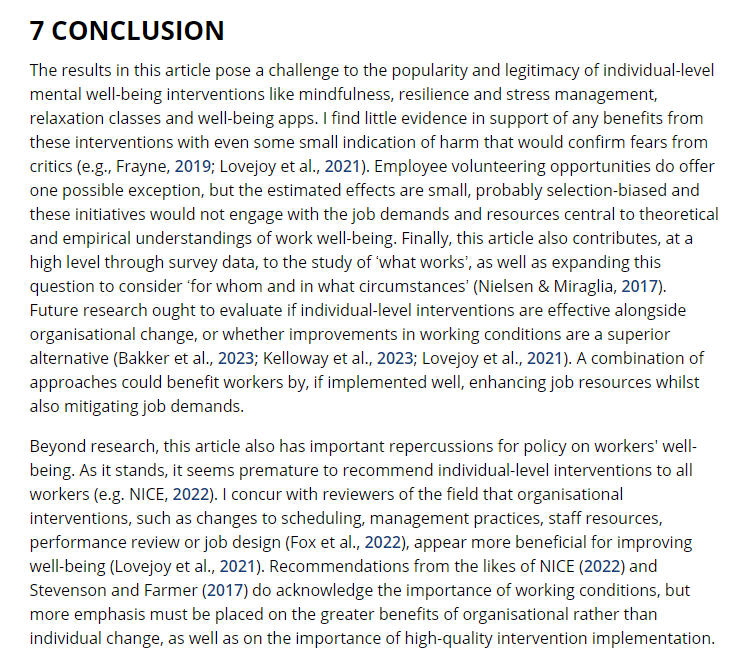
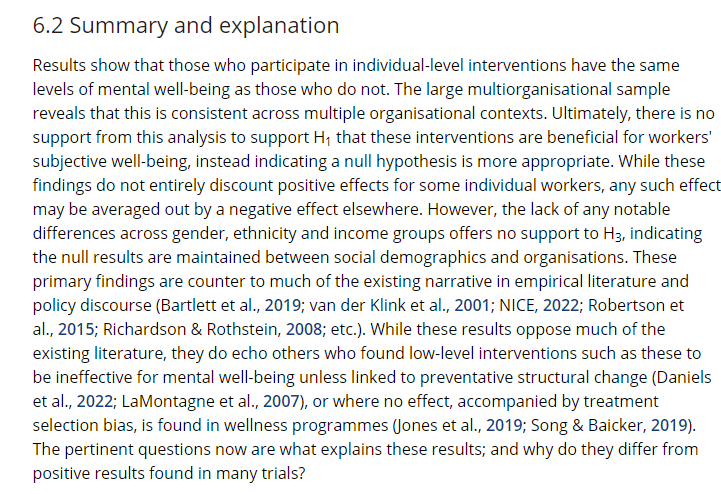
· Across multiple subjective well-being indicators, “participants appear no better off”
· And that, “those who participate in individual-level interventions have the same levels of mental well-being as those who do not”
· “results suggest interventions are not providing additional or appropriate resources in response to job demands”
· Finally, “there is no support from this analysis to support [hypothesis 1] that these interventions are beneficial for workers’ subjective wellbeing, instead indicating a null hypothesis is more appropriate”
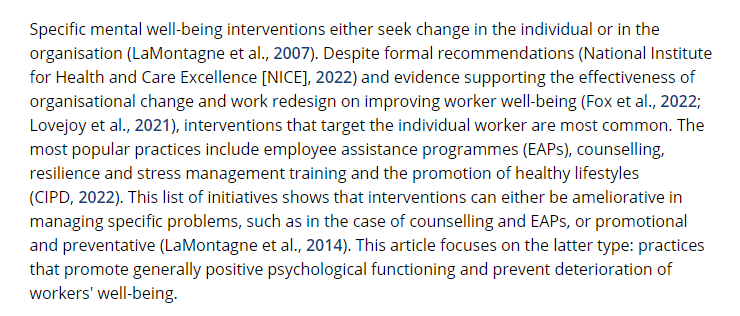
Unpacking the findings, it’s said that these findings don’t entirely discount positive effects for some individual workers, it’s said that “any such effect may be averaged out by a negative effect elsewhere”.
The results are said to “echo others who found low-level interventions such as these to be ineffective for mental well-being unless linked to preventative structural change”.
An exception to the null findings relate to volunteering work. This was found to have a small positive effect.
Note – several important limitations were present, e.g. cross-sectional, survey (with little info on the actual interventions) and more.
Summary next week.
Author: Fleming, W. J. (2024). Industrial Relations Journal, 55(2), 162-182.
Study link: https://doi.org/10.1111/irj.12418
My site with more reviews: https://safety177496371.wordpress.com

 SafetyInsights.org
One thought on “Workplace well-being initiatives not found to improve worker well-being”