What is the role of communication in the incubation of major accidents?
Barry Turner explored these themes, among many others, in his seminal man-made disasters work across 84 major accidents.
Turner found that communication was implicated as:
· Completely unknown prior information
· Prior information noted but not fully appreciated
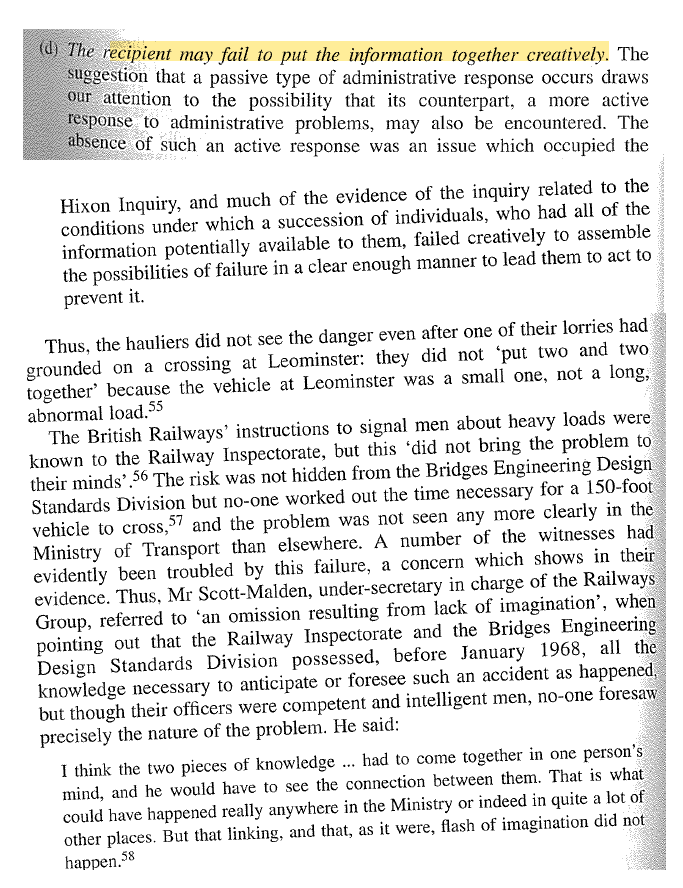
· Prior information noted by someone, but not combined with other information at an appropriate time
· Prior information available, but ignored because there was no place for it within prevailing modes of understanding
He also found that:
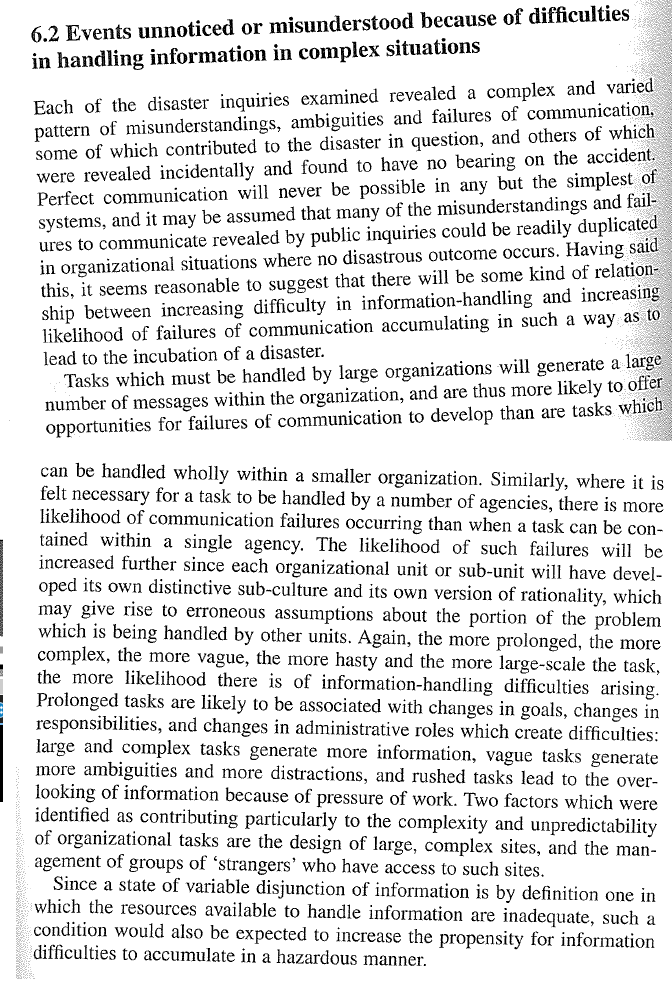
· Each disaster revealed a “complex and varied pattern of misunderstandings, ambiguities and failures of communication”
· “Perfect communication” isn’t possible in any but the simplest of systems, if at all. These issues are likely amplified in large organisations
· A “variable disjunction” of information, where resources to handle info is inadequate, is likely to “increase the propensity for information difficulties to accumulate in a hazardous manner”
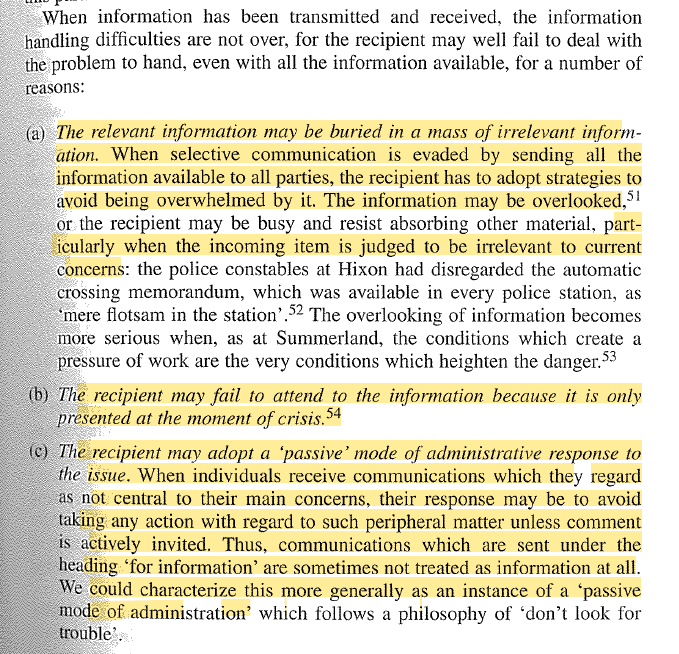
· Relevant info may be “buried in a mass of irrelevant information”. For instance, when CCing/reply all, recipients adopt strategies to “avoid being overwhelmed by it”. People may overlook the information, particularly if they see it as irrelevant
· Information may be overlooked if it’s sent at a moment of crisis or inopportune moment
· People may adopt a ‘passive’ mode of interpretation. For instance, the use of CCing, reply all or for information “are sometimes not treated as information at all”
· It’s cautioned that we should pay attention not just to what information is available, but its distribution, the communication networks in place, and to the boundaries that impede information flow; of which may ‘permit disasters to occur’
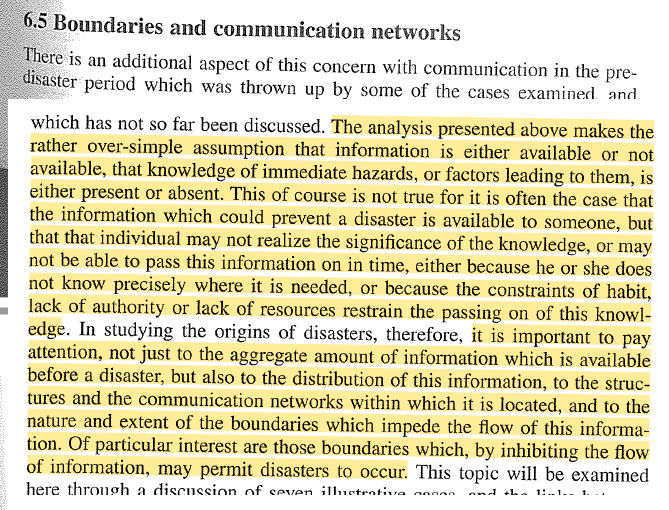
Ref: Turner, B. A. (1997). Man-made disasters.


 SafetyInsights.org
2 thoughts on “Man-made disasters: the role of communication failures in the incubation of disasters”