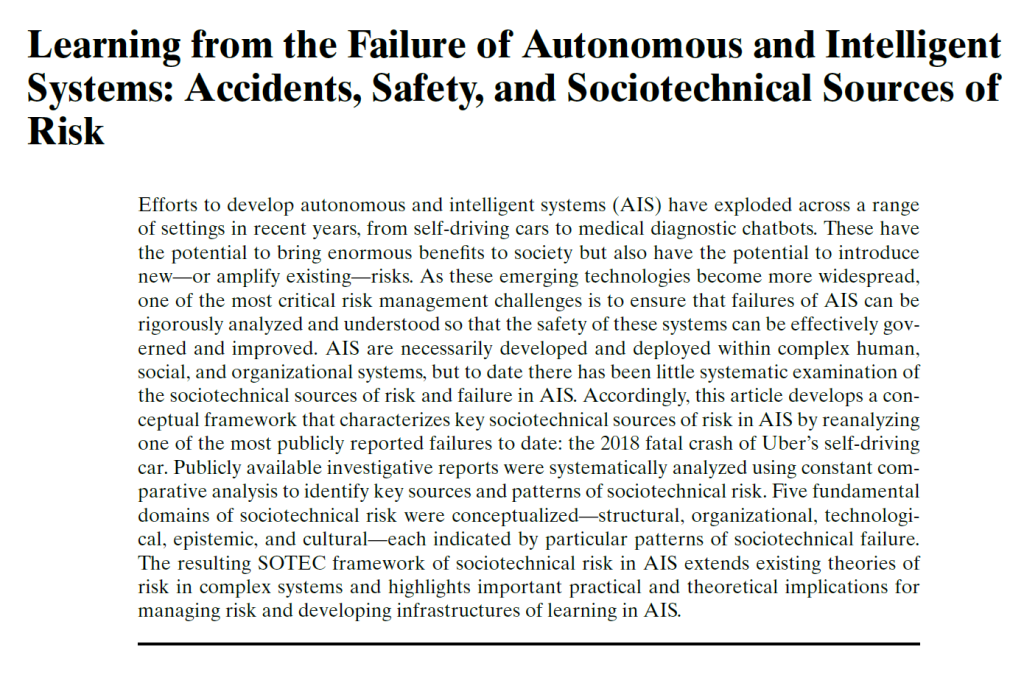
A fascinating read from Carl Macrae (his work is always good – I’ve covered a few of his papers), exploring the sociotechnical sources of risk of autonomous and intelligent systems (AIS).
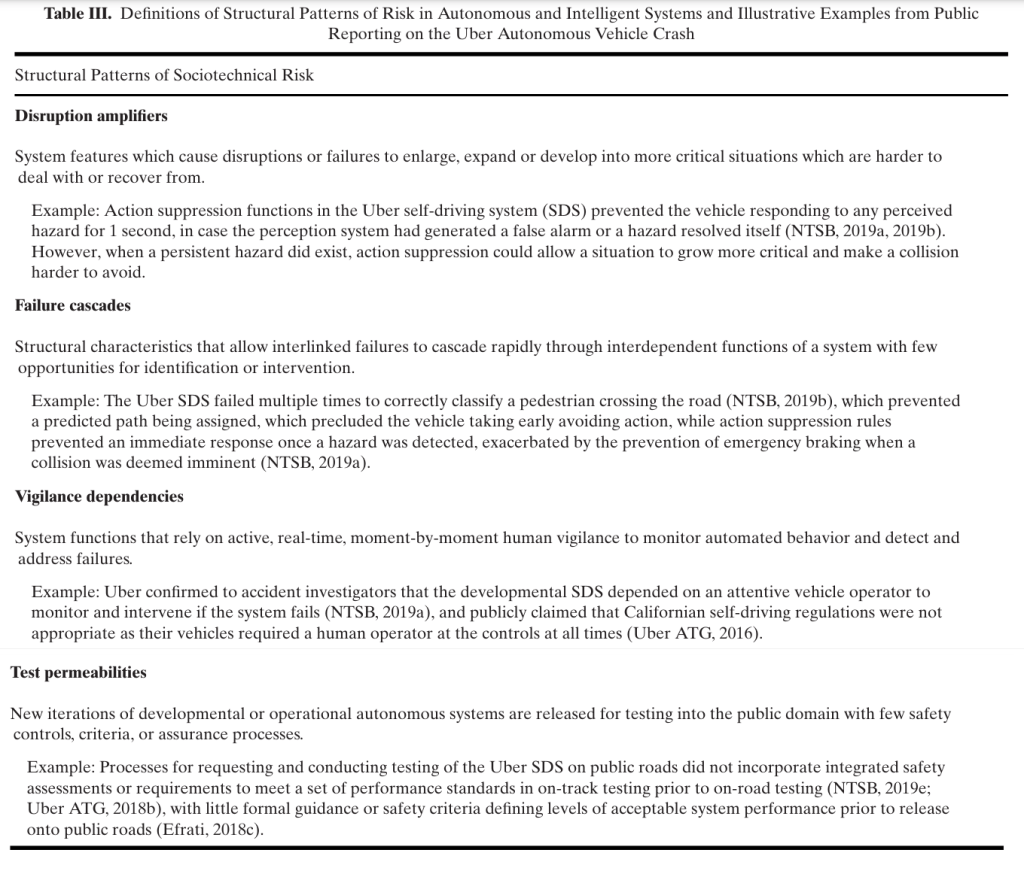
Reanalysis of the 2018 fatal Uber self-driving car crash via multiple reports was used as a case.
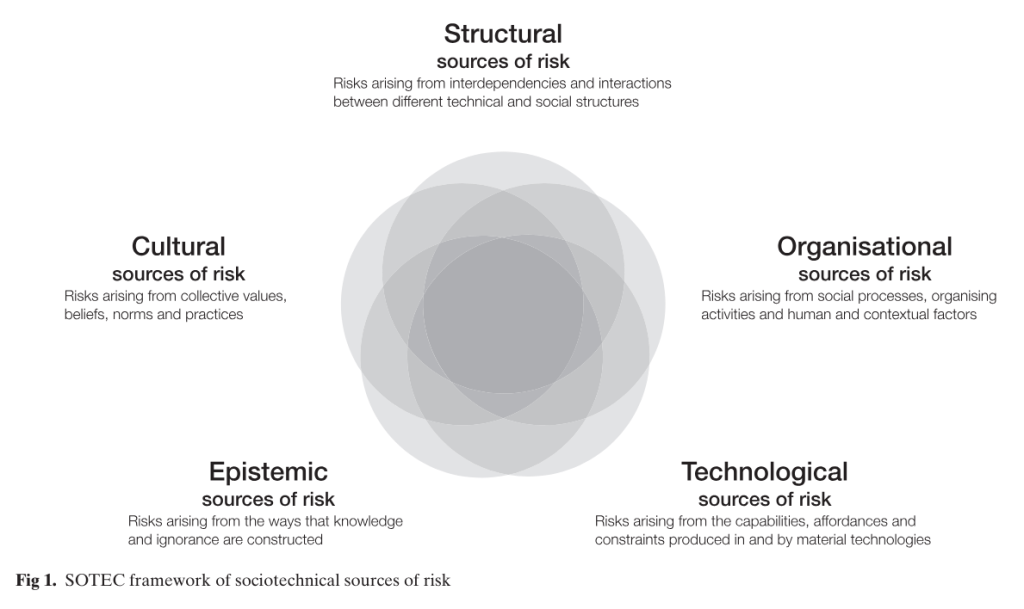
Five sources of sociotechnical risk were conceptualised:
· Structural
· Organisational
· Technological
· Epistemic
· Cultural
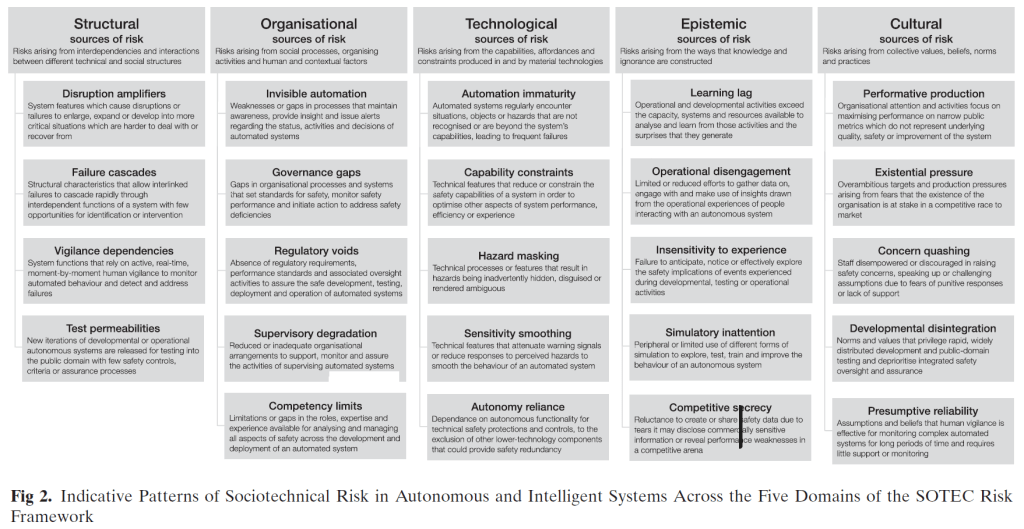
Some of the risks I found particularly interesting were:
· Vigilance dependencies: system functions requiring active, real-time human vigilance to monitor automated behaviour and address failures
· Invisible automation: gaps in processes that maintain awareness, provide insight and issue alerts in the status and decisions of automated systems
· Hazard masking: technical processes that result in hazards being inadvertently hidden, disguised or ambiguous
· Sensitivity smoothing: Technological features that attenuate warning signals to smooth the behaviour of automated systems
· Autonomy reliance: dependence on autonomous functionality for technical safety protections when lower-technology could provide safety redundancy
· Competitive secrecy: Reluctance to share safety data due to fears it may disclose commercially sensitive information
· Existential pressure: Overambitious targets and production pressures
· Presumptive reliability: Assumptions that human vigilance is effective for monitoring complex automated systems for long periods
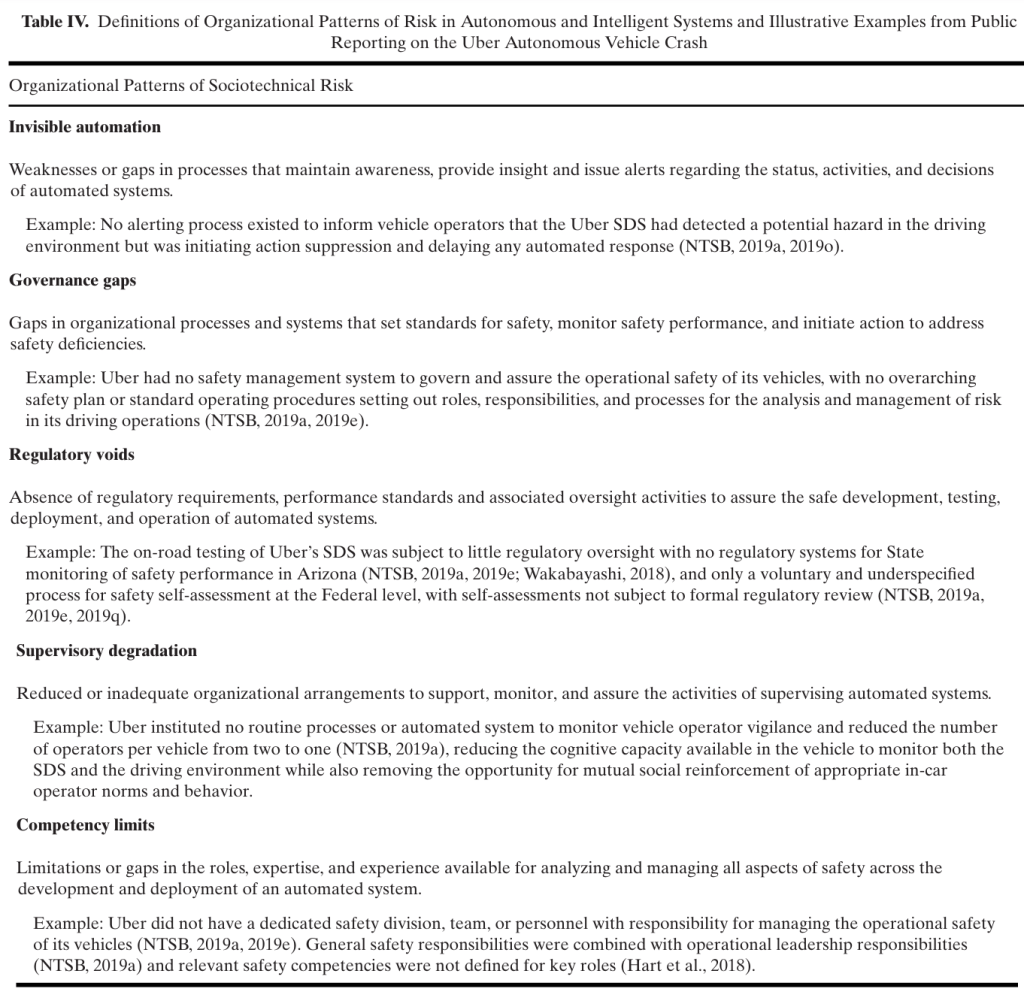
Check out the full paper – you won’t be disappointed.
Ref: Macrae, C. (2022). Learning from the failure of autonomous and intelligent systems: Accidents, safety, and sociotechnical sources of risk. Risk analysis, 42(9), 1999-2025.
Study link: https://onlinelibrary.wiley.com/doi/pdfdirect/10.1111/risa.13850
My site with more reviews: https://safety177496371.wordpress.com

 SafetyInsights.org
One thought on “Learning from the failure of autonomous and intelligent systems: Accidents, safety, and sociotechnical sources of risk”