What is the quality of suicide investigations, limitations of investigation approaches, and their potential for organisational learning?
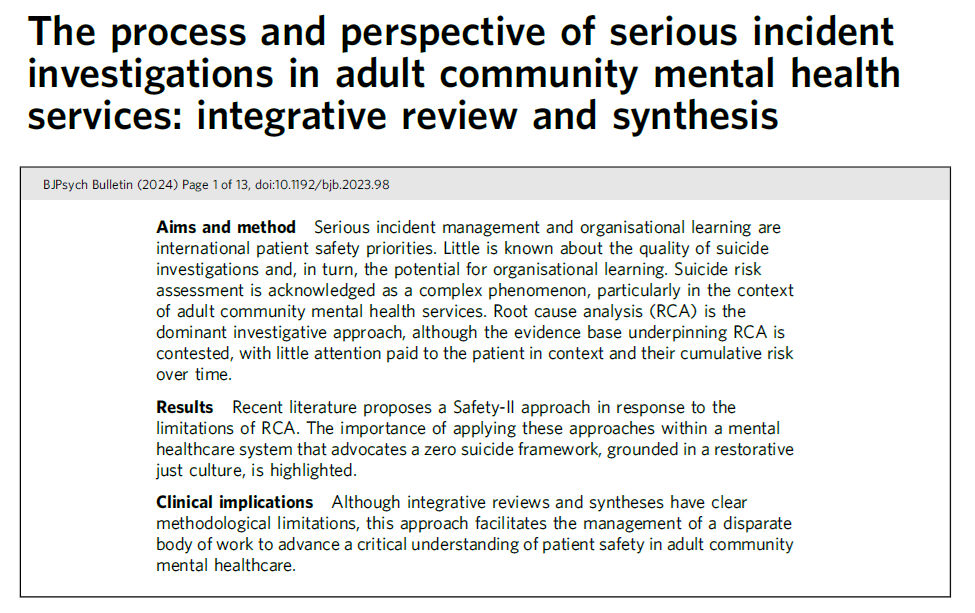
This upcoming paper explored these questions in adult community mental health services, drawing on a safety-II lens.
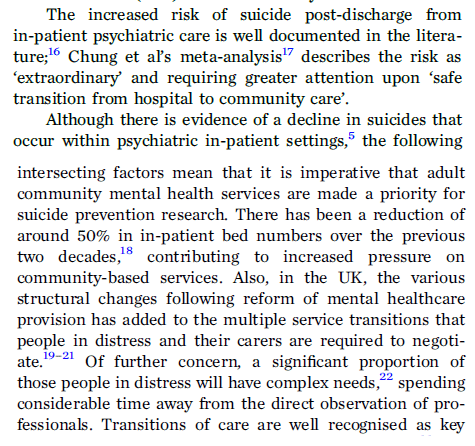
Key findings:
Root cause analysis–
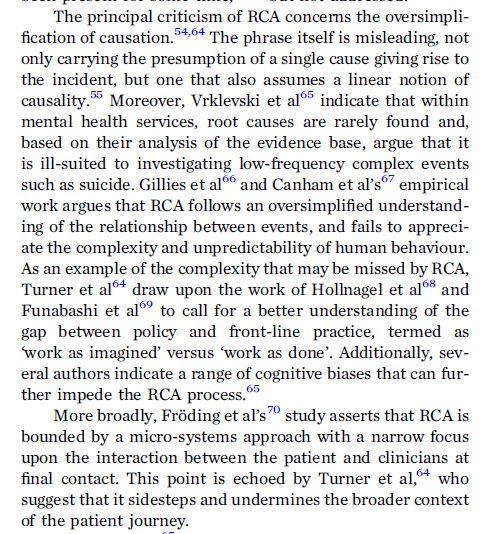
· >80% of the studies placed root cause analysis (RCA) as the dominant approaches for suicide investigation
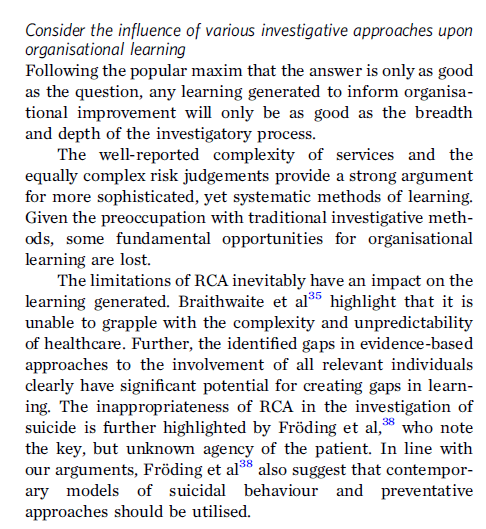
· The main criticism of RCA approaches relates to the “oversimplification of causation”, said itself to be “misleading, not only carrying the presumption of a single cause giving rise to the incident, but one that also assumes a linear notion of causality”
· Within mental health services “root causes are rarely found” and RCA approaches are “ill-suited to investigating low-frequency complex events such as suicide”
· RCA approaches follow an oversimplified understanding of the relationship between events, and “fails to appreciate the complexity and unpredictability of human behaviour”
· RCA approaches were also found to result in weak recommendations unlikely to affect practice and focus on individuals
Complexity–
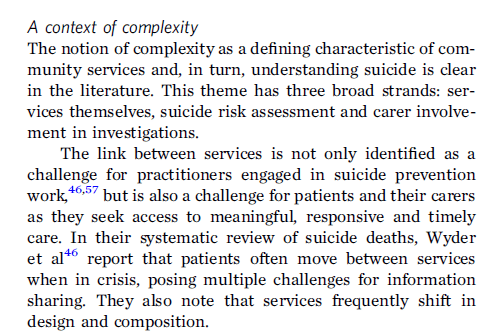
· Complexity is seen as a “defining characteristic of community services” and thus, in understanding suicide
· One study drew “upon the dark irony that exists when investigations flag inadequate risk assessment as contributory, when evidence simultaneously indicates the fallacy of suicide risk prediction”
· Further, these authors argue that “asserting demands for better risk assessment not only reinforces the myth but undermines other potential areas of inquiry”.
In concluding they argue:
· Suicide is an “ultimate harm that embodies the unpredictability and complexity of human behaviour; establishing causation is neither simple nor certain”
· RCA approaches seem to be “largely inappropriate investigative [tools], and questions remain about its suitability for suicide investigations as part of a patient safety paradigm”
Summary next week.
Ref: Haylor, H., Sparkes, T., Armitage, G., Dawson-Jones, M., Double, K., & Edwards, L. (2024). BJPsych bulletin, 1-13
My site with more reviews: https://safety177496371.wordpress.com

 SafetyInsights.org
One thought on “Root Cause Analysis investigation tools inadequate for suicide risk and prevention”