I’ve long been fascinated by this idea from Trevor Kletz (I love his work) about how organisations ‘have no memory’, and a way to maintain this collective human capability is to mark-up critical procedures, standards etc. with the reasons why those specifications exist.
Examples would be critical investigation findings, or findings from experience, HAZOPs, and risk assessments.
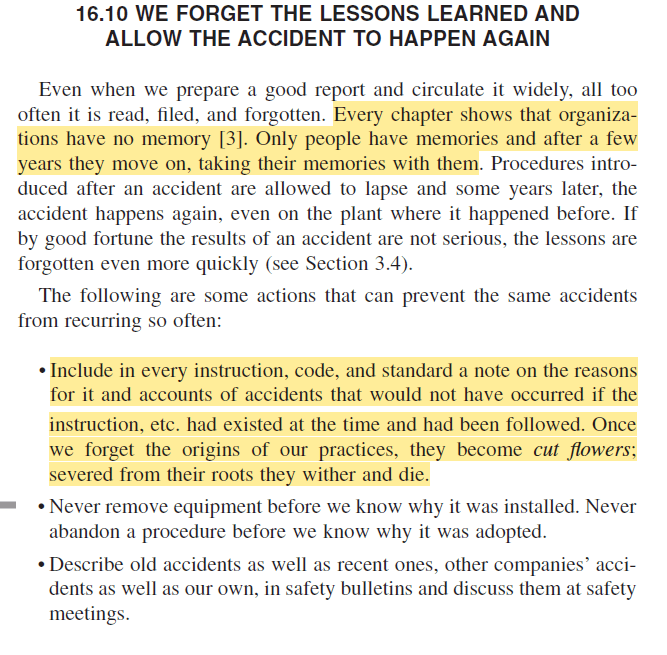
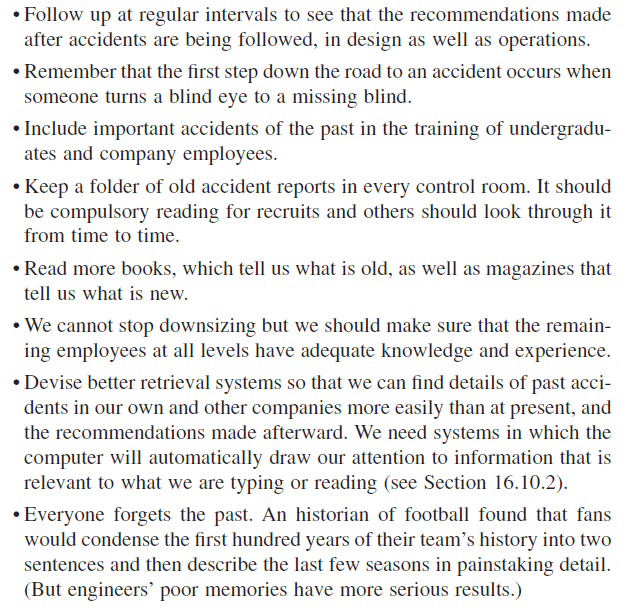
[Within reason of course. I think he means the most critical stuff based on collective knowledge and expertise, codes, laws, and unfortunately, spilled blood, and not marking up every document with findings from every investigation, pre-mortem, etc.]
Has anybody seen this approach working well? Is it common in any industry? (Engineering docs maybe?)
Would love to see or hear examples.
I don’t recall Kletz ever mentioning this directly, but his idea seems to align somewhat partially with collective mindfulness.
Although I can see a potential by-product of clutter if not managed well (procedures could quickly fill up with peripheral info about incidents and the like which distract from the artefact’s functionality and comprehension), the idea does nevertheless interest me.
Source: Kletz, T. (2003). Still going wrong!: case histories of process plant disasters and how they could have been avoided. Elsevier.

 SafetyInsights.org
One thought on “Organisations’ have no memory: Trevor Kletz on building collective mindfulness for major accident prevention”