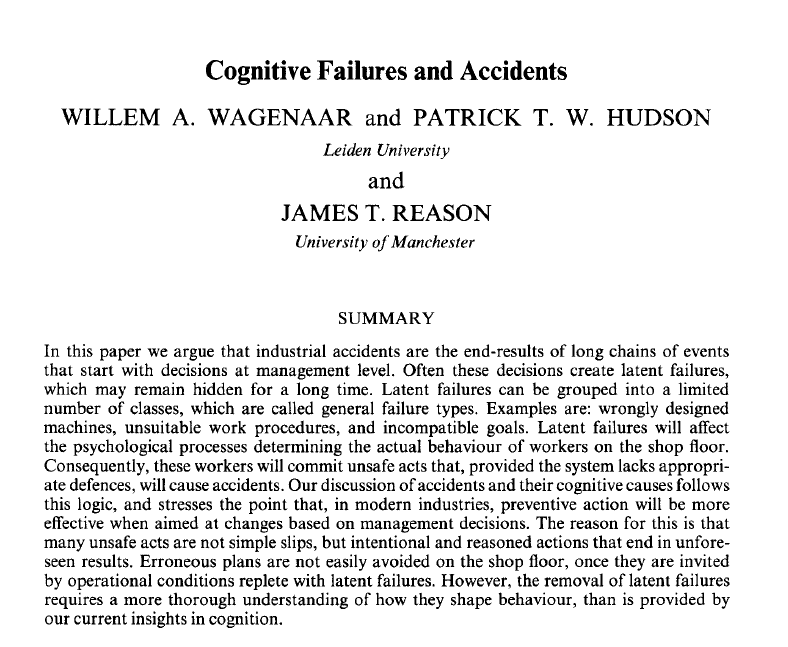
I found this 1990 paper from Wagenaar, Hudson and Reason interesting (more from the historical perspective); but still pretty insightful.
Note. Don’t read into the specific findings, nor the language used (e.g. “foolishness”) too much – it is >30 year old, after all.
Some points covered:
· Safety awareness initiatives tend to be among the most common safety interventions – often using posters, billboards and other material (images 1 & 3)
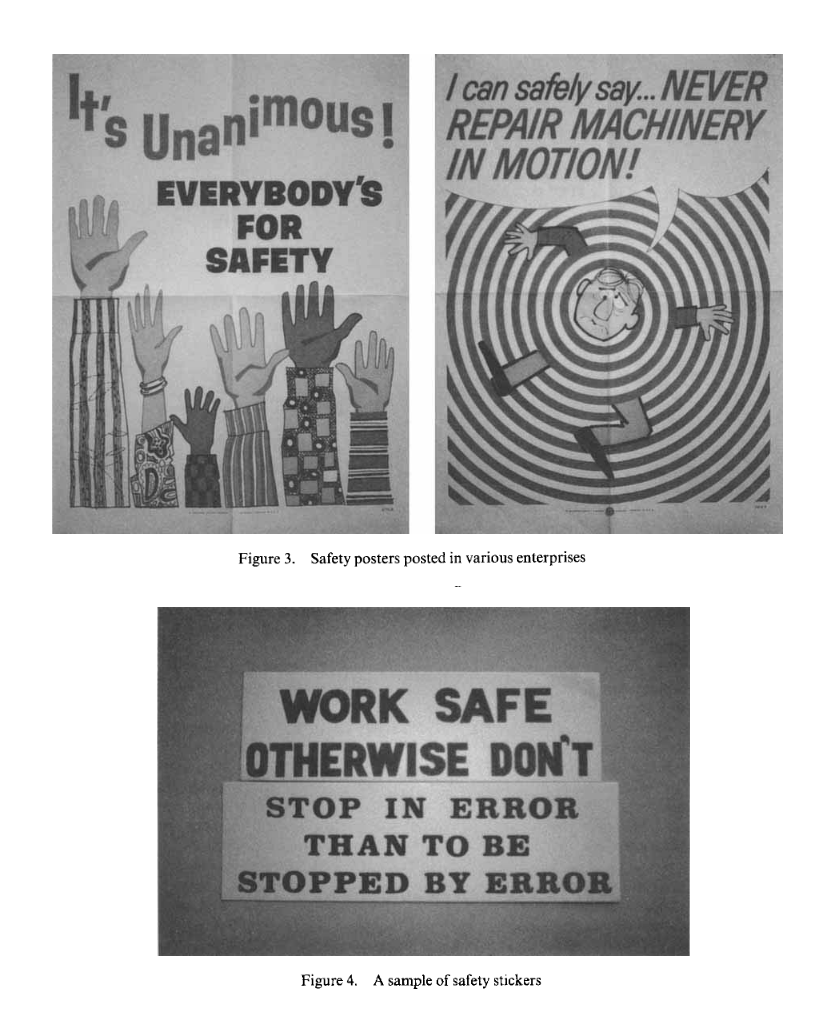
· Nevertheless, organisations “spend huge amounts of money at this type of non-directive indoctrination”, without ever “questioning the underlying concept”
· Earlier research found little connection between lack of motivation to subsequent safety performance
· Moreover, little earlier research also found a connection between ‘”conscious acceptance of a known risk”, whereas in most instances, people thought that they were in a routine situation to which “their normal repertoire of habits would apply”
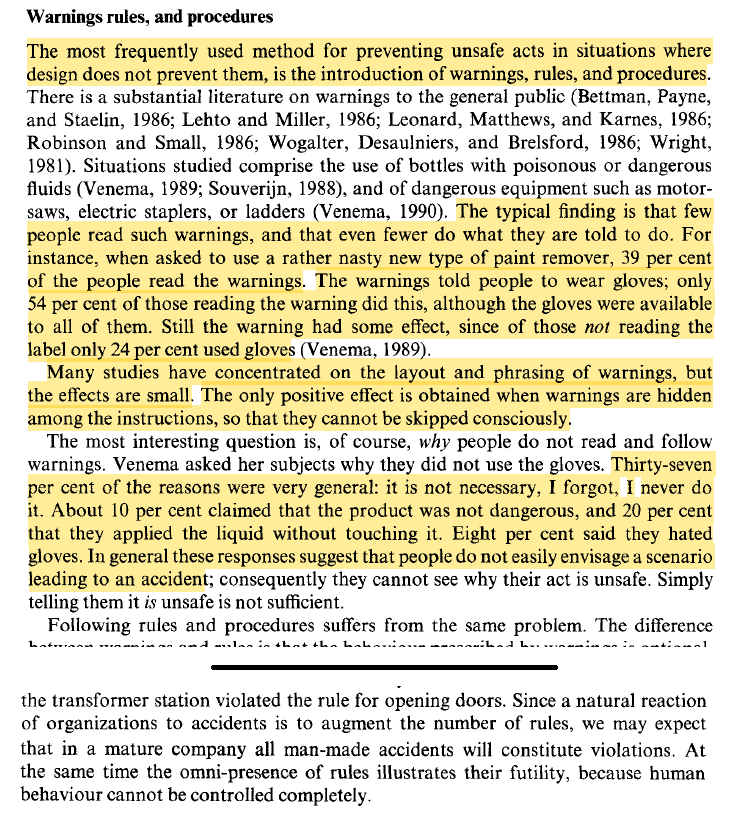
· Warnings, rules and procedures are the most prevalent approach (image 3); yet, again, earlier research found that limited people took notice of warnings
· More interesting is why people didn’t read or follow the warnings: it wasn’t necessary, they forgot, the product wasn’t perceived to be dangerous, people hated using gloves. The authors argue that “In general these responses suggest that people do not easily envisage a scenario leading to an accident”
· They also discuss the fallacy of procedural control, “the omni-presence of rules illustrates their futility, because human behaviour cannot be controlled completely”
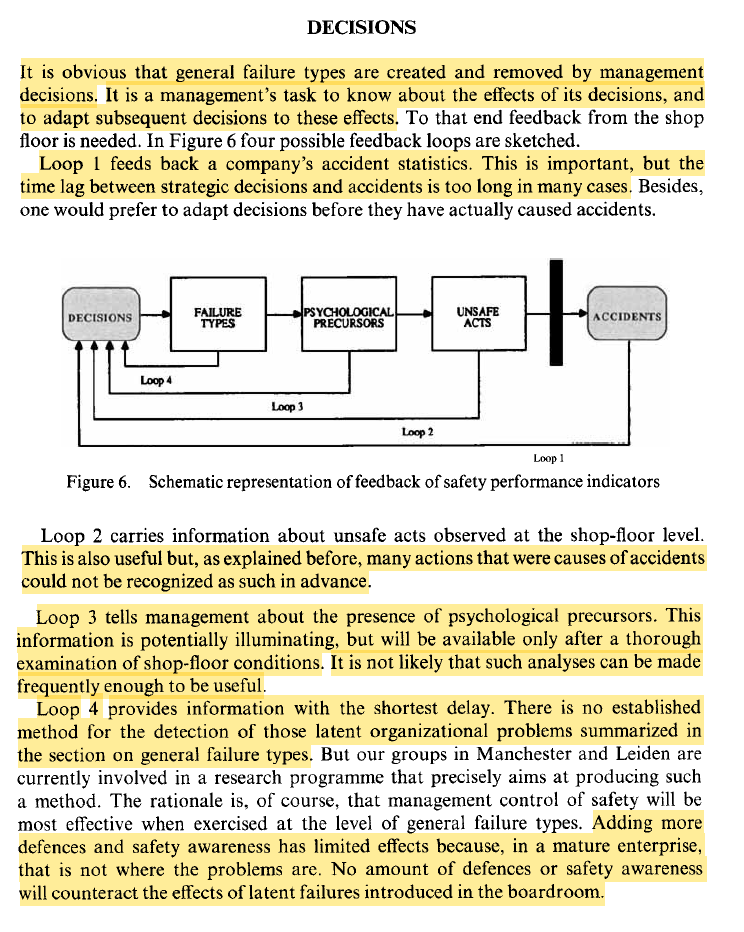
· They also briefly discussed decisions (lots more has been researched here, so read with caution), but they propose a schematic representation of feedback of safety performance indicators to aid in decision making
· Loop 1 relying on incident data tends to be too slow; loop 2 relies on frontline observations, which may be useful but factors contributing to accidents may not have been considered as problematic in advance
· Loop 3 focused on psychological precursors, which can be illuminating but typically only available after a thorough analysis. Loop 4 has the shortest delay (general failure types which were discussed in the paper)
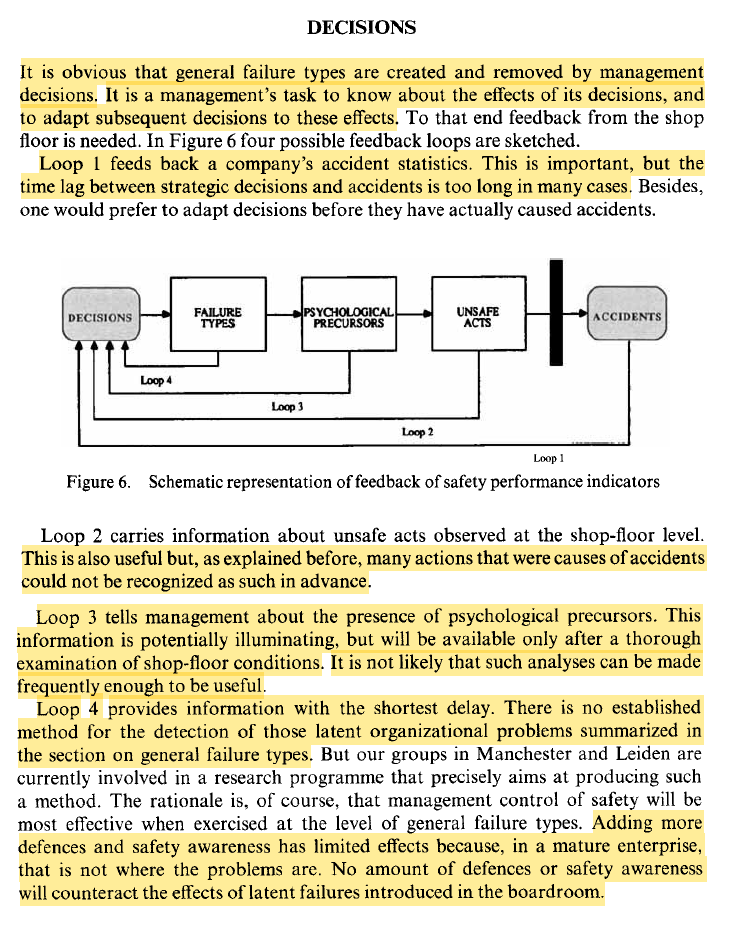
· Nevertheless, “Adding more defences and safety awareness has limited effects because, in a mature enterprise, that is not where the problems are. No amount of defences or safety awareness will counteract the effects of latent failures introduced in the boardroom”.
Ref: Wagenaar, W. A., Hudson, P. T., & Reason, J. T. (1990). Cognitive failures and accidents. Applied Cognitive Psychology, 4(4), 273-294.
Study link: https://doi.org/10.1002/acp.2350040405
LinkedIn post: https://www.linkedin.com/posts/benhutchinson2_i-found-this-1990-paper-from-wagenaar-hudson-activity-7201359542331351041-BhCE?utm_source=share&utm_medium=member_desktop
 SafetyInsights.org
One thought on “Cognitive failures and accidents”