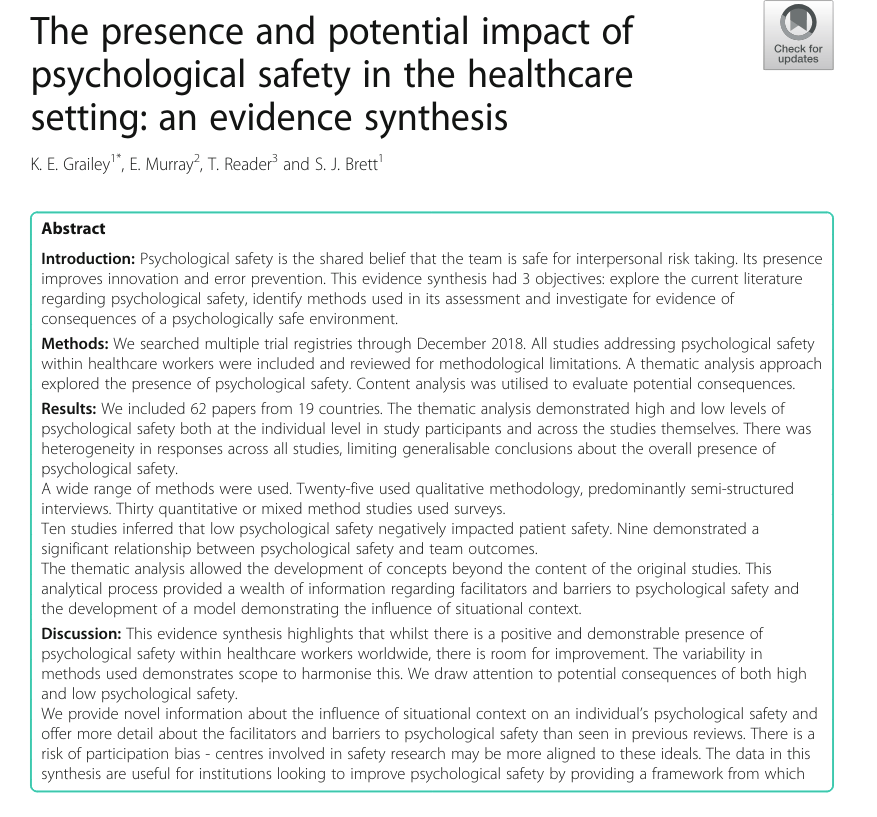
This 2021 evidence synthesis study on psychological safety in healthcare may interest people.
It:
1. Synthesised existing literature investigating psychological safety in healthcare workers
2. Identified the methods used to assess psychological safety in healthcare workers
3. Reviewed the literature for evidence of consequences of high or low psychological safety
(Note. If you’re after the efficacy of PS on different indices, then check out the meta-analyses and systematic reviews covered on my site.)
Findings:
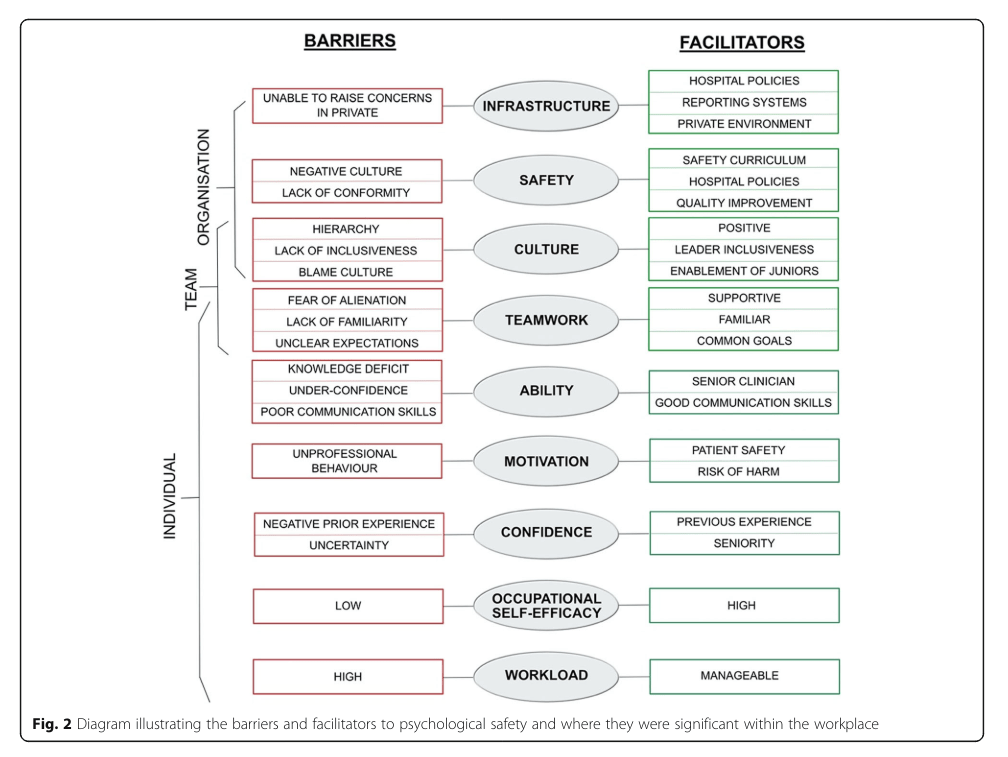
There was “substantial variation in the psychological safety reported by healthcare workers across all studies”
A huge variety of methods were used to evaluate PS and hence this large variety makes it more difficult to contrast improvements across settings
“Individuals possessing high levels of psychological safety are crucial to effective and safe healthcare delivery, and also in the promotion of organisational learning”
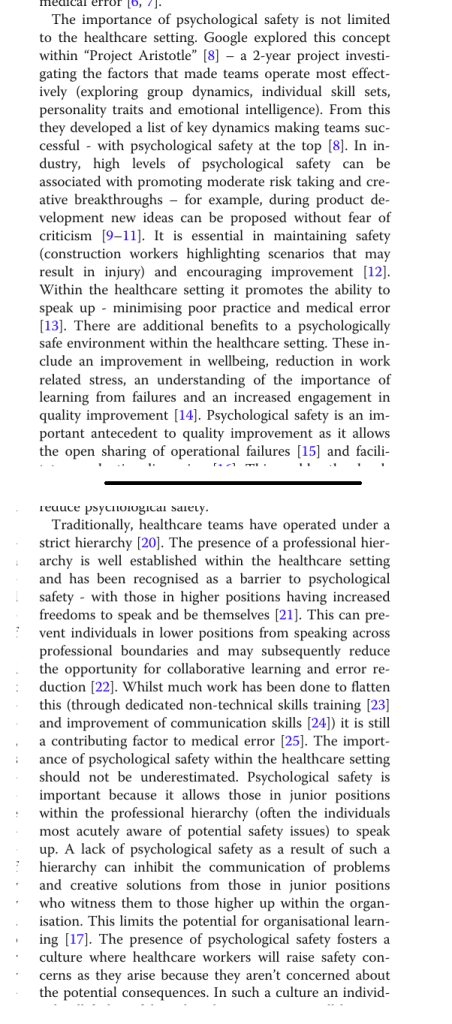
“Such individuals contribute by discussing risk and adapting to avoid error; consequently, the organisation can find new pathways and processes to facilitate future positive outcomes”
They “demonstrate that psychological safety is consistently shown to be present (often to high levels) within the populations of healthcare workers studied. However, the analysis demonstrated that there is consistently a number of individuals who report feelings and behaviours consistent with low psychological safety”
“Several studies indicated that psychological safety had a significant benefit on the working environment, particularly when applied to teamwork, team creativity and quality improvement”
No healthcare studies (as of 2021) “provided statistically significant evidence of correlations between low psychological safety and adverse outcomes (impossible in the case of the qualitative studies)”
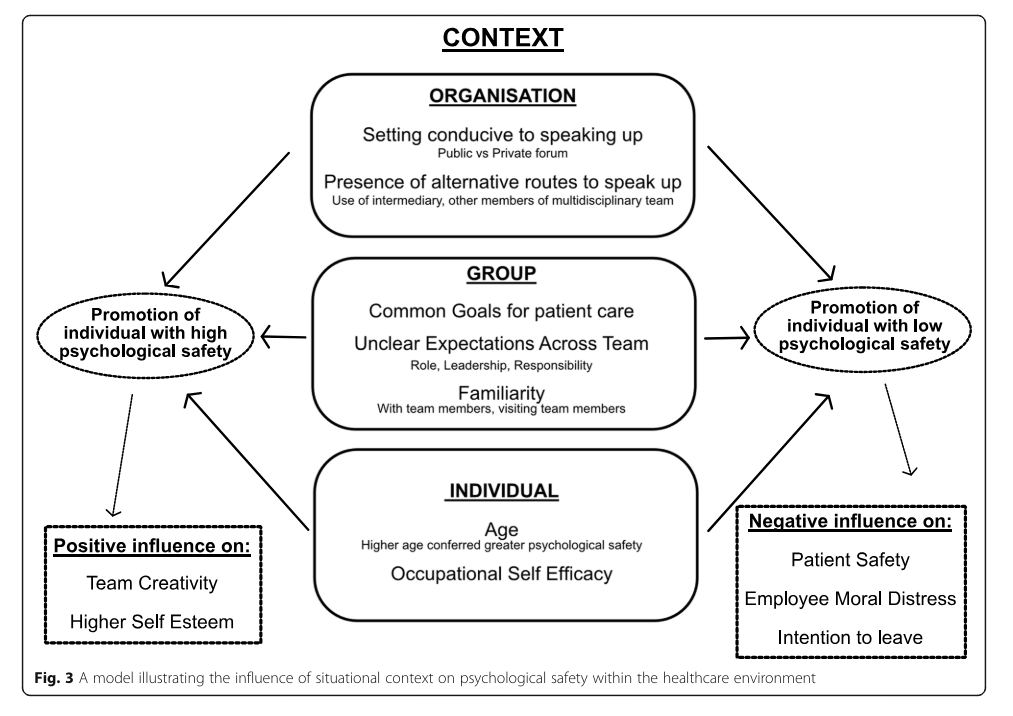
Nevertheless, “there was a strong feeling that this had a negative impact on patient safety. This was predictable based upon prior research; but it was also interesting to observe some of the potential consequences for the individual worker – low self-esteem, increased intention to leave the profession and risk of moral distress”
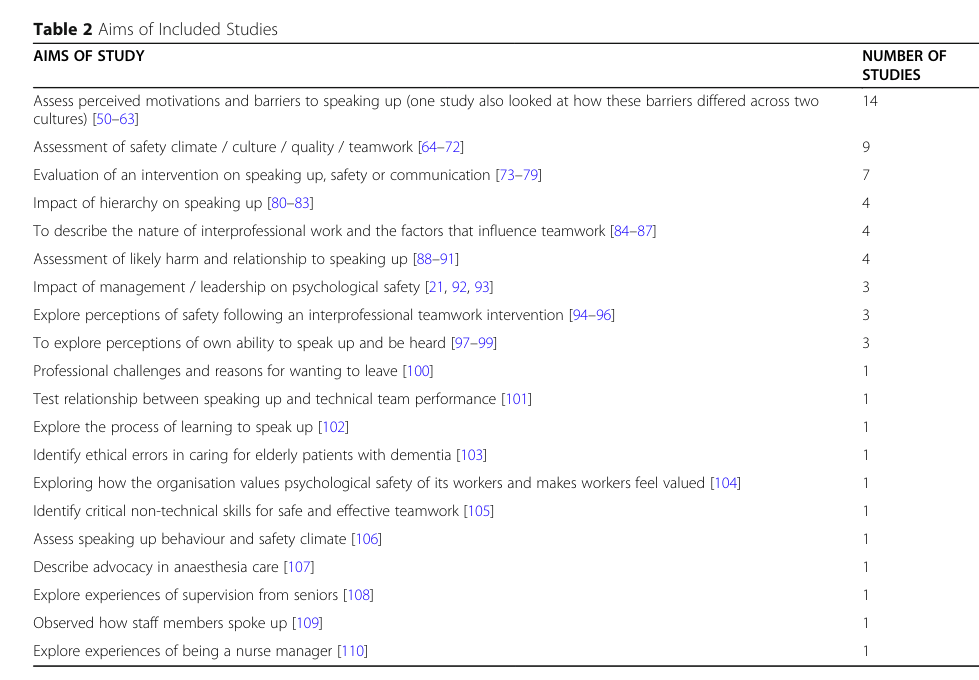
“It is not surprising that effective reporting channels, all members of the team feeling enabled and high occupational self-efficacy were key in promoting psychological safety”
Both organisational factors, like reporting channels and feedback to individuals, and individual factors, like confidence and knowledge base, were found to promote or inhibit PS
“at the organisational level, within the category of infrastructure, we observed that the setting for speaking up had an impact on an individual’s psychological safety. An individual may feel confident to speak up in the context of a private setting but be constrained by the context of a public venue”
Further, “Organisational culture has an influence on situational context and the consequential perception of a psychologically safe environment. Changing the culture of an organisation, envisaged with a view to improving psychological safety, can be challenging due to the presence of multiple stakeholders and the complexities associated with the healthcare setting”
“Many of the factors that contribute to psychological safety are not malleable or easy to change (especially within the constraints of a resource poor environment)”
“It is also likely to be the case that some factors promoting psychological safety will be unique to the team itself, and the individual personalities and stresses that are found within that particular environment”
Ref: Grailey, K. E., Murray, E., Reader, T., & Brett, S. J. (2021). The presence and potential impact of psychological safety in the healthcare setting: an evidence synthesis. BMC health services research, 21, 1-15.
Study link: https://link.springer.com/article/10.1186/s12913-021-06740-6
My site with more reviews: https://safety177496371.wordpress.com

 SafetyInsights.org
2 thoughts on “The presence and potential impact of psychological safety in the healthcare setting: an evidence synthesis”