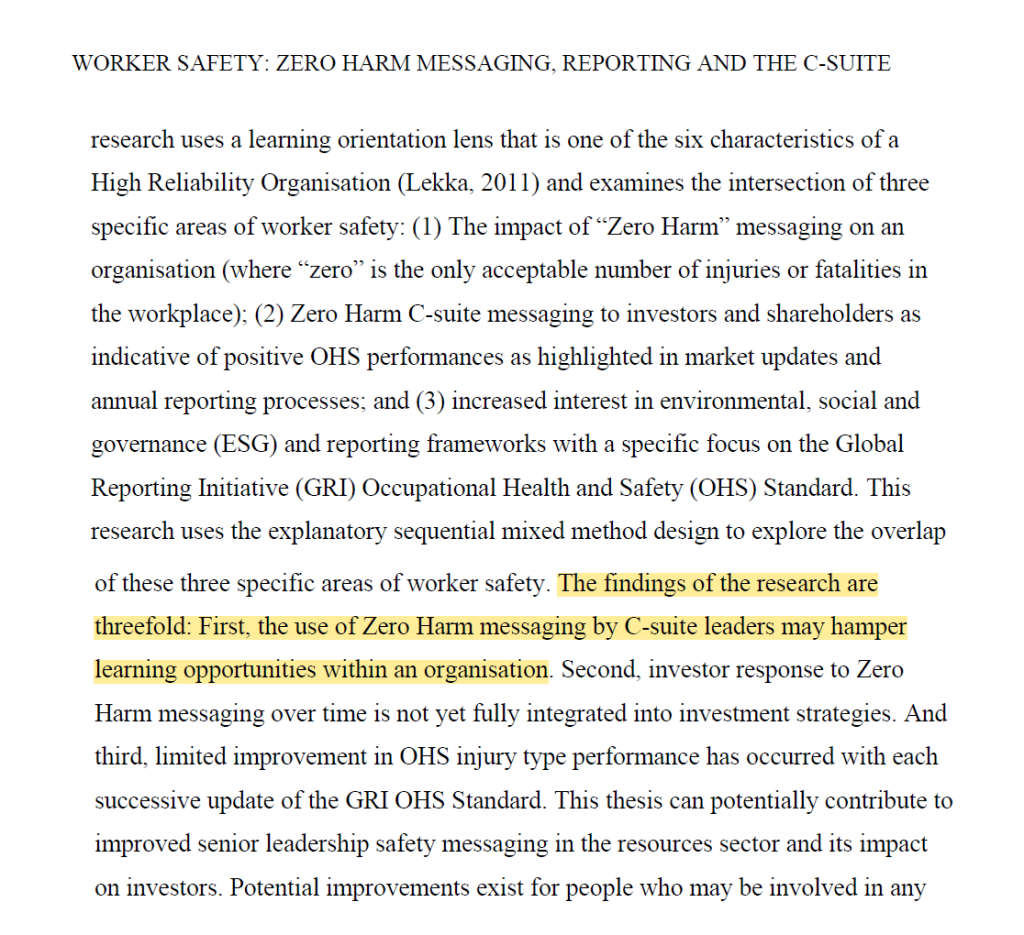
A really interesting doctoral thesis from @dr simon Roberts, exploring:
1) the impact of zero harm messaging on organisational performance
2) zero harm C-suite messaging to investors and shareholders
A range of data was obtained from the mining industry, including mid-year and end of year reports, sustainability reports, and analysis of meeting transcripts.
I can only cover a few findings.
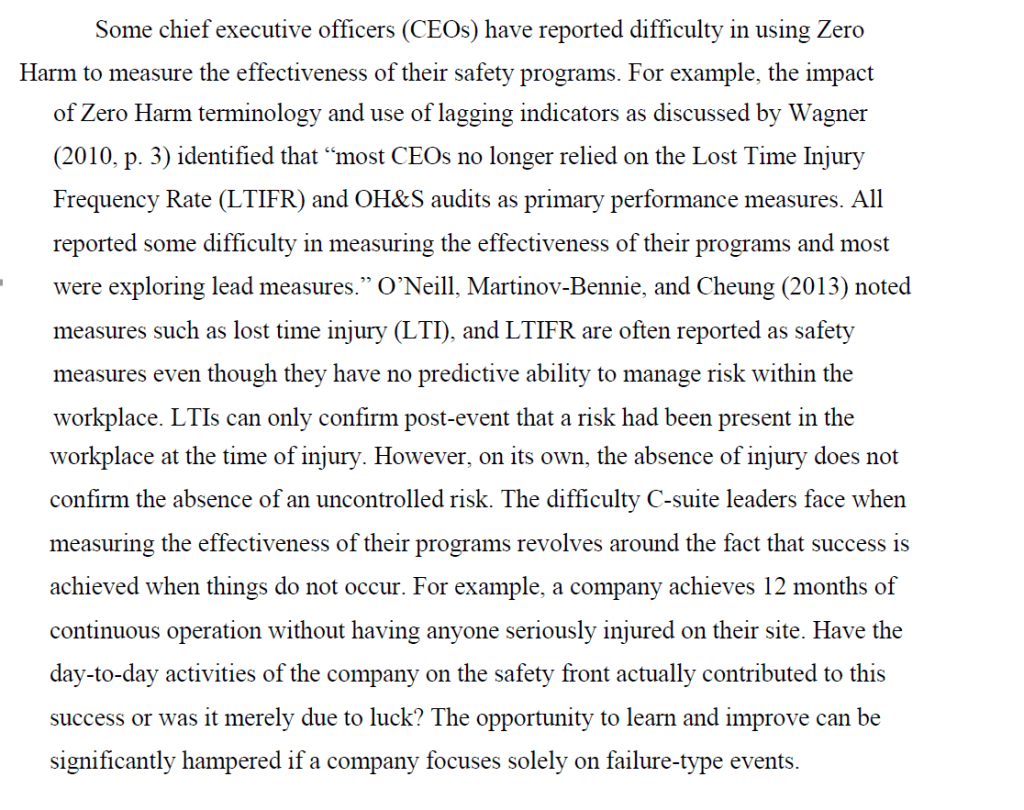
Key findings:
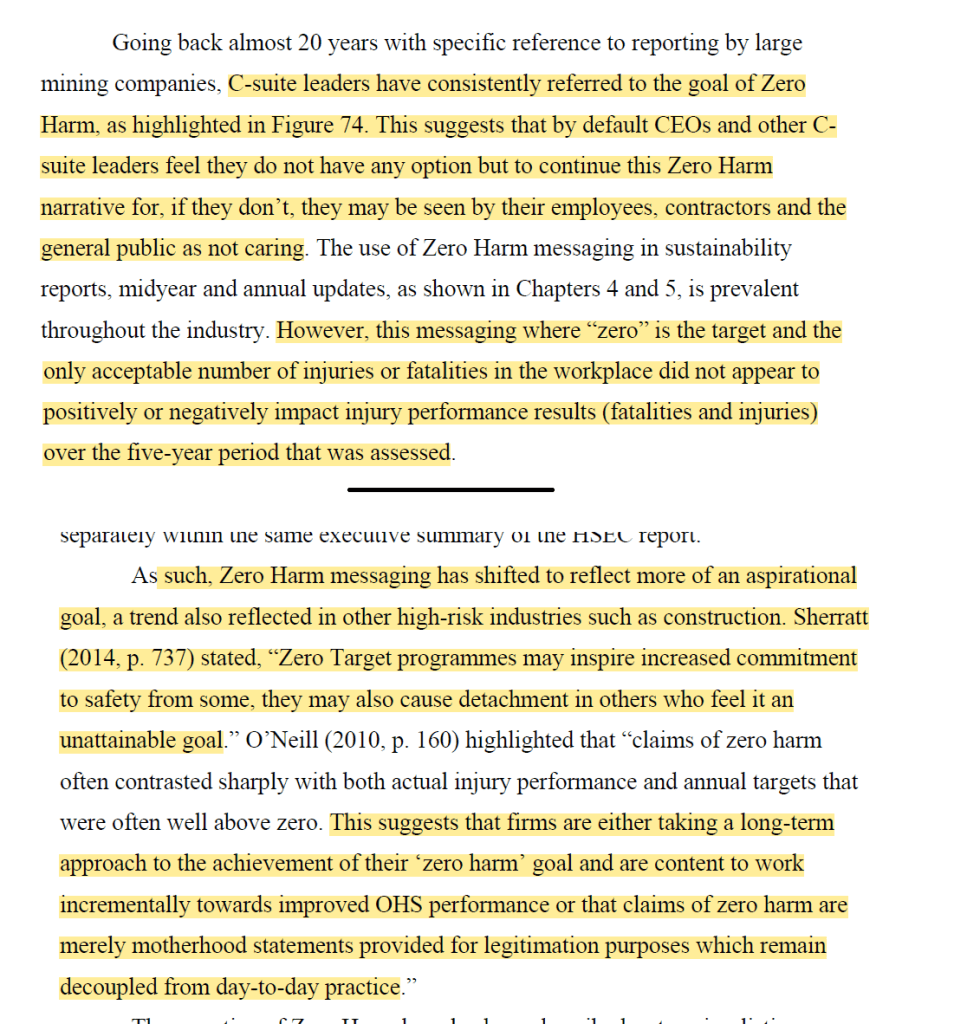
· “Using Zero Harm themes and messaging did not appear to impact injury type performance results either positively or negatively over the five-year period
· [** Although this may not surprise people too much as we may not expect zero harm messaging to directly impact injury/fatality performance, and they’re too rare and statistically variable to be adequately powered]
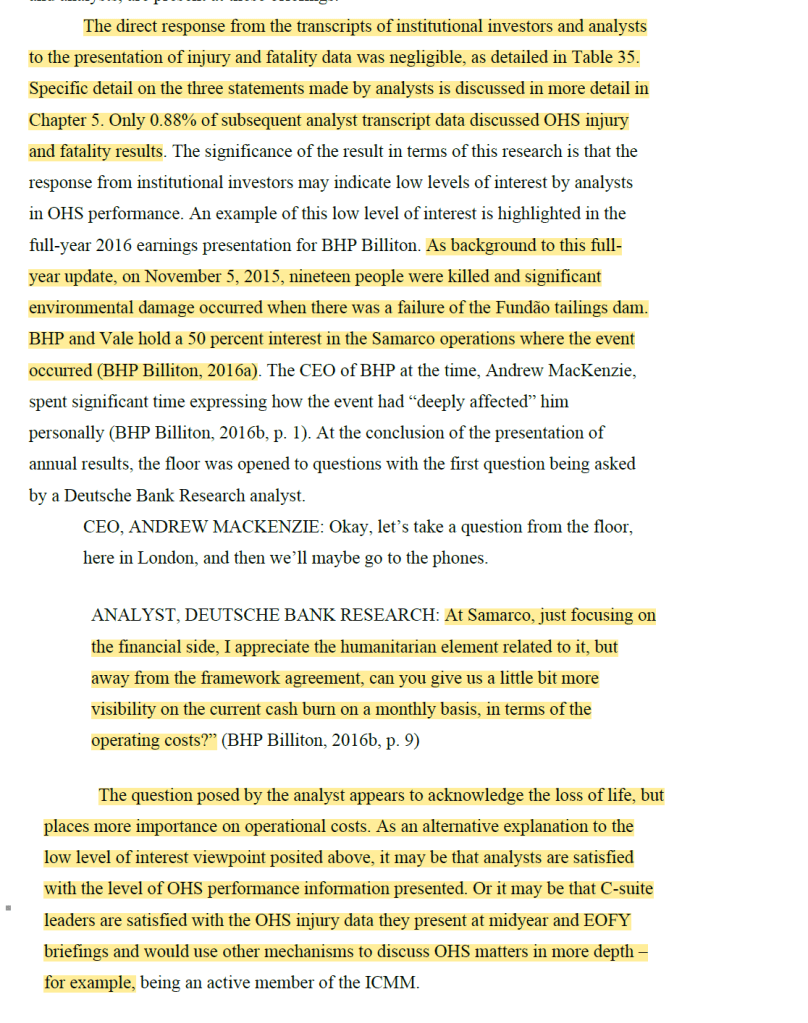
· “The direct response from the transcripts of institutional investors and analysts to the presentation of injury and fatality data was negligible”
· “Specific detail on the three statements made by analysts is discussed in more detail in Chapter 5. Only 0.88% of subsequent analyst transcript data discussed OHS injury and fatality results”
· That is, less than 1% of discussions between investors and the CEOs at mid and end of year meetings involved a discussion of safety
· Simon mentioned that this lack of investor interesting was surprising, noting how >300 analysts were analysed and only 3 comments regarding safety were recorded “even when company had had multiple fatalities in the year – this was different from what was written in the annual reports – annual reports would report negative information but quickly off-set by writing something positive – like sad that we had fatality but happy to report our TRIFR went down”
· “When assessing the overall trend of Zero Harm type messaging in sustainability reports and market updates, it was evident that C-suite leaders spent more time discussing injury type performance measures, such as the TRIFR, and general safety-related performance, when presenting to the market versus discussing fatality-related events in detail”
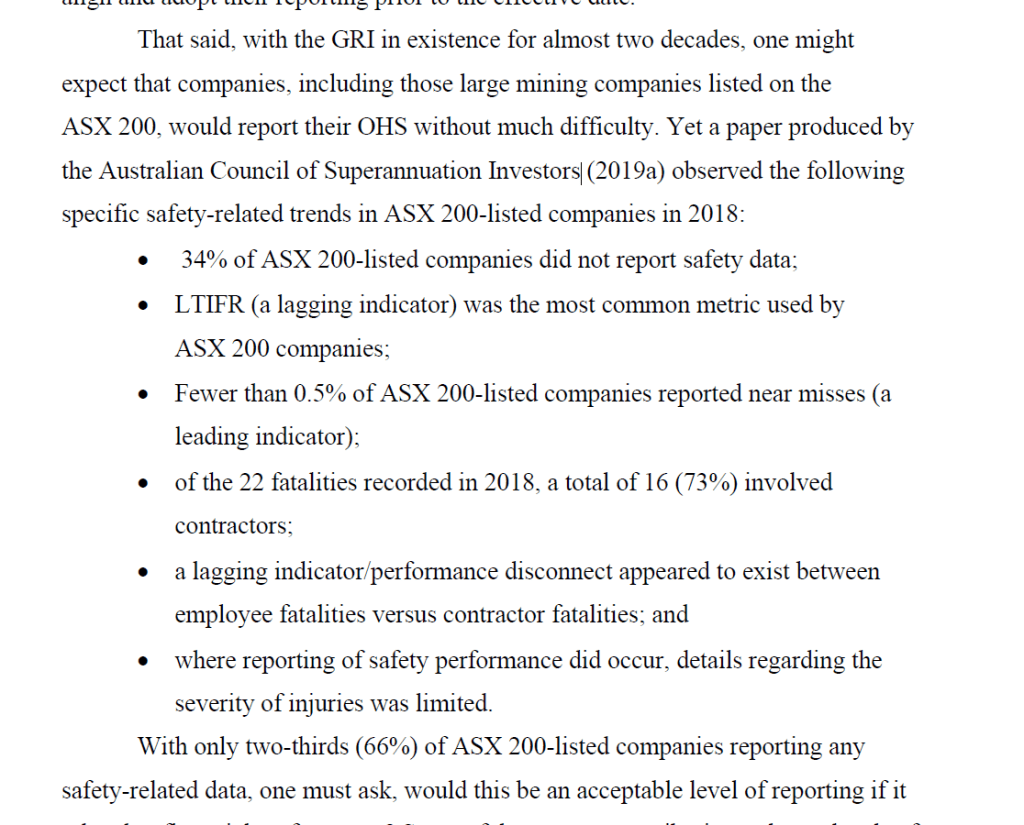
· “When analysing comments specific to OHS injury performance (fatalities), it was apparent that negative statements were associated with these events. However, they were quickly offset by positive statements around overall injury performance data –that is, total recordable injury rate or vice versa”
· “With a total of 342 analysts participating in midyear and full-year updates, it is interesting to note that questioning on OHS injury performance is limited when C-suite leaders highlight loss of life on an annual basis”
· Citing prior research, it’s noted that “C-suite and senior leaders found difficulty in measuring the effectiveness of their OHS programs and using lagging indicators such as LTIFR, TRIFR did not add much value in driving effective OHS performance”

Ref: Roberts, S. D. (2020). Worker safety: zero harm messaging, reporting and the C-suite.
My site with more reviews: https://safety177496371.wordpress.com

 SafetyInsights.org
One thought on “Worker safety: zero harm messaging, reporting and the C-suite”