
This conceptual modelling study had an interesting premise – they explored the risks resulting from overlapping construction works.
I think most of us can recall many recent incidents involving SIMOPS, where different work groups contribute to hazardous conditions for others (often due to designs and sequencing not accounting for these interactions).
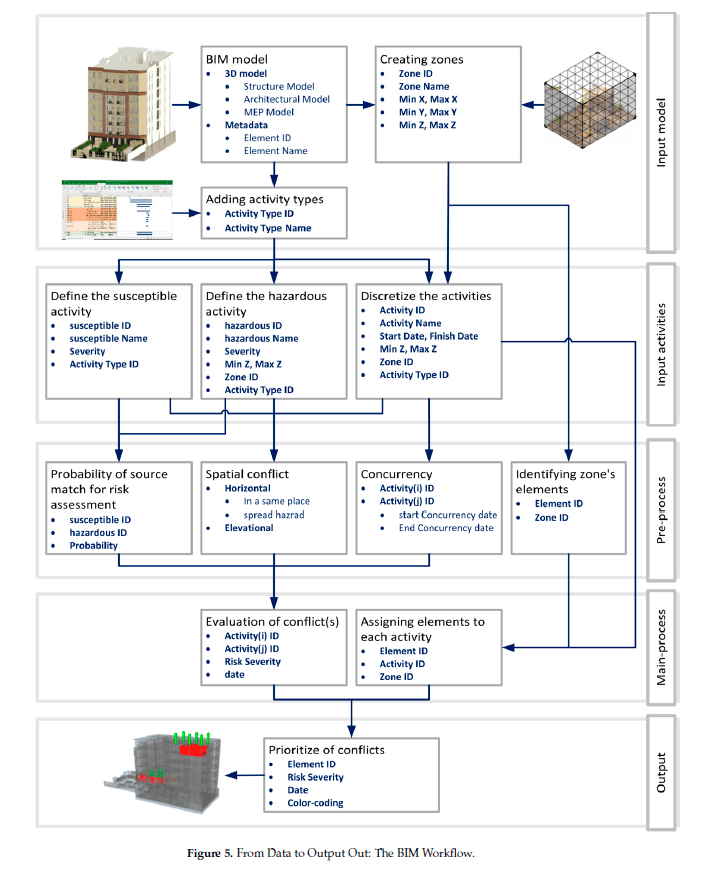
This study drew on data from OSHA accidents, feeding them into a simulated BIM environment and evaluating risk levels from overlapping building works.
Some findings:
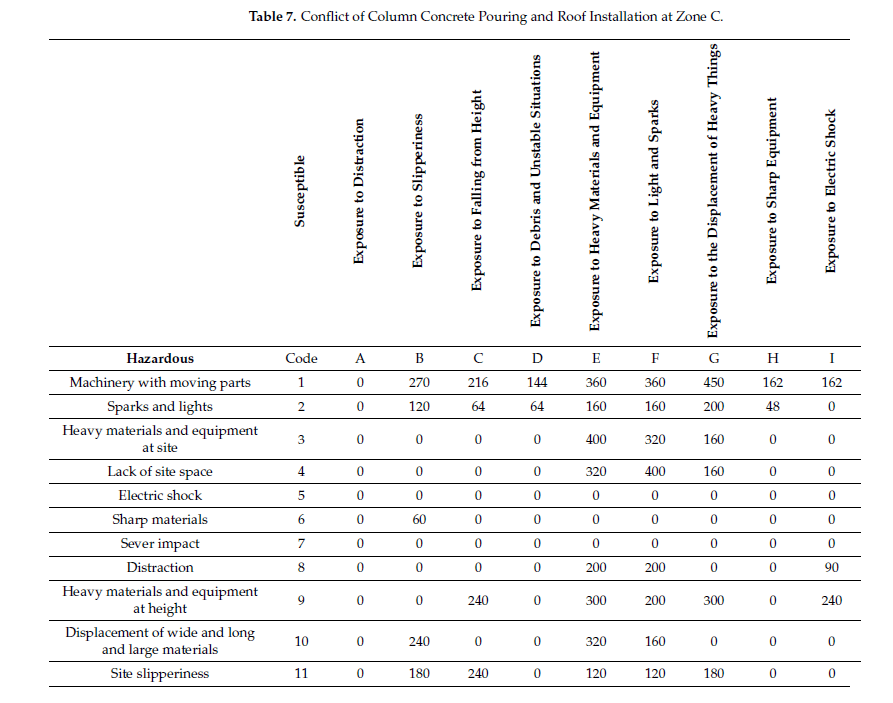
· Based on accident analysis, they extracted 11 hazardous activities and 9 susceptibility activities (e.g. the activities with potential for overlap)
· “While the construction industry has long been aware of the inherent risks associated with individual activities, overlapping construction activities introduce another layer of complexity to safety”
· Applying the overlapping hazard assessment in the BIM environment “revealed 75 conflicts that were neglected before”
· And, “These overlooked conflicts can be considered blind spots in traditional evaluations, underscoring the need for a more comprehensive approach”
· For instance, pouring concrete in columns and roof installation in elevated slabs are two examples that “often occur sequentially or concurrently in building construction” and “The safety hazards associated with one activity can indeed increase the risks for the other”
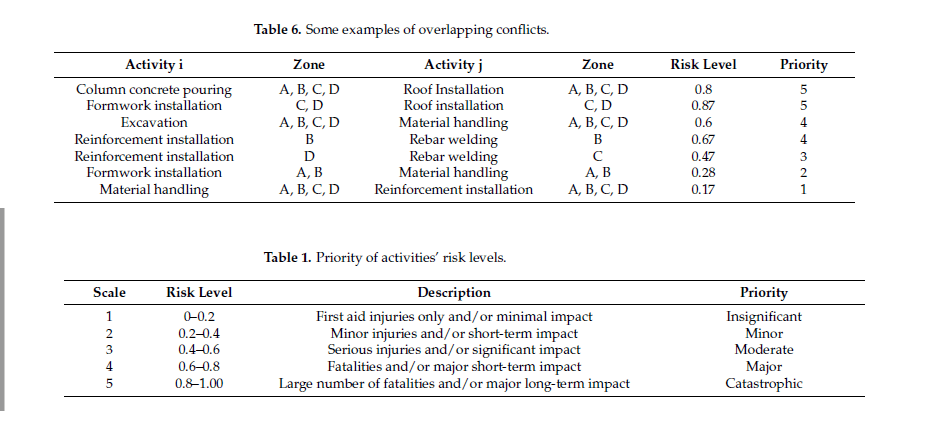
· Moreover, other concurrent works like roof installation, steel fixing, excavating and material handling can be hazardous tasks that “that can take place at the same time, and many injuries happen when these activities occur together”
· “Focusing on the hazards pertaining to each activity without considering hazards stemming from neighboring activities can expose workers to unforeseen hazards”
· “After implementing the proposed model, it becomes evident that while numerous studies have delved into identifying and categorizing individual construction risks, few have holistically approached the issue of overlapping conflicts”
· “The introduction of the “overlapping conflict” concept, as we have proposed, fills a notable gap in the current literature, emphasizing overlapping conflicts where activities intersect in time, space, and hazard potential”
I think the paper and its findings (which are specific to building construction and a limited subset of overlapping works) are less interesting – but the premise is far more interesting.
Given the maturity of BIM and machine learning, I can think of a lot of potential for more mature assessments of overlapping works and SIMOPs to feed into temporary works and design; e.g. computers running millions of simulations to assess hazardous interactions.
Ref: Rashidi Nasab, A., Malekitabar, H., Elzarka, H., Nekouvaght Tak, A., & Ghorab, K. (2023). Managing safety risks from overlapping construction activities: A BIM approach. Buildings, 13(10), 2647.
Study link: https://doi.org/10.3390/buildings13102647
My site with more reviews: https://safety177496371.wordpress.com

 SafetyInsights.org