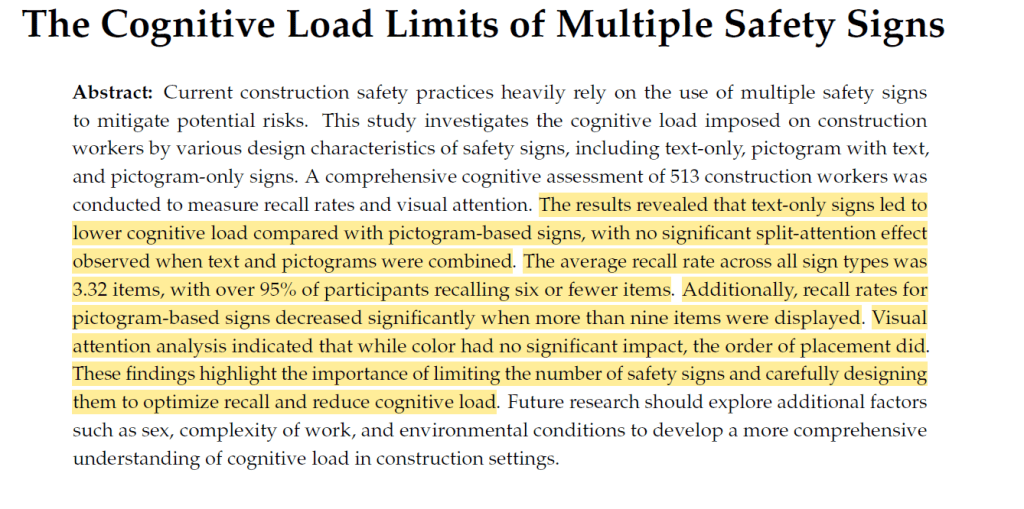
This study evaluated the cognitive load imposed on construction workers by multiple safety signs with design configurations – including text only, pictograms and text, and pictogram only.
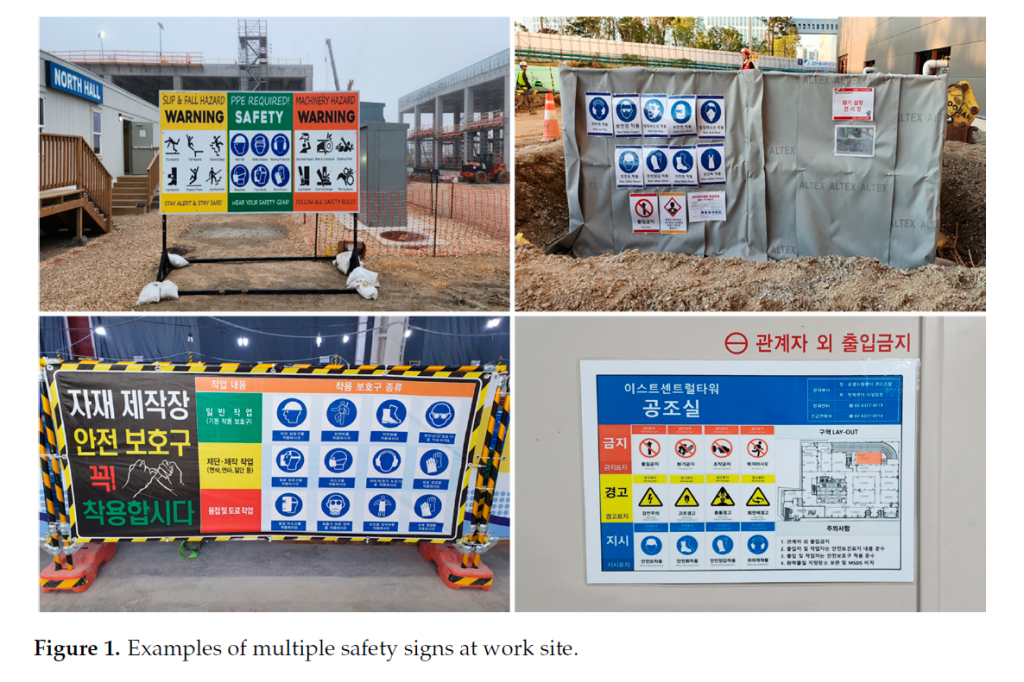
513 Korean construction workers were included.
Background:
- “To mitigate the potential risks, it is a standard practice to post multiple safety signs at work sites”
- “However, given that human information processing capacity is finite, displaying an excessive amount of information may lead to cognitive overload”
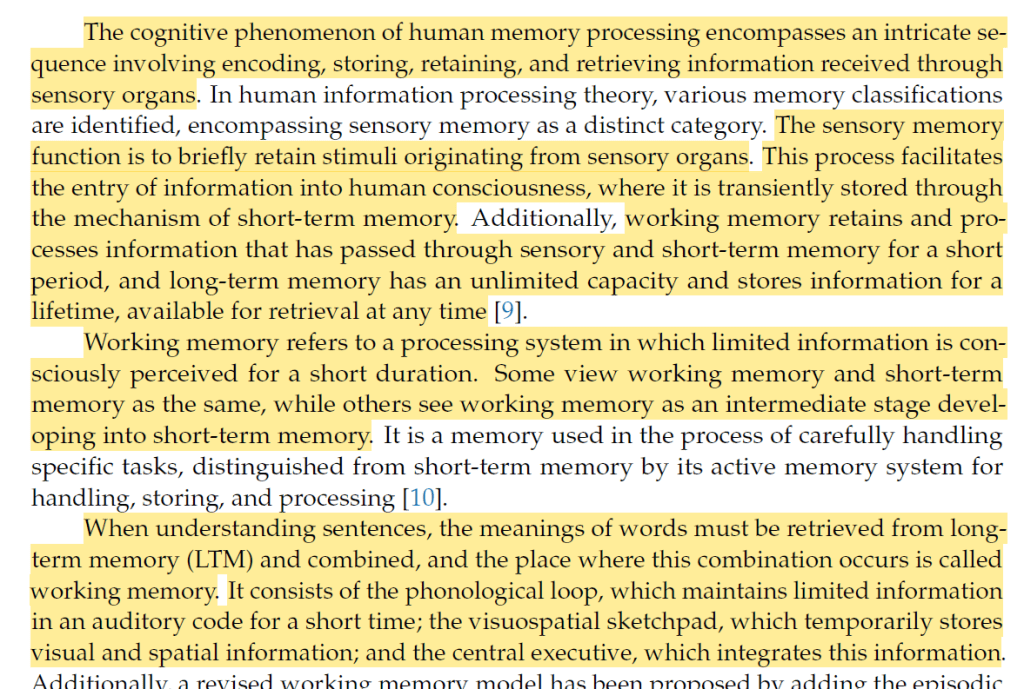
- “Humans receive external stimuli and information by interacting with their surroundings, and the received information is processed in the human cognitive memory system”
- “About 60% of the information is received through visual stimuli and 20% through auditory stimuli, making sight an extremely important sense and the most frequently used one”
- Memory is asserted to consist of several storage units, including sensory memory, short-term memory and long-term memory
- “When image information can only be understood in conjunction with text, comprehension of the text takes precedence” whereas in “materials composed of images and text, when deriving meaning solely from images is challenging, the process of constructing meaning through text takes precedence”
- “When visual and auditory information are presented simultaneously, working memory processes them independently. However, when learning visual (images) and auditory (verbal) information simultaneously, if text, which is a type of visual information, is provided at the same time, it results in cognitive overload in the visual working memory”
- “Providing both visual information and text at the same time causes an overload in the visual working memory capacity. This phenomenon of cognitive overload is known as the redundancy effect”
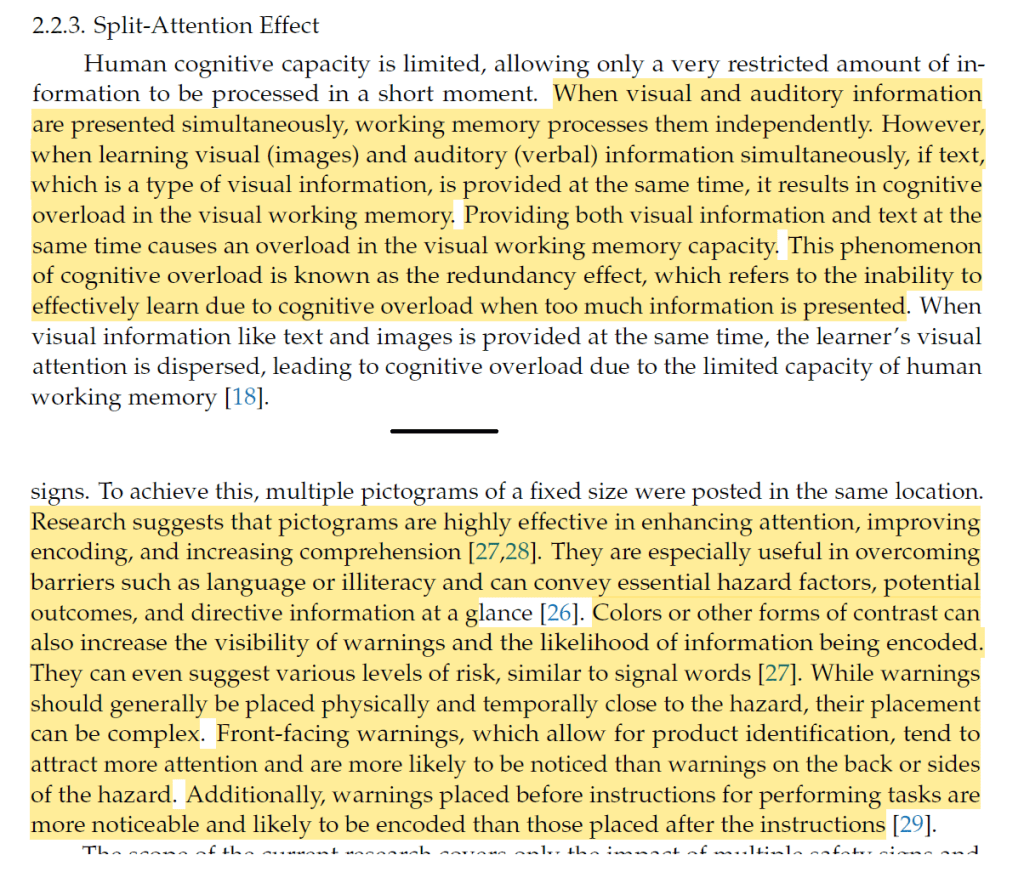
- “pictograms are highly effective in enhancing attention, improving encoding, and increasing comprehension [27,28]. They are especially useful in overcoming barriers such as language or illiteracy and can convey essential hazard factors”
- “Colors or other forms of contrast can also increase the visibility of warnings and the likelihood of information being encoded”
Key findings:
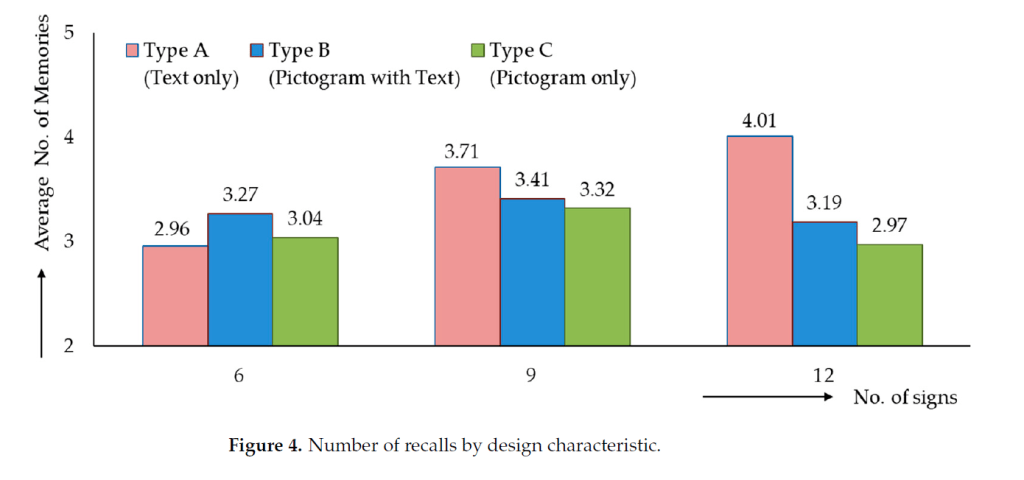
- “text-only signs led to lower cognitive load compared with pictogram-based signs, with no significant split-attention effect observed when text and pictograms were combined”
- The “average recall rate across all sign types was 3.32 items, with over 95% of participants recalling six or fewer items. Additionally, recall rates for pictogram-based signs decreased significantly when more than nine items were displayed”
- “Visual attention analysis indicated that while color had no significant impact, the order of placement did”
- “despite an increase in the amount of displayed information, participants were only able to recall an average of 3.32 items from multiple safety signs”
- “Most participants, over 90%, were only able to recall between two and six items, which is consistent with Miller’s magic number 7 +- 2”
- “The familiarity workers have with their work environment and tasks can cause them to overlook safety signs, even when they are intentionally directed to pay attention to them”
- “there was no significant difference in the number of items recalled based on age or experience, but there was a difference in the effectiveness of pictograms and warning texts in conveying information”
- “Pictograms were found to have a higher cognitive load and were less effective in conveying information compared with warning texts”
- “presenting both pictograms and warning texts in multiple safety signs did not result in a divided attention effect”
- “the visual attention characteristics in multiple safety signs showed that to minimize cognitive load, the recall rate decreased sequentially from left to right, starting with the first stimulus presented. This indicated a stronger primacy effect than a regency effect”
- “While safety signs typically combine pictograms and text, it was most effective to use both for up to six signs”
- “For communicating more than nine hazards, using only text became more effective as pictograms could be too complex and overloaded with information”
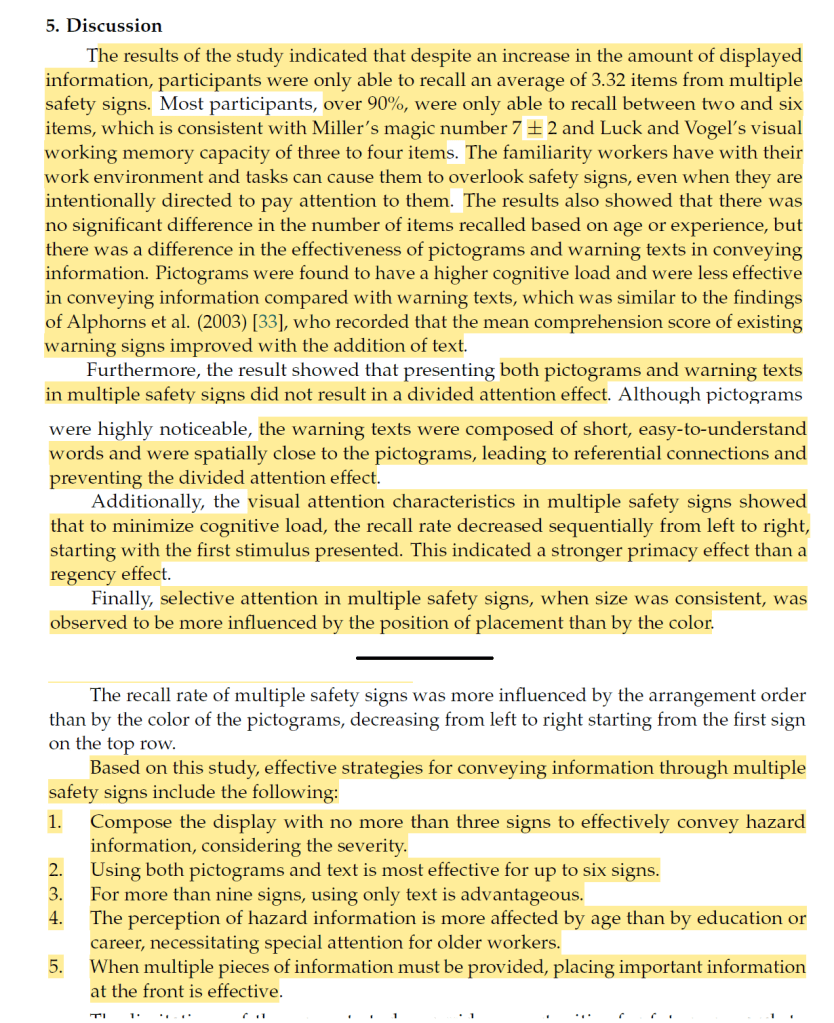
Finally, they provide some suggestions on the design of signs – see image below.
Ref: Kwon, Y. H., Kwon, Y. B., Nwagbala, D. C., & Park, J. Y. (2024). The Cognitive Load Limits of Multiple Safety Signs. Buildings, 14(8), 2391.
Study link: https://doi.org/10.3390/buildings14082391
My site with more reviews: https://safety177496371.wordpress.com

 SafetyInsights.org