An interesting Masters from J Allan Turner, who interviewed Safety-II experts. (Note it’s from 2017 – so there’s a lot of progress in application since then.)
The following questions were explored:
- How do organizations implement Safety-II?
- How do organizations obtain buy-in from their leadership and employees?
- What tools and techniques are used in daily practice?
- How is the success of Safety-II measured?
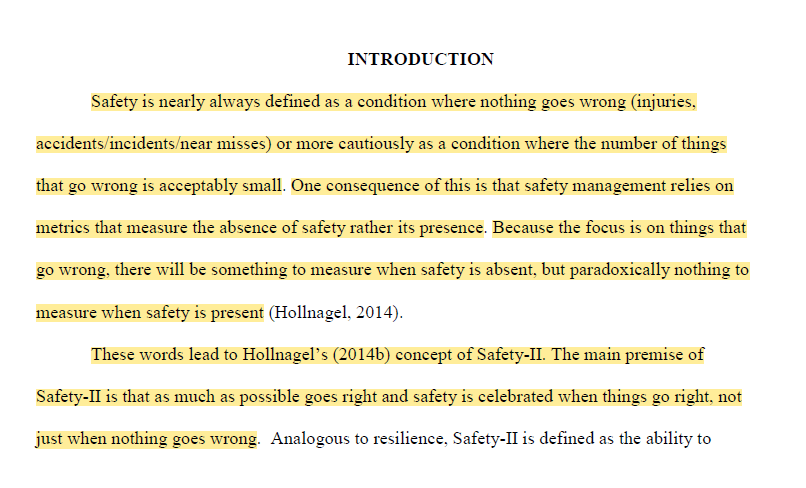
WAY too much to cover, so just a few extracts:
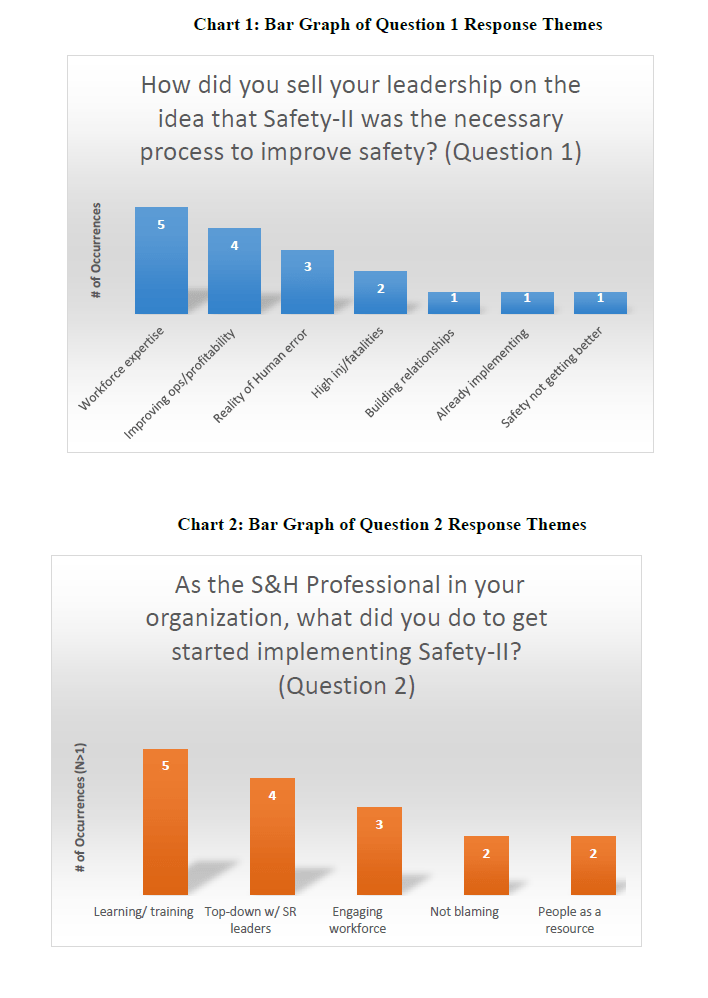
- “acknowledging the reality of human error was a key point in selling Safety-II to their leadership” according to 3 participants
- “Empowering decision making was noted as a key tool in ensuring employee success by four of the interviewees”
- “Eight of the interviewees … noted that their employees have an active voice in their daily activities”
- Six participants “noted that leaders view employees as a resource”
- “One respondent stated that incident investigations are done from perspective of investigating success not failure”
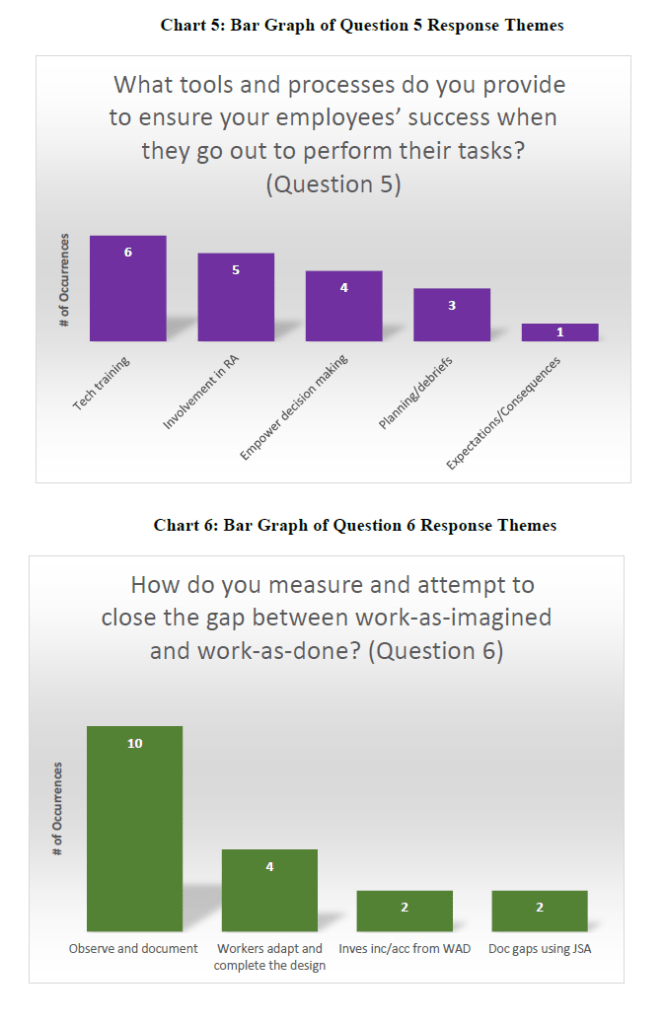
- Two “investigate from the perspective of work-as-done, not work-as-imagined. One investigates the systemic structures in place that allow incidents to occur”
- “All of the interviewees noted using some form of risk management tool or process to proactively manage risk” and “Involvement in the risk assessment process was noted as a key tool by five of the interviewees”
- “Three of the interviewees reported that they view their employees as a source of resilience and three also using Hollnagel’s (2017) Resilience Assessment Grid”
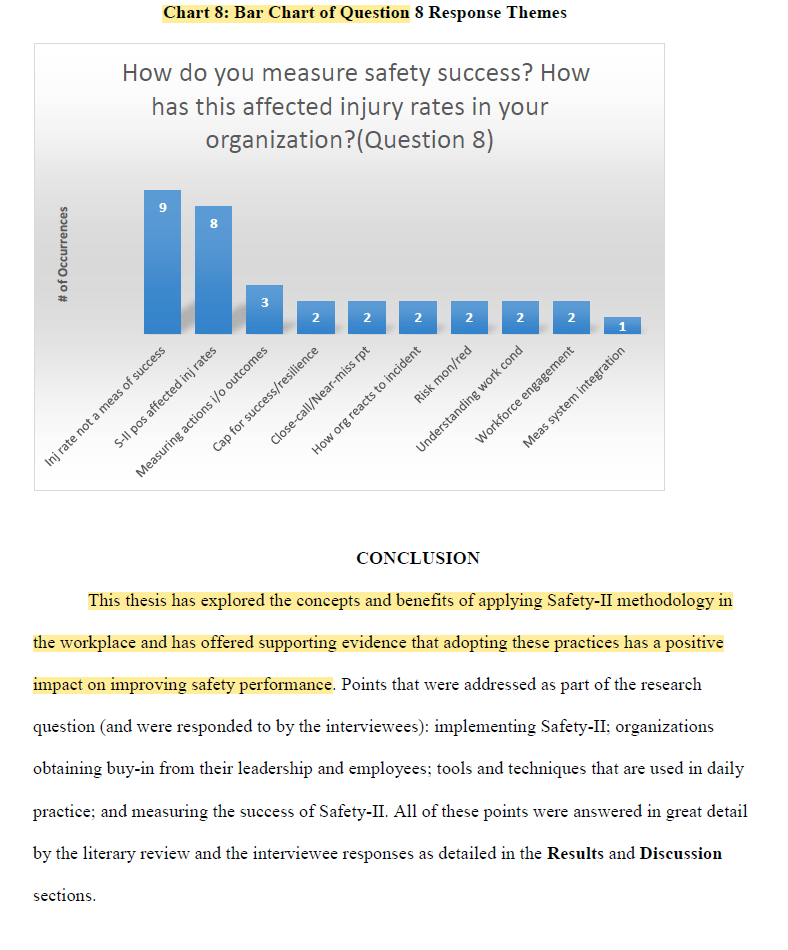
- “nine of the thirteen interviewees reporting that measuring safety by reactive measures was not an effective means of measuring safety success, but eight of those interviewees stated that Safety-II had positively affected injury rates”
- “There were numerous methods reported by the interviewees … on how they measured safety success instead of or in addition to reactive measures. Three measure actions instead of outcomes, two measure capacity for success and resilience, two measure close-call/near-miss reporting, two measure how the organization reacts to an incident, two measure risk monitoring and reduction, two measure understanding conditions in which you work, two measure workforce engagement, and one measures system integration”
- “If there is a gap between Erik Hollnagel’s concepts and what is being practiced by the interview respondents, it would be that while no one disagreed with the concepts of Safety-II as an effective means to improve safety, nine of the respondents are still reporting safety performance using reactive metrics”
- “This despite that all were in agreement that these were not an effective measure of safety performance. This demonstrates that much work remains to be done in convincing those organizations leaders to view safety performance by these methods”
- Regarding WAI / WAD “Auditing to work-as-imagined is auditing to a fantasy. Talk to your employees and understand how work-is-done and give dignity to that worker”
- “None of the respondents had a quantifiable method for measuring the gap and several opined that a method to do so did not exist”
- “We have multiple success measures. One is that the field crews understand what the conditions are doing to them, how the conditions are managing the situation which drives a deliberative and less efficient response instead of the crews managing the situation”
Ref: Turner, J. A. (2017). How is Safety-II Being Applied in Practice and is it Working? (Master’s thesis, East Carolina University).
Study link: https://thescholarship.ecu.edu/server/api/core/bitstreams/939079f6-0a70-4dd8-9966-5cb742216a7d/content
My site with more reviews: https://safety177496371.wordpress.com

 SafetyInsights.org