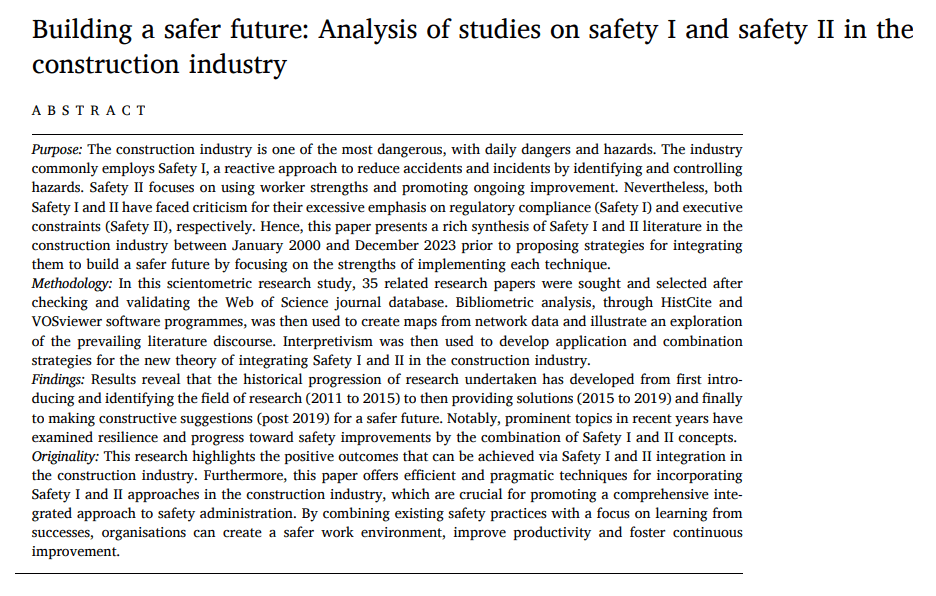
This research synthesis may interest people – it evaluated 35 Safety-I & Safety-II papers relating to construction safety.
A key focus was highlighting areas for integration. Not a summary – but paper is open access.
I found some of the arguments a bit janky or underdeveloped, but appreciate the challenge the authors had; it also makes for a decent reference on what research is out there.
Some points:
- According to the paper, “The primary goal of both Safety I and II is to safeguard the “diversity of living people” and mitigate the potential for harm and loss of life”
- And “Both strive to provide a secure working environment and reduce the occurrence of dangers and potential harm”
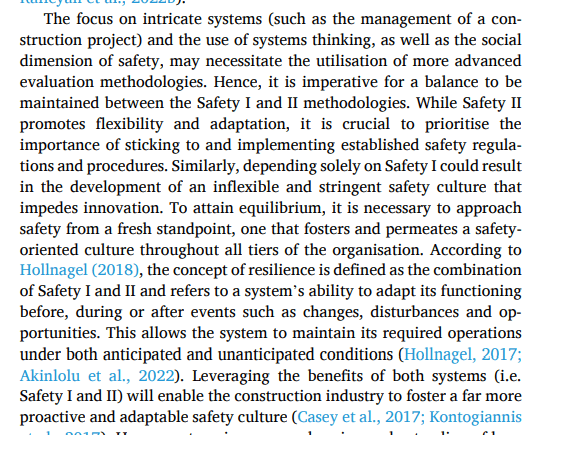
- Many different methods exist to achieve these objectives – “To achieve the optimal equilibrium between the two methods, it is necessary to conduct a meticulous evaluation of the circumstances and requirements of each construction site”
- “Depending on the specific setting, certain conditions may necessitate strict adherence to the norms, while others may call for a more adaptable and collaborative approach”
- “For example, in the case of routine tasks that are well-known to have potential dangers, Safety I measures (such as mandatory personal protective equipment and standardised procedures) may be enough. Nevertheless, in the face of unforeseen hazards or difficulties, the Safety II approach, which emphasises worker engagement, learning and solution-oriented mindset, may offer superior effectiveness”
- Further, “the incorporation of Safety II concepts necessitates surpassing mere reactivity (Peng et al., 2023). To do this, it is necessary to consistently seek input from employees, have regular safety meetings, and foster an environment where workers can collaboratively propose and implement safety solutions”
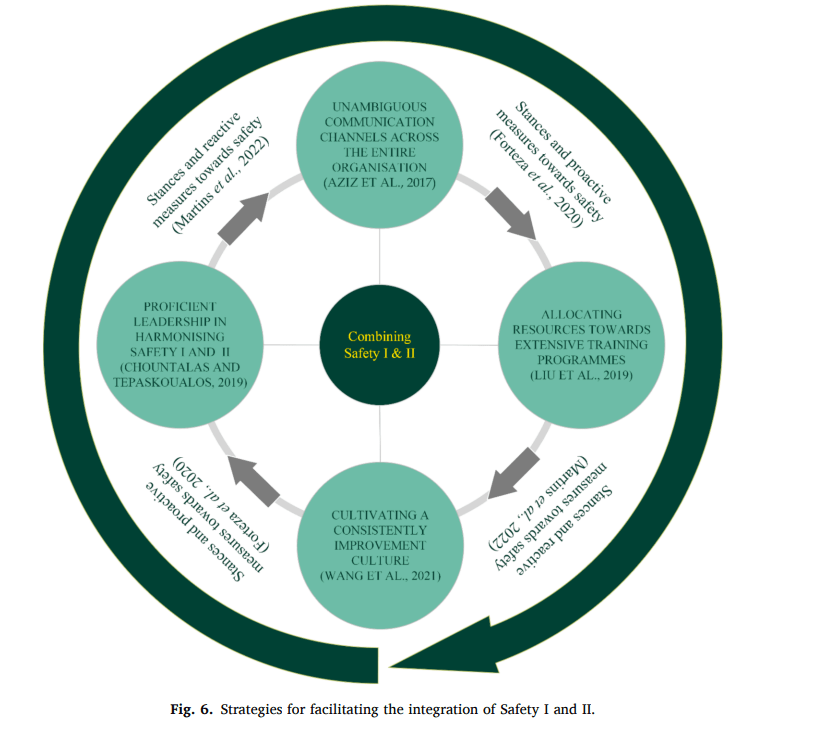
- “Ultimately, effective leadership is required to reconcile both Safety I and II”
- “Moreover, an overemphasis on enforcement and discipline can be counterproductive, and a balanced approach that includes regular and consistent feedback, both positive and constructive, is recommended to motivate safe work practices and reduce hazards”
- “Finally, embedding safety practices into existing workflows and using small tests to identify effective strategies can help in achieving sustainable safety improvements”
- “Both the Safety I and II systems have their own strengths and limitations when it comes to interpreting safety management. By combining the benefits of these two approaches, organisations can establish healthier work environments”
- “ This involves not only identifying and effectively managing risks (Safety I), but also creating a culture that promotes learning, adaptability and resilience to internal challenges (resilience)”
- A keyword analysis revealed that ‘resilience’ and ‘Safety-I’ and ‘Safety-II’ are often “inextricably linked in the same paper”
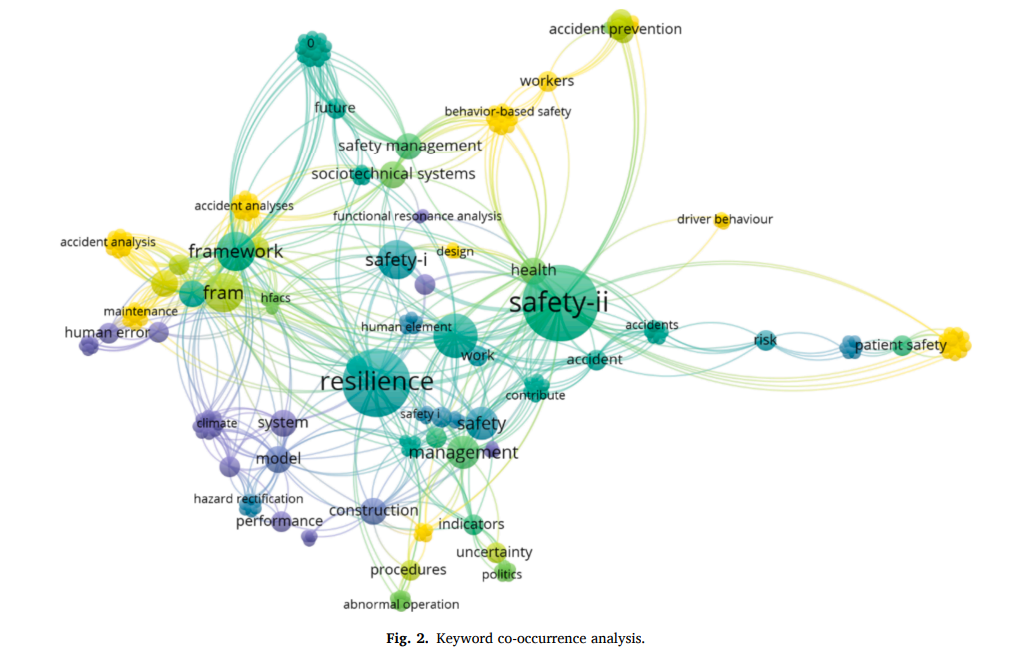
- “Moreover, the outcomes of the work produced are often theoretical or illustrative in terms of frameworks produced for future deductive testing. Considerably less attention has been given the large-scale case studies and empirical research to validate these in practice”
- Keyword analysis further revealed that much of the research has focused on theoretical frameworks, procedures, sociotechnical systems and thematic models rather than practical applications
- Some more recent work “indicates a shift towards examining human factors (Zarei et al., 2022) and behaviour-based safety (Homann et al. (2022) and their integration into various safety management functions”
- Sid Dekker was the most prolific author in this field based on their inclusion criteria, with other big names as expected (Hollnagel etc.)
- Australia had the most citations in this area with these inclusion criteria, other leaders were the UK and US
Authors: Sarvari, H., Edwards, D. J., Rillie, I., & Posillico, J. J. (2024). Safety Science, 178, 106621.
Study link: https://doi.org/10.1016/j.ssci.2024.106621
My site with more reviews: https://safety177496371.wordpress.com

 SafetyInsights.org