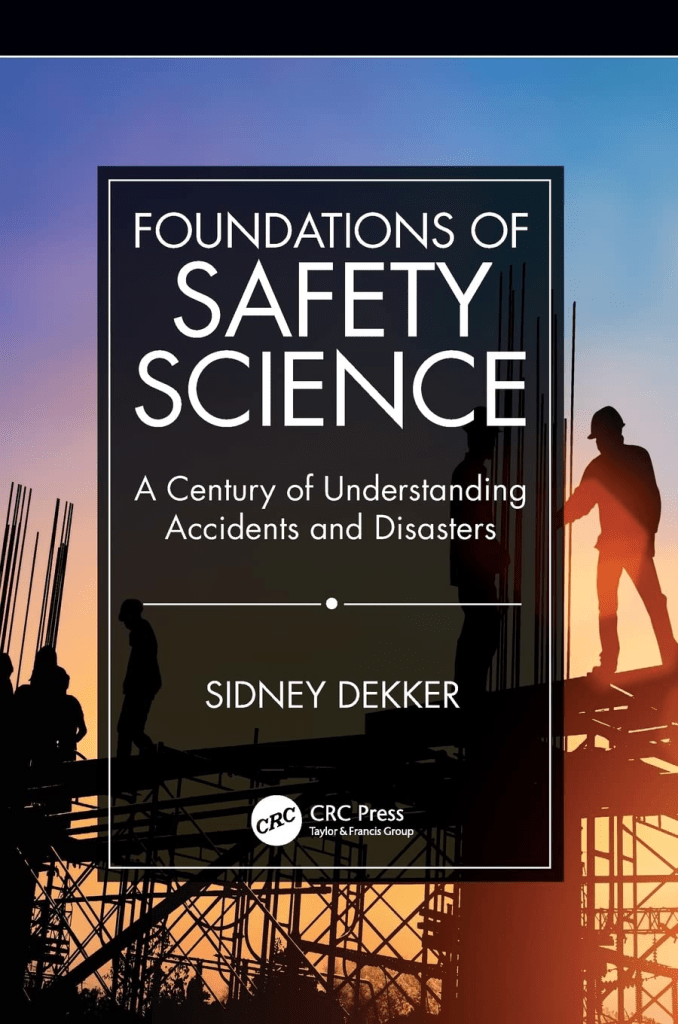
More extracts from Foundations of Safety Science, this time from Ch.11 on Resilience Engineering and the adaptive perspective. This is 1 of probably 2 or 3 more posts.
Some extracts:
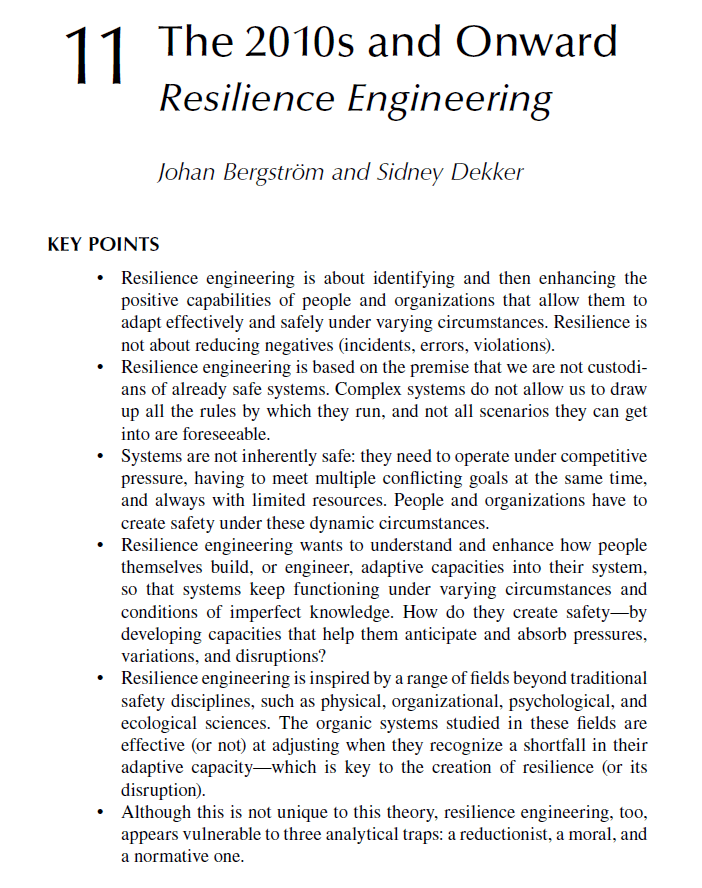
- “Resilience engineering is based on the premise that we are not custodians of already safe systems. Complex systems do not allow us to draw up all the rules by which they run, and not all scenarios they can get into are foreseeable”
- “Hollnagel makes the argument that we should not (just) try to stop things from going wrong. Instead, we need to understand why most things go right, and then ensure that as much as possible indeed goes right”
- “Safety is not about the absence of negatives; it is about the presence of capacities”
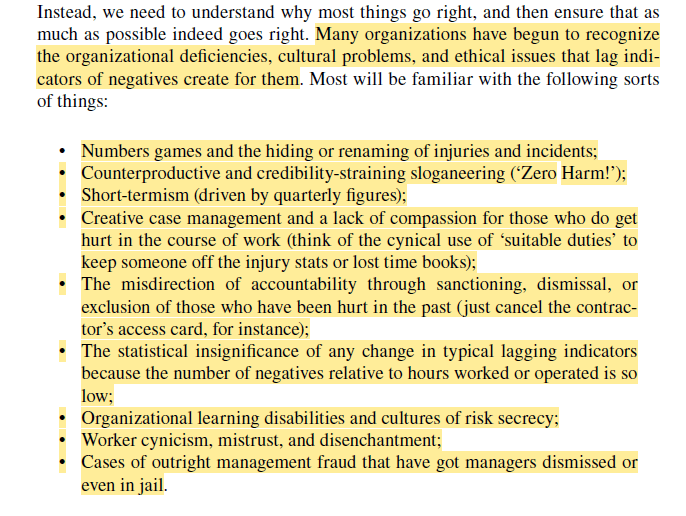
- Conversely, “many organizations have begun to recognize the organizational deficiencies, cultural problems, and ethical issues that lag indicators of negatives create for them”
- This includes (image 1): gaming behaviours and hiding or renaming of injuries, “credibility-straining sloganeering”, like zero harm, a drive for short-termism, a lack of compassion for those hurt (tokenistic alternative duties), statistical insignificance in changes to lagging indicator, cultures of risk secrecy and more
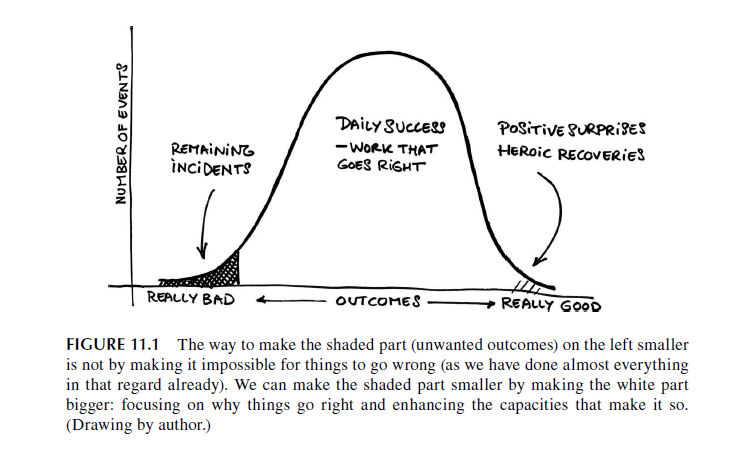
- Next they discuss the distribution of outcomes (image 2). To make further progress on safety, instead of simply trying to reduce the shaded part of what goes wrong, but by “understanding what accounts for the big middle part where things go right, and then enhancing the capacities that make it so”
- And “we do not make the shaded part smaller by making the shaded part smaller. We make the shaded part smaller by making the white part bigger”
These logics come from a wider body of safety science, which includes some intertwined positions, like:
- failures “represent the converse of the adaptations necessary to cope with the real world complexity” rather than being simply breakdowns of normally functioning systems
- “Individuals and organizations must always adjust their performance to varying conditions”
- Adjustments made by people are approximate being that resources and time are finite
- “Success can be ascribed to the ability of groups, individuals, and organizations to anticipate the changing shape of risk before damage occurs; failure is the result of a temporary or permanent disruption of that capacity”
Parts 2 & 3…some other time.
Ref: Dekker, S. (2019). Foundations of safety science. Routledge.
My site with more reviews: https://safety177496371.wordpress.com

 SafetyInsights.org
2 thoughts on “Foundations of Safety Science: Resilience Engineering and safety as the presence of capacities”