What are better ways to design procedure systems? And how do we balance between concrete action-required steps vs more flexible steps?
Check out yesterday’s pod which unpacked a model 1 (top-down, more set in stone and less flexible) vs model 2 (more adaptable and requiring interpretation from workers) perspective on procedures.
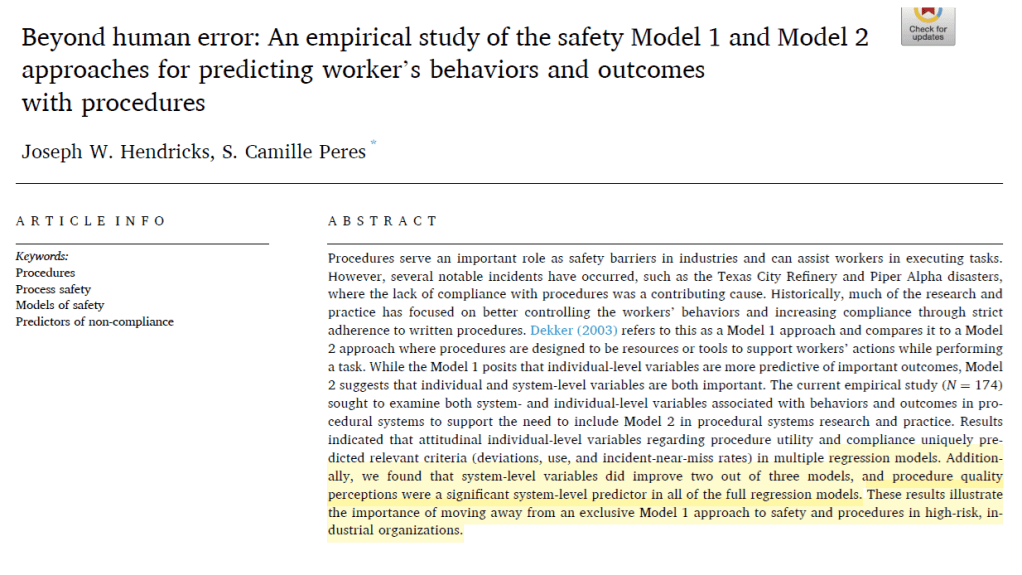
They found the best predictor of procedure use across all models was–shock horror–the procedure’s quality and useability.
Get that wrong, or base it mostly on work-as-imagined assumptions, and you’re going to run into a nasty, and possibly fatal, surprise.
Moreover, they recommend a relative shift towards more of model 2 – procedures as resources to support workers, than to purely constrain their behaviour (which is more or less a fantasy, anyway).
Spotify: https://open.spotify.com/episode/4bkXtRa1k4ARsF07L8YyGE?si=8gUX6b2pSBSO9XfvIWlgDg
Make sure to subscribe to Safe As on Spotify/Apple, and if you find it useful then please help share the news, and leave a rating and review on your podcast app.
I also have a Safe As LinkedIn group if you want to stay up to date on releases: https://www.linkedin.com/groups/14717868/?lipi=urn%3Ali%3Apage%3Ad_flagship3_detail_base%3Bhdg8uJYYT%2BmsMqZvpHBmdQ%3D%3D


 SafetyInsights.org