
The maths of bad luck: A banger myth from Trevor Kletz in ‘Dispelling Chemical Engineering Myths’, showing the statistical basis that the past isn’t a good measure of future ‘safety’.
I’ll cover more myths in later posts.
Here Kletz challenges the statement “We’ve done it this way for 20 years without an accident, so it must be safe”.
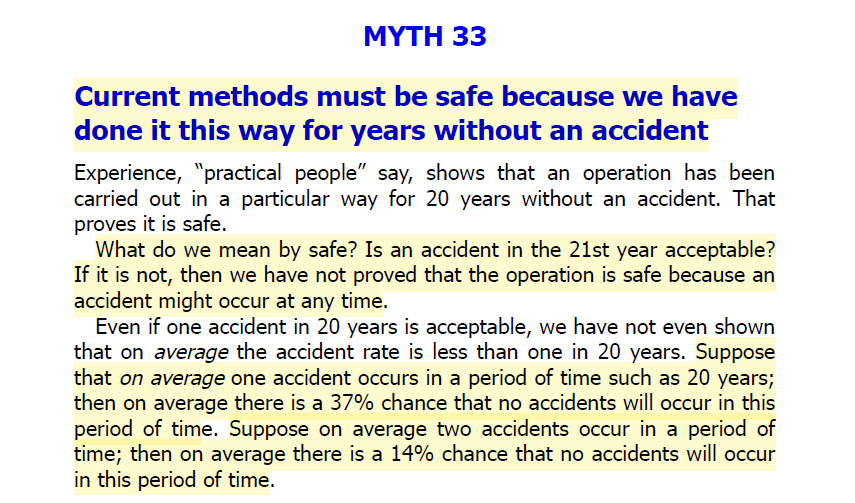
This is based on faulty reasoning because the fact no fatal incident or major accident has occurred over 20 years is “relevant only if a fatality in the 21st year is acceptable”.
The absence of these events over 20 years isn’t evidence showing that the probability is less than 1 in 20, “All it proves is that we can be 86 per cent confident that the probability is less than once in ten years” (quoted from Learning from Accidents).
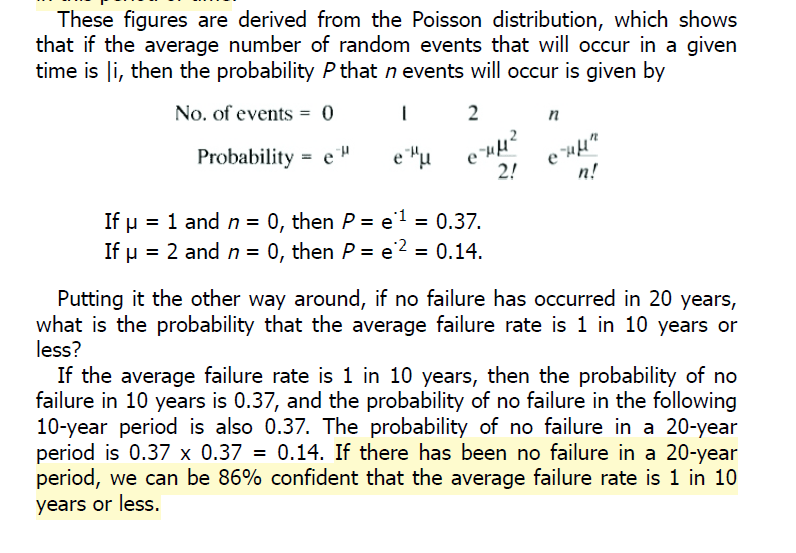
Kletz uses the Poisson distribution to highlight the danger of statistical innumeracy, and from the false sense of safety from using absence of accidents as a proxy for the presence of capacities.
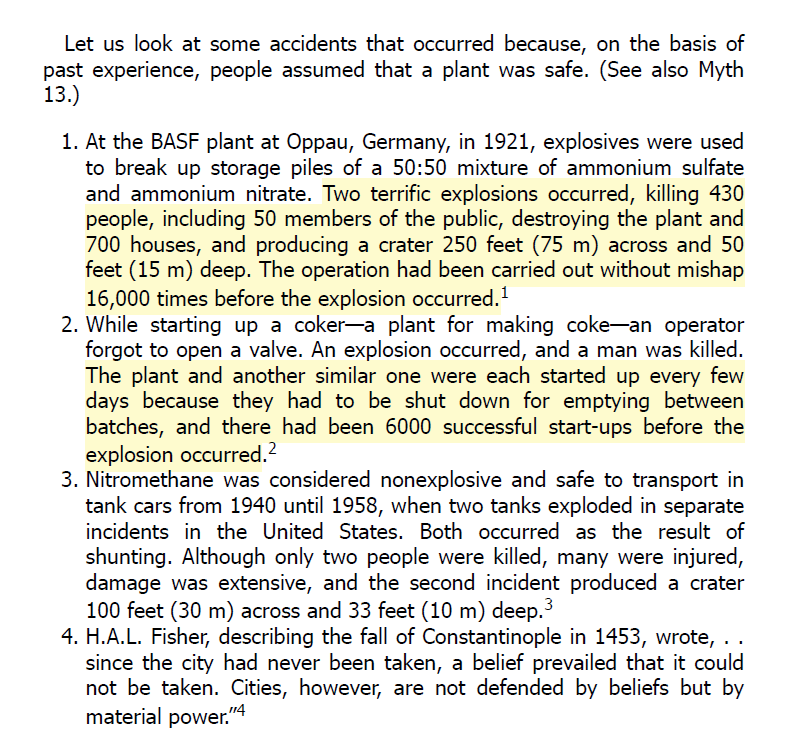
Hence, a lack of incidents can rather be more a period of good luck, or fortuitous dice rolls.


 SafetyInsights.org