
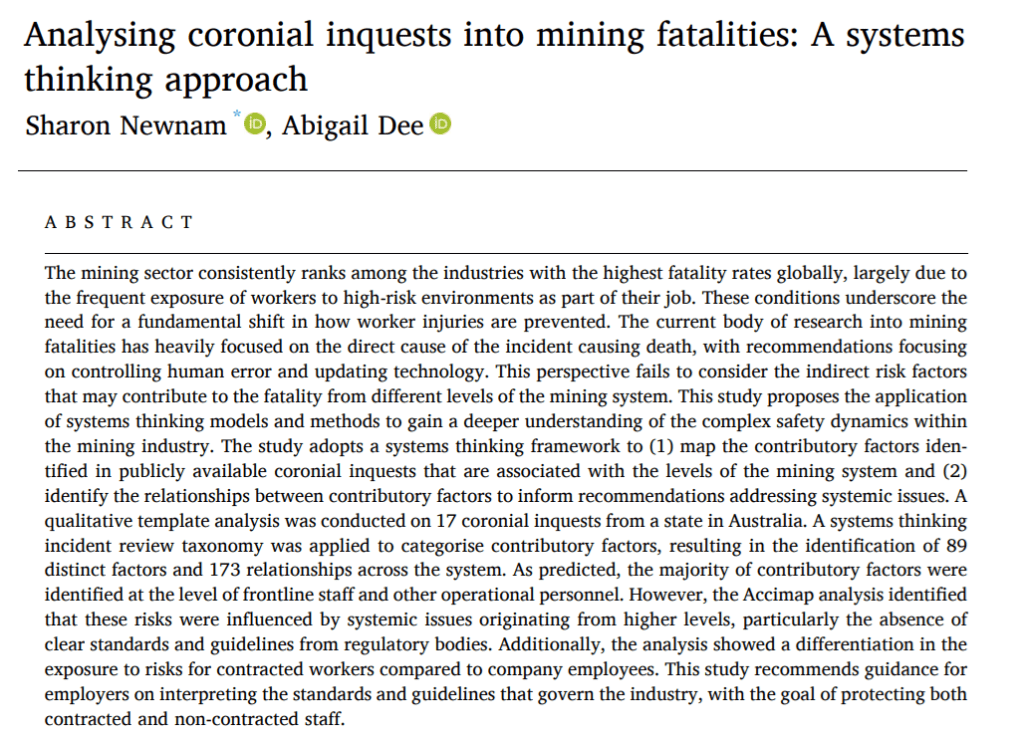
This applied a systems thinking incident approach to Queensland mining fatality coronial inquiries.
Extracts:
· “As predicted, the majority of contributory factors were identified at the level of frontline staff and other operational personnel”
· “However, the Accimap analysis identified that these risks were influenced by systemic issues originating from higher levels, particularly the absence of clear standards and guidelines from regulatory bodies”
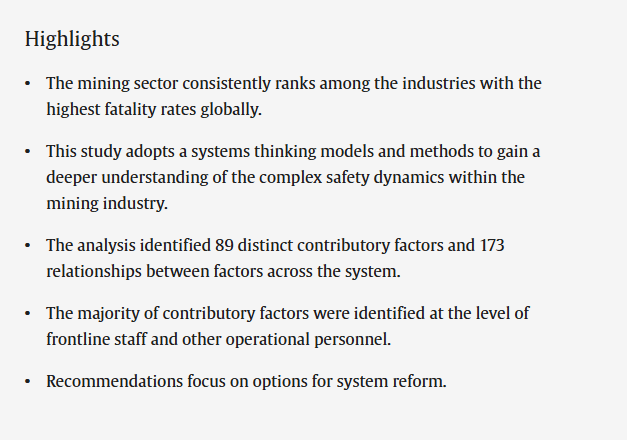
· findings highlight “how upstream governance, regulatory, and client-related decisions can influence downstream safety outcomes”
· This suggests “interventions focused only on the lowest levels of the system are insufficient for addressing systemic risks and are unlikely to lead to sustainable or meaningful reductions in risk”
· Issues were identified at higher levels, where the “absence of clear standards and guidelines from regulatory bodies”
· Six reports noted “Inadequate legislation” as a contributory factor
· They “highlighted a distinction between two frontline groups, non-contracted staff and contractors”
· The “frequency analyses identified that the competencies and actions of contracted staff were higher compared to non-contracted employees”
· And they noted that a “lack of experience, knowledge, skills, and training directly contributed to heightened risks for frontline workers”
· Contracted staff were identified as often being “unaware of which policies and procedures (from the mining company or their employer) they were required to adhere to”
· “It was identified that maintaining adequate “Staff numbers” was essential to effectively carry out the required work. “Rostering” was identified as a factor when staff were scheduled for excessively long shifts, posing risks to their health and capacity to perform their duties effectively”
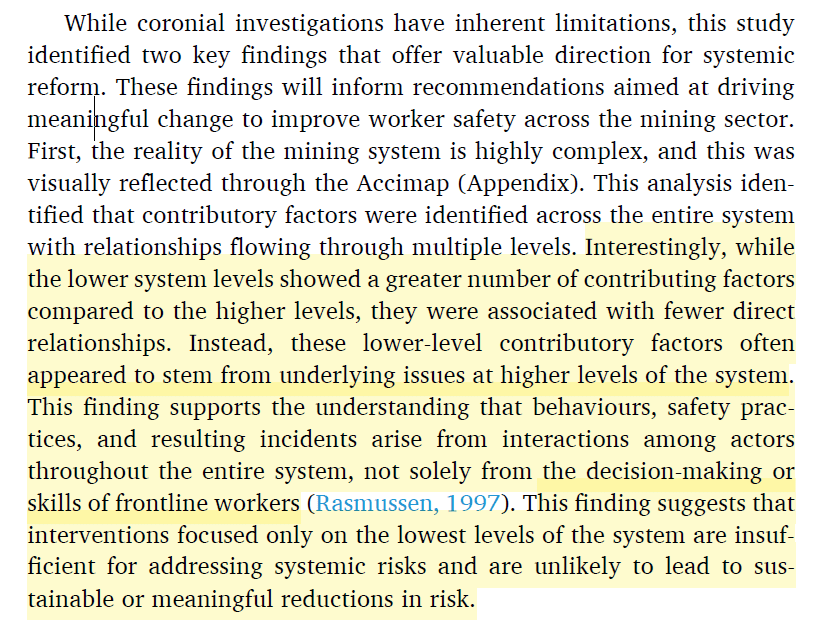
· “Interestingly, while the lower system levels showed a greater number of contributing factors compared to the higher levels, they were associated with fewer direct relationships”
· “Instead, these lower-level contributory factors often appeared to stem from underlying issues at higher levels of the system. This finding supports the understanding that behaviours, safety practices, and resulting incidents arise from interactions among actors throughout the entire system, not solely from the decision-making or skills of frontline workers”
· “This finding suggests that interventions focused only on the lowest levels of the system are insufficient for addressing systemic risks and are unlikely to lead to sustainable or meaningful reductions in risk”
Ref: Newnam, S., & Dee, A. (2026). Analysing coronial inquests into mining fatalities: A systems thinking approach. Safety Science, 193, 107023.

Shout me a coffee (one-off or monthly recurring)
Study link: https://doi.org/10.1016/j.ssci.2025.107023
My site with more reviews: SafetyInsights.org
Shout me a coffee: https://buymeacoffee.com/benhutchinson
Safe As LinkedIn group: https://www.linkedin.com/groups/14717868/

 SafetyInsights.org