Was fatigue a contributor to the Titanic disaster? Quite possibly.
This study draws on several sources to try and piece together the probable effects of sleep loss (** sources not including Celine Dion or paintings of French girls).
Don’t read into this too much, but just a fun little study.
Extracts:
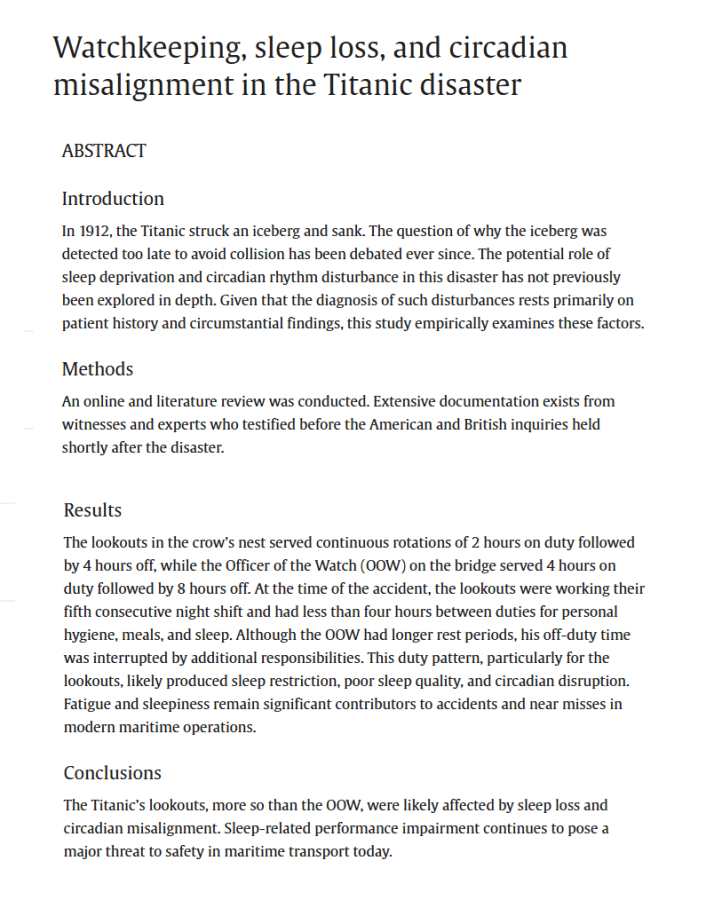
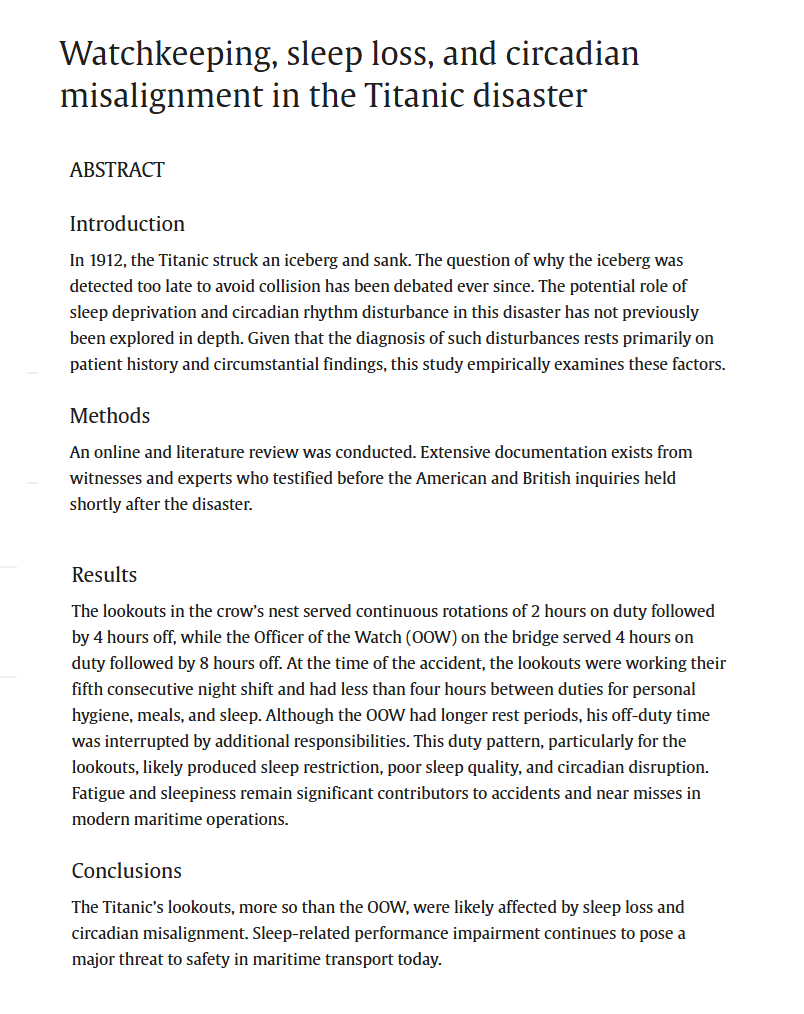
· “The Titanic’s lookouts, more so than the OOW [Officer of the Watch], were likely affected by sleep loss and circadian misalignment”
· “Sleep-related performance impairment continues to pose a major threat to safety in maritime transport today”
· “The lookouts in the crow’s nest served continuous rotations of 2 hours on duty followed by 4 hours off, while the Officer of the Watch (OOW) on the bridge served 4 hours on duty followed by 8 hours off”
· “At the time of the accident, the lookouts were working their fifth consecutive night shift and had less than four hours between duties for personal hygiene, meals, and sleep”
· “Although the OOW had longer rest periods, his off-duty time was interrupted by additional responsibilities. This duty pattern, particularly for the lookouts, likely produced sleep restriction, poor sleep quality, and circadian disruption”
· “In their four-hour off-duty periods, the lookouts were expected to eat, drink, attend to hygiene, relax, and rest, leaving at best 3.5 hours’ sleep per break”
· “In addition, they slept in a shared bunkroom with 34 other crew members, and the environment, also affected by ship motion and ambient noise, was far from conducive to restorative sleep”
· The First Officer had a range of tasks relating to navigational instruments, some of which “he had to wind and compare daily at 08:00 while maintaining a chronometer comparison book.11 This implies that after his night shift ended at 02:00, fewer than six hours remained for continuous sleep”
· Age may have also been a factor, since “As individuals age, their circadian rhythms become less adaptable to night work”, disrupting sleep
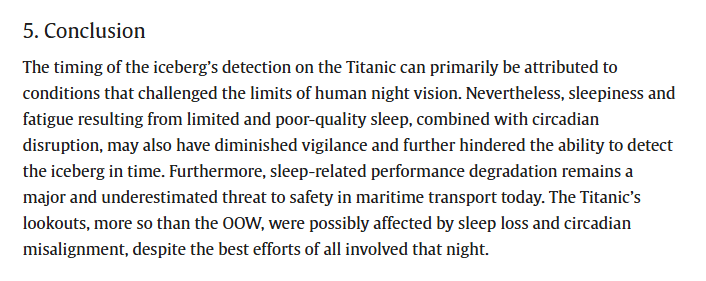
· Newer data suggested that issues with lookouts were implicated in 2/3 of collisions or groundings, and 1/3 involved a fatigued officer alone on the bridge at night (** this isn’t causal of course, but fatigue is really challenging to causally link)
· In any case, they argue that the proposed prevalence of fatigue symptoms and fatigue-related incident involvement are likely underestimated, given “personal, cultural, legal, and commercial pressures that discourage accurate reporting”
** Limitations present, of course. Not just the original data, but the challenge of pin-pointing the role of fatigue.

Shout me a coffee (one-off or monthly recurring)
Study link: https://doi.org/10.1016/j.sleepx.2025.100165

 SafetyInsights.org