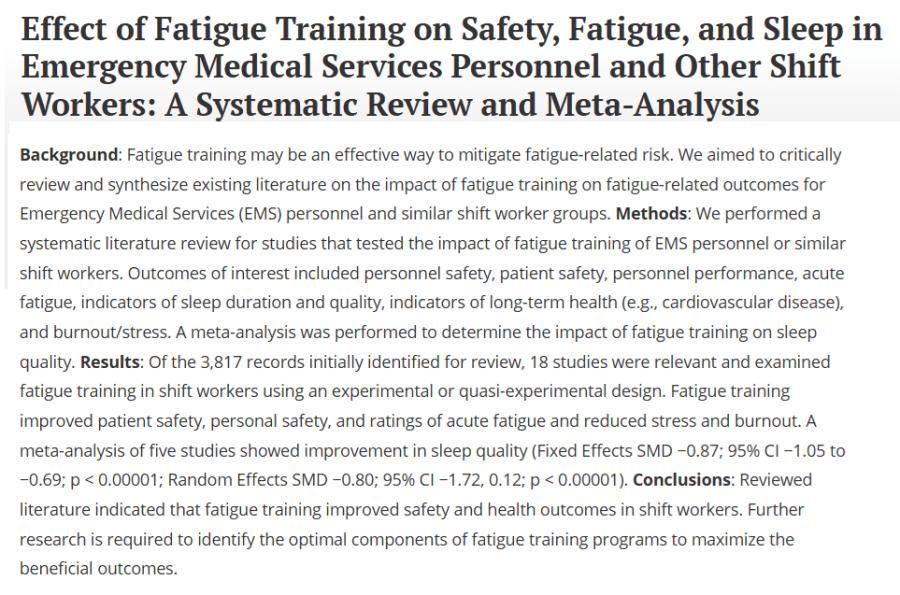
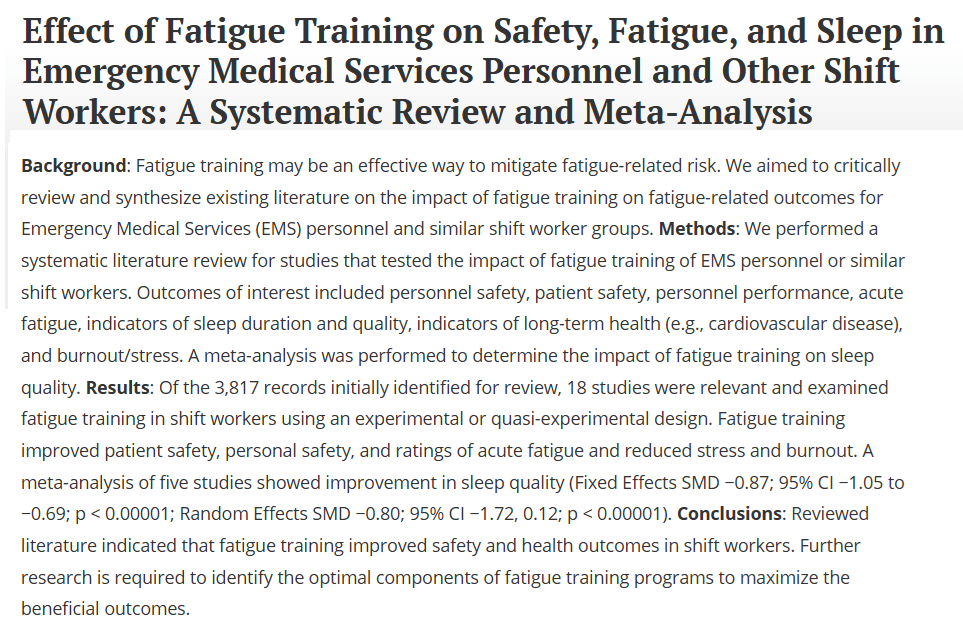
This meta-analysis and systematic review investigated research on the impact of fatigue training on fatigue-related outcomes.
Target groups were emergency medical services personnel and other similar shift work groups.
Extracts:
· Overall they found “fatigue training improved safety and health outcomes in shift workers”
· Findings from two studies were “favorable for patient safety,” showing a “decrease number of errors” and a “decrease in the residents’ perception of their potential for error” following fatigue training
· Three studies investigated personnel safety, generally characterised as favourable (with some mixed evidence) – one study reported “20% reduction in the number of drowsy driving episodes and 80% reduction in MVCs”
· Another found a “24% lower odds of firefighters filing an injury report among those attending the fatigue education and training session”
· “positive association between fatigue training and improvement in perceived safety culture in truck drivers” was also detected”
· Fatigue training had an “overall favorable” impact on personnel performance, where one intervention showed a “large, significant positive effect on reaction time during shift (flights)”
· Another study reported a “20% reduction in number of days when performance is affected by inadequate sleep”
· For acute fatigue, four quasi-experimental studies had favourable findings for mitigating acute fatigue, detecting “lower levels of acute fatigue during the post-intervention period compared to baseline”
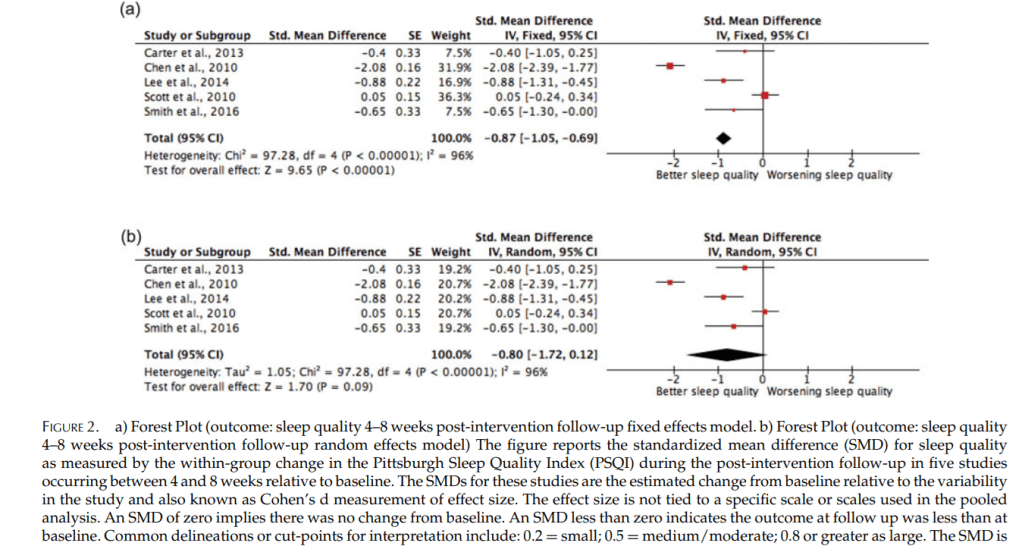
· For sleep quality, analysis of 5 studies “showed improvement in sleep quality”, with the effects of fatigue education and training on sleep quality being “large and statistically significant” at 4-8 wks post-baseline, interpreted as favourable
· For burnout and stress, the findings suggest a “positive impact of the fatigue education and training interventions on indicators of burnout and stress post introduction of the intervention” also interpreted as favourable
· For long-term health, multiple studies indicated a “favorable impact on indicators of long-term health”, like self-reported mental health, physical health, and depression symptoms
· Importantly, the “overall quality of evidence was judged low or very low due to lack of randomized clinical trials in operational settings”
· And “Most studies were judged to have a serious or very serious risk of bias due to the limitations associated with quasi-experimental study designs”
Ref: Barger et al. (2018) Effect of Fatigue Training on Safety, Fatigue, and Sleep in Emergency Medical Services Personnel and Other Shift Workers: A Systematic Review and Meta-Analysis, Prehospital Emergency Care, 22:sup1, 58-68

Shout me a coffee (one-off or monthly recurring)
Study link: https://doi.org/10.1080/10903127.2017.1362087
Safe As LinkedIn group: https://www.linkedin.com/groups/14717868/


