‘Re-Imagining Risk Assessment’
Another extract from Marcin’s book ‘Learning from Normal Work’.
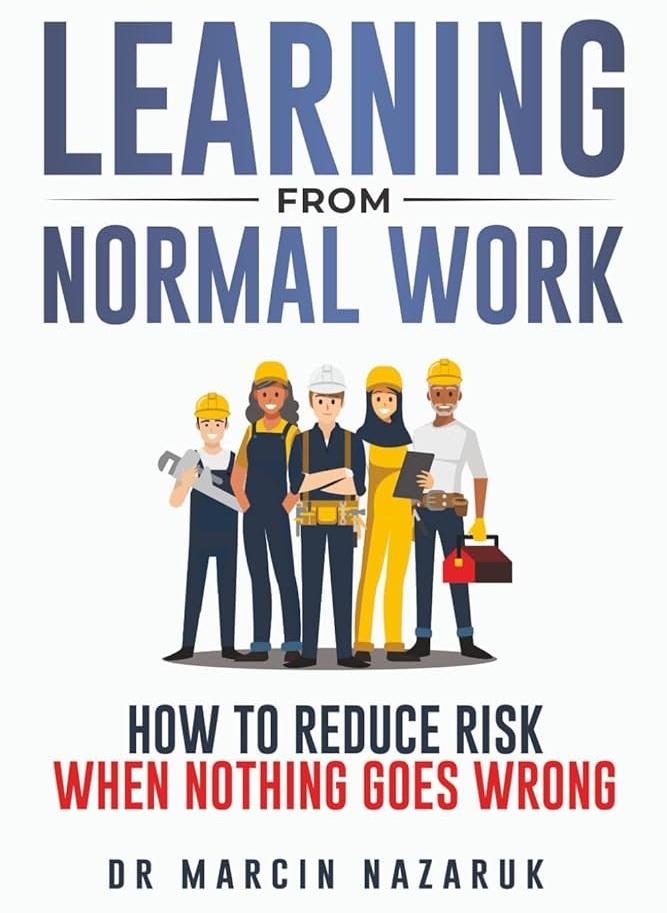
These extracts come from the chapter about how we can expand the imagination of the risk assessment – focusing on John and Sarah:
· “ … we were still seeing accidents. In some cases, the accidents were repeating themselves. Our traditional risk assessments focused on identifying hazards”
· And based on their existing approaches, “As for error traps and adaptations, we were clueless. We didn’t have a way to tell the difference between work as-imagined and work as-done”
· An example of a risk assessment template that helps explore error traps is provided
· “With our old risk assessment process, the hazard that the assessor identified was electrocution. There’s even a warning sign on the front of the panel, so that’s straightforward. The key point here is that the risk assessment took place without any workers present, so the assessor had to imagine how tasks in this space would be completed”
· They add the worker to the process, observing what the worker really has to do, to get the job done, including the challenges they face – with this approach “That’s when error traps become visible”
· “It looks as if the standard risk assessments were overlooking a lot of critical context”
· And without observing the real work, and relying on pure desktop risk assessments, “…it’s really hard to assess what the problems might be”
· “… without noticing and addressing these error traps, our original risk assessment was incomplete” and it was “focused on visible, static hazards. We needed to incorporate dynamic risk assessment, which takes into account the changing conditions and the real-time decision-making that workers face every day”
· “Working with the workers, and understanding the choices they make,” John reflected. “That makes a lot of sense”
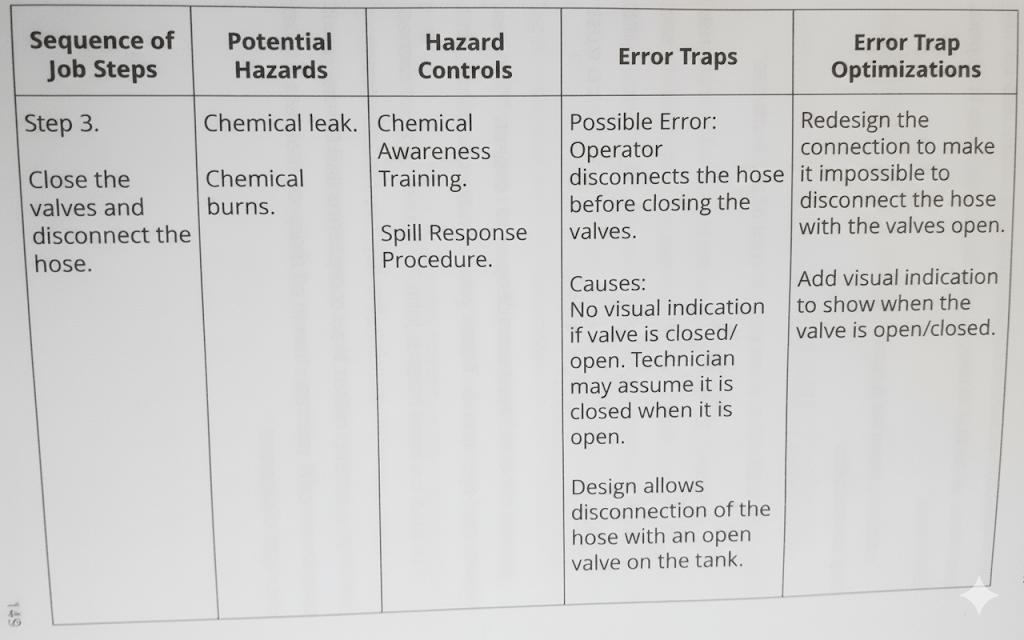
FYI: For those familiar with STAMP/STPA, we’d call those error traps, like disconnecting the hose before closing the valve ‘unsafe control actions’.