Some extracts from Matt Hallowell’s Energy-Based Safety, exploring contradictions and logics of injury vs fatality prevention:
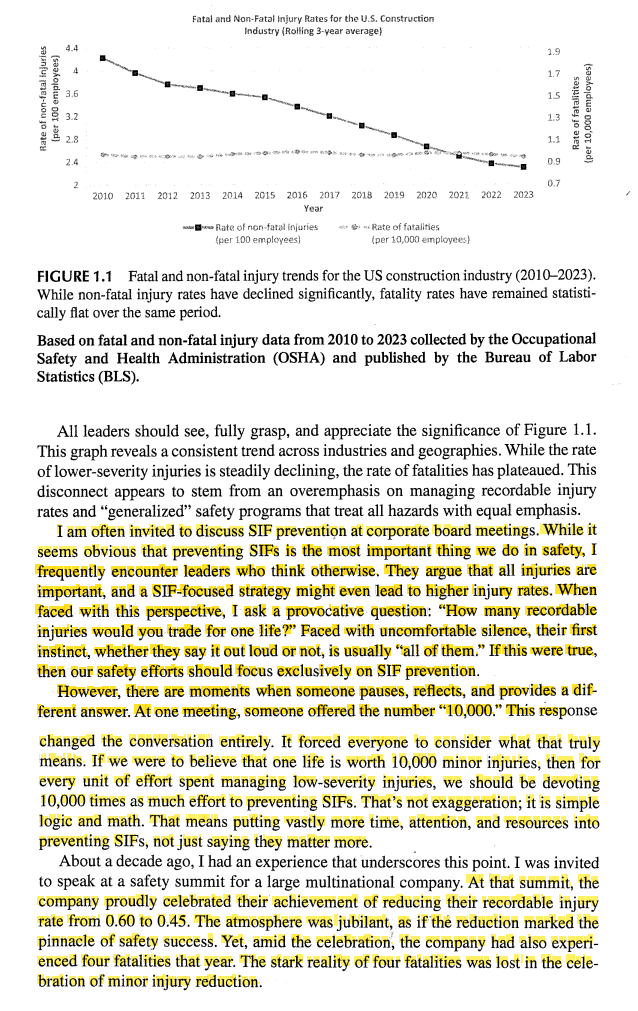
- If “all injuries are important … and a SIF-focused strategy might even lead to higher in injury rates” then “How many recordable injuries would you trade for one life?”
- “Faced with uncomfortable silence, their first instinct, whether they say it out loud or not, is usually “a lot of them”
- Matt notes one summit he presented at where “the company proudly celebrated their achievement of reducing their recordable injury rate from 0.60 to 0.45. The atmosphere was jubilant, as if the reduction marked the pinnacle of safety success”
- “Yet, amid the celebration, the company had also experienced four fatalities that year. The stark reality of four fatalities was lost in the celebration of minor injury reduction”
- A decade later, “their recordable injury rate had declined even further to 0.20. However, the number of fatalities remained the same, with four lives lost once again. The tone of this second summit was markedly different. Gone was the Jubilation of the earlier meeting, replaced by solemn acknowledgment that their approach was not addressing the incidents that matter most. It was clear that a new approach was needed”
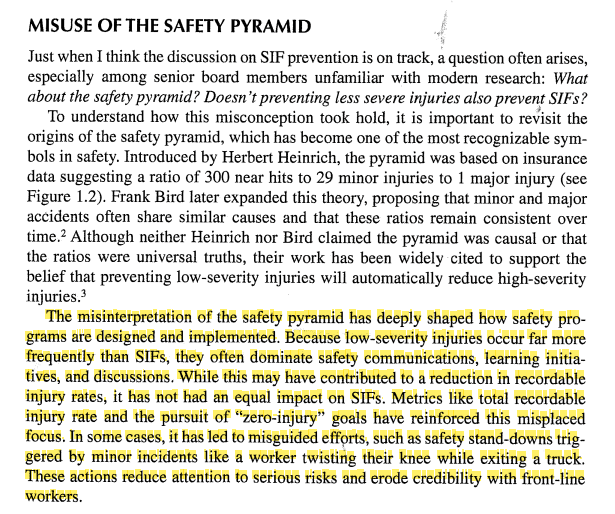
- And on the misdirection and misfocus of managing minor potential hazards over SIFs, “Because low severity injuries occur far more frequently than SIFs, they often dominate safety communications, learning initiatives and discussions. While this may have contributed to a reduction in recordable injury rate, it has not had an equal impact on SIFs”
- “Metrics like total recordable injury rate and the pursuit of “zero-injury” goals have reinforced this misplaced focus. In some cases, it has led to misguided efforts, such as safety stand downs triggered by minor incidents like a worker twisting their knee while exiting a truck. These actions reduce attention to serious risks and erode credibility with front line workers”