Want to know the cutting edge, new-fangled ideas of industrial safety? Read on.
Oh, and it’s from 1948.
** PS. Check out my YouTube: https://youtube.com/@safe_as_pod?si=nrKljK0AeUZXTOgd
Extracts:
History of Safety–
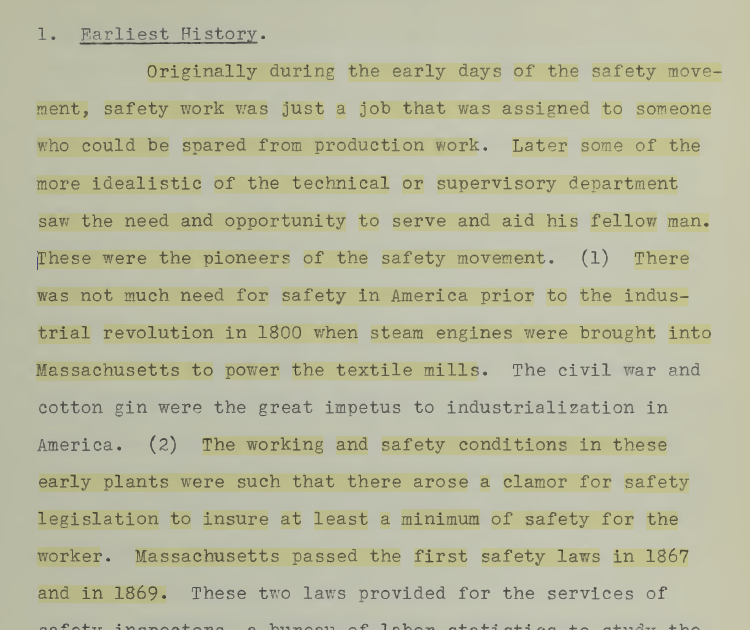
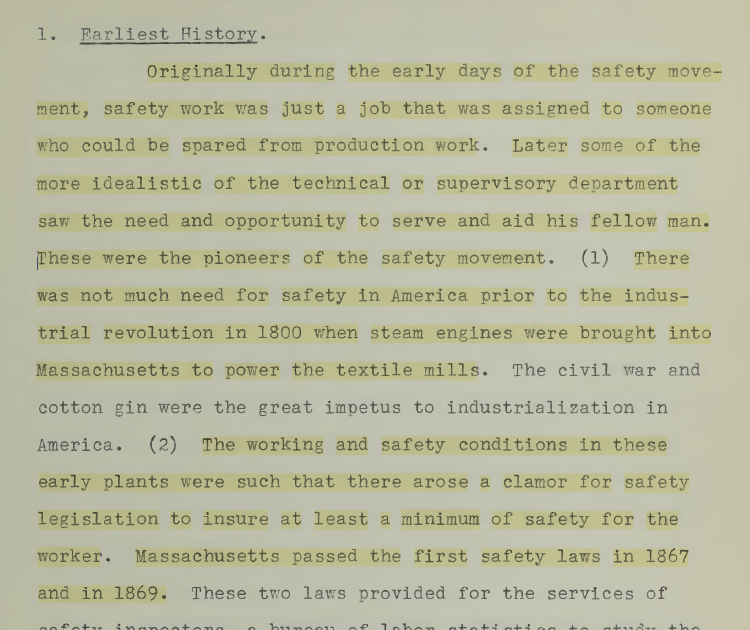
· “Originally during the early days of the safety movement, safety work was just a job that was assigned to someone who could be spared from production work”
· “Later some of the more idealistic of the technical or supervisory department saw the need and opportunity to serve and aid his fellow man. These were the pioneers of the safety movement”
· “There was not much need for safety in America prior to the industrial revolution in 1800 when steam engines were brought into Massachusetts”
· “Massachusetts passed the first safety laws in 1867 and in 1869”
· “The Joliet Works of The Illinois Steel Company is often referred to as “the birthplace of the American industrial accident prevention movement”
· “In 1892 a safety department was organized. The first order issued was for flywheel inspection”
· “the workman’s compensation laws were the greatest factor in raising the level of industrial safety to where it is today. These laws made it directly expensive for any employer to have accidents in his plant”
On building trust and respect–
· “a feeling of mutual respect and good will between the safety department and the worker as well as psychological rapport is necessary to get the message across”
· “It was formerly the practice at Ford to use plant guards to enforce safety rules. The methods were somewhat “Gestapo”-like and the guards were resented by the workers”
· “A worker spotting a guard might quickly put on his goggles while swearing under his breath at the hated safety man”
Next the author unpacks safety measures—
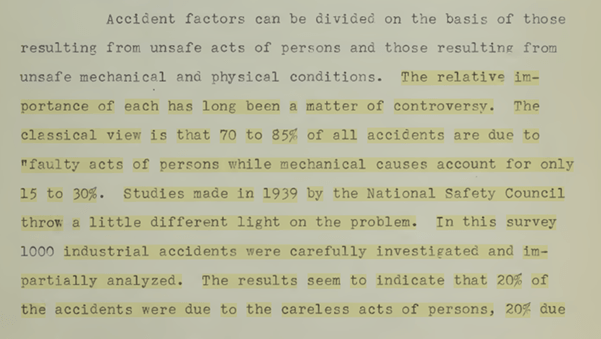
· “Accident factors can be divided on the basis of those resulting from unsafe acts of persons and those resulting from unsafe mechanical and physical conditions”
· “The relative importance of each has long been a matter of controversy”
· “The classical view is that 70 to 85% of all accidents are due to “faulty acts of persons while mechanical causes account for only 15 to 30%”
· However, 1939 study of 1000 accidents challenges these assumptions: “20% of the accidents were due to the careless acts of persons, 20% due to faulty physical conditions, and the remaining 60% were due to a combination of the two factors”
· The survey “pointed to a more strict attention to physical causes in the future”
· The author discusses the value of accident frequency and severity rates – necessary over simple counts of accidents
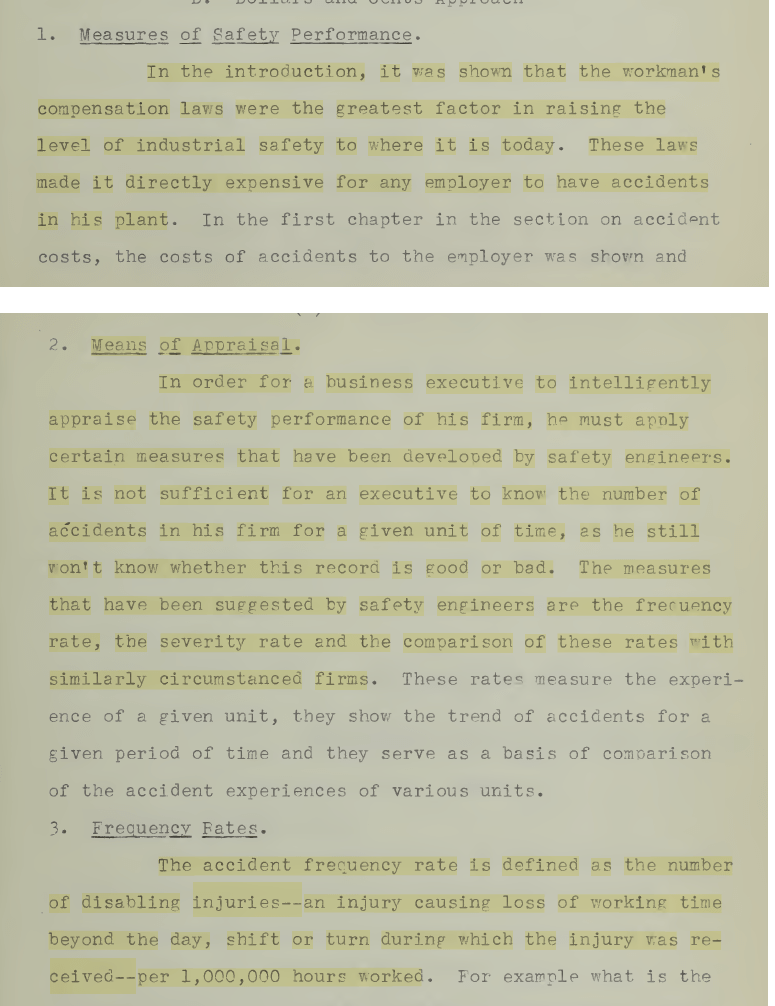
So which is better? The author provides two arguments
- For severity: “The ones who believe that severity rates are the more important indicators say that from a humanitarian and financial view that a reduction in deaths and other serious injuries as indicated by the shrinking severity rate is more important than is a reduction of the less serious accidents that necessitate only a few days lost time each”
- For frequency: “all accidents are a potential cause of death or very serious injury, although it may result in a very minor injury or no injury at all. Therefore, attention should be given to the elimination of all accidents not just the very serious ones”, and this accounts for luck, also
- However for this author: “From an accident prevention point of view, both accident are of equal importance, however. In contests between two units, the frequency rate is the preferable to the severity because of the luck factor”
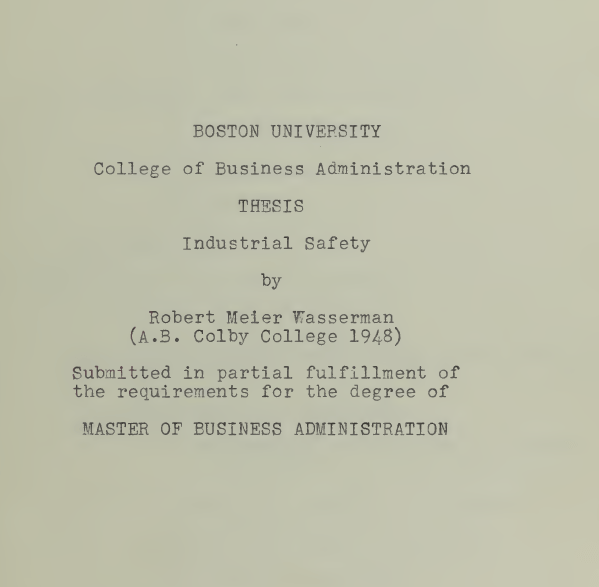
Ref: Wasserman, R. M. (1949). Industrial safety (Doctoral dissertation, Boston University).

 SafetyInsights.org