

This scoping review evaluated research on the effectiveness of toolbox talks (TBTs) as a safety intervention.
Just 14 studies met inclusion. They used adult learning theory as the framework to assess the research.
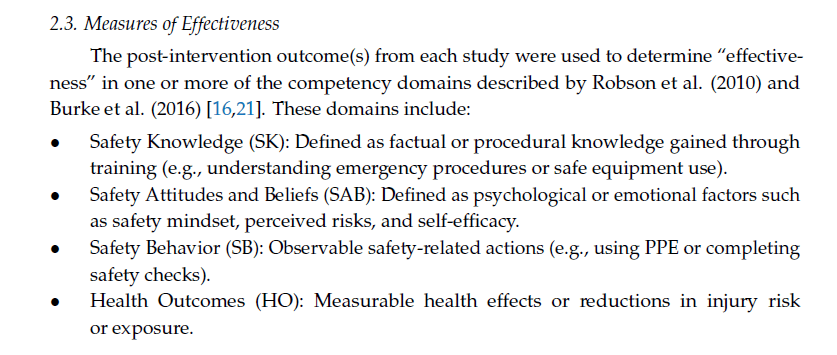
The following measures of effectiveness were used:
Results:
Following TBTs interventions:
· Six studies found statistically significant improvements in workers’ safety knowledge, highlighting improvements in the ID of hazards and application of safe work practices
· Some work found that TBTs translated into significant changes in safety perceptions, attitudes and beliefs, “leading to improved hazard awareness and greater confidence in their ability to perform job tasks safely”
· This suggests that well-structured TBTs “can influence not only what workers know but also how they think about safety”
· “Behavioral outcomes varied, though most studies noted positive changes in worker practices”
· Some work observed modest changes in observable safety awareness among older, more experienced workers, and some work found links with use of PPE, improved safety communication and more
· Some TBTs “that engaged workers through tailored messages and participatory formats demonstrated effectiveness in shifting daily behaviors and worksite norms. These studies also documented safer work practices and improved actions for protecting health”
· Some work also explored health outcomes, with two demonstrating reductions in workplace exposures and improved protective behaviours
· Two studies suggested that “TBTs contributed to safer practices at the team level, reinforcing the value of TBTs in promoting not just individual behavior change but system-level safety culture improvements”.
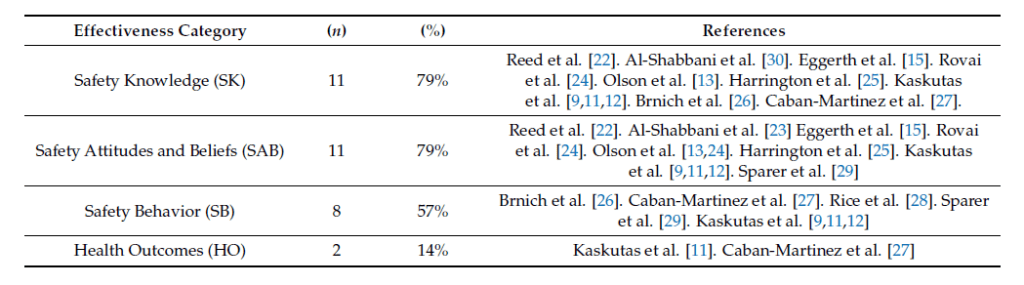
In all they argue that these findings suggest that “TBTs can positively influence multiple dimensions of occupational safety, from enhancing individual knowledge and perceptions to shaping organizational norms and practices”.
Several barriers to TBT effectiveness exist, of course. Worker disengagement was the main documented barrier. For one, “more-experienced workers tended to be less engaged and perceived TBTs as redundant or unnecessary”. And the presence of disengaged supervisors reduced the effectiveness of the TBT intervention.
Language barriers and cultural differences were also barriers to effective TBT interventions. Another barrier is the high turnover and transient workforce nature of construction. These factors “disrupted the continuity of TBT programs, making it difficult to reinforce lessons over time”.
Best Practices
They covered some of the better practices for enhancing effectiveness of TBT interventions. These included:
· Tailoring TBT content to worker experience and cultural context
· Using visual aids, like line drawings and the like
· Using narrative-based TBTs “helped make safety messages relatable and engaging”
· Using small-group discussions also helped to reinforce messages, like fall protection
Ref: Kearney, G. D., Hisel, J., & Staley, J. A. (2025). Effectiveness of Toolbox Talks as a Workplace Safety Intervention in the United States: A Scoping Review. Safety, 11(2), 35.

Study link: https://doi.org/10.3390/safety11020035
LinkedIn post: https://www.linkedin.com/pulse/effectiveness-toolbox-talks-workplace-safety-united-ben-hutchinson-seafc

 SafetyInsights.org