Night shift work linked to various indices of cardiovascular disease (CVD) risk in this systematic review and meta-analysis.
81 studies were evaluated.
Extracts:
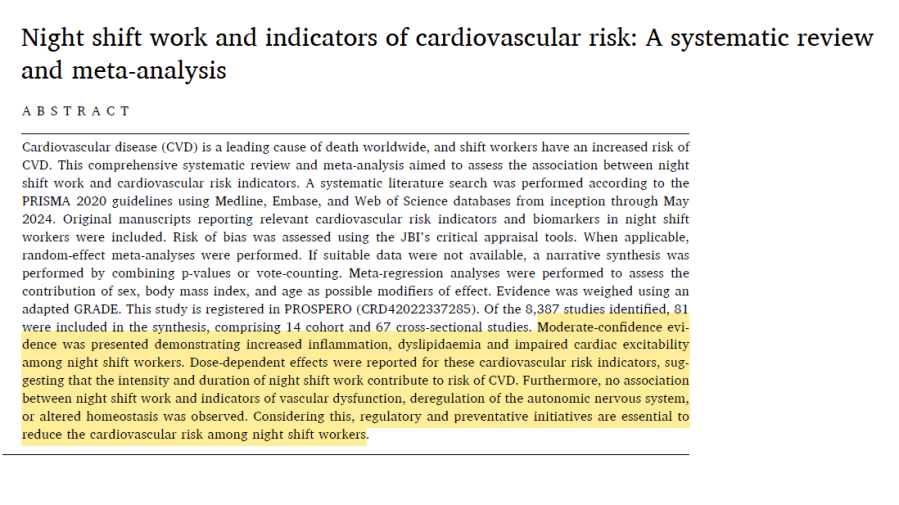
· “Dose-dependent effects were reported for these cardiovascular risk indicators, suggesting that the intensity and duration of night shift work contribute to risk of CVD”
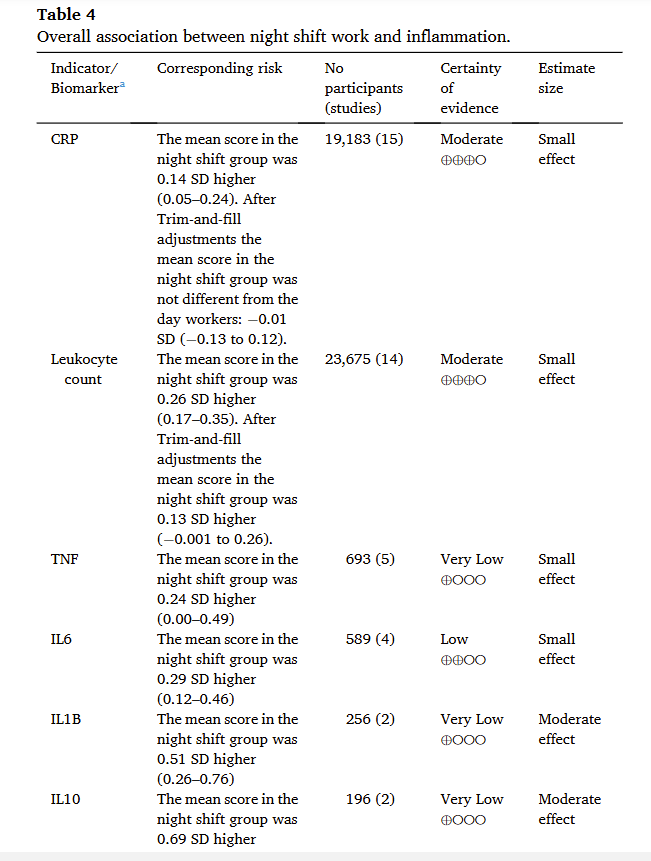
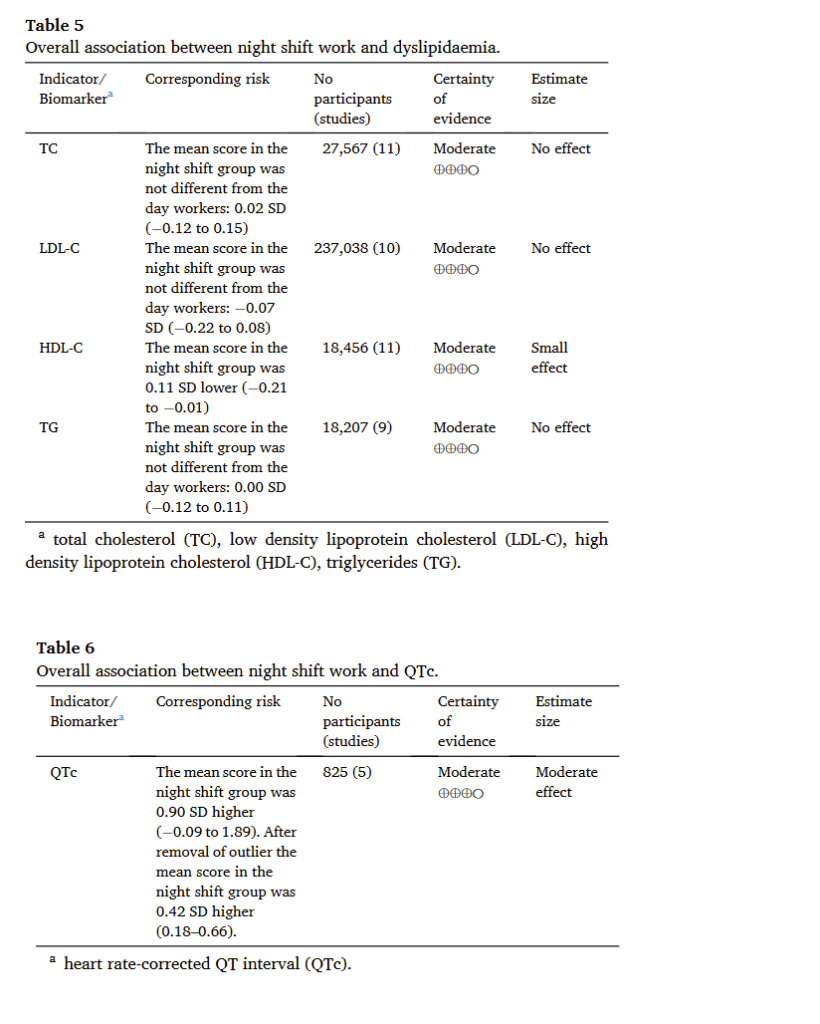
· “This systematic review reports moderate-confidence evidence for inflammation, dyslipidaemia and prolonged QTc, indicating impaired cardiac excitability, among night shift workers, with increasing effects among workers with long working duration”
· “these findings provide sufficient evidence for elevated inflammation and associated cardiovascular risk among nightshift workers. However, while inflammatory markers are highly affected by different lifestyle factors, the causality of the effect may be indirect due to changes in lifestyle patterns among night shift workers”
· “comparisons of evidence showed consistency for decreased HDL-C levels … among night shift workers (at moderate-confidence level)”
· “In addition to shift schedule and intensity, duration of night shift work affects the HDL-C levels as increasing duration is associated with reduced HDL-C levels”
· “the combined meta-analysis provides strong evidence that night shift work is associated with dyslipidaemia and specifically implicates HDL-C as a suitable biomarker”
· “Furthermore, a dose-dependent effect on QTc max values was reported as increased working duration with night shift work was associated with increasingly prolonged QTc values”
· “Prolonged QTc is associated with an increased risk of arrythmias, and this finding sup- ports a higher cardiovascular burden among night shift workers”
· “It is important to note that lifestyle factors, often affected by shift work, such as diet, sleep deprivation, and stress, may contribute to QTc prolongation. Thus, the causality of these findings needs to be further investigated”
· “Despite ample evidence indicating an increased risk of hypertension among shift workers … the quantitative analysis did not identify associations between shift work and vascular events”
· “Similarly, inconsistent results for early arterial stiffness markers have been previously reported among shift workers (Gusm ̃ao et al., 2022) and sleep deprived adults”
· “no association between night shift work and indicators of vascular dysfunction, deregulation of the autonomic nervous system, or altered homeostasis was observed”
· “Given the common occurrence of night shift work, this has important implications for public health policies. Thus, interventional strategies are necessary to reduce the risk of CVD among shift workers”
Ref: Erdem, J. S., Das, M. K., De Ryck, E., Skare, Ø., Jenny-Anne, S. L., Bugge, M., … & Zienolddiny-Narui, S. (2025). Environmental Research, 121503.

Shout me a coffee (one-off or recurring monthly)
Study link: https://doi.org/10.1016/j.envres.2025.121503

 SafetyInsights.org